Two rooms can be lit to exactly the same brightness and still send your body opposite messages. The difference is color — the warmth or coolness of the light itself. After sunset, that difference matters more than almost any other lighting choice you make. And once you understand what is happening, setting up your home for calmer evenings becomes surprisingly simple.
The Kelvin scale, in plain terms
Light color is measured in kelvin. Low numbers look warm and amber, like candlelight around 1,800 kelvin or a cozy incandescent bulb near 2,700 kelvin. High numbers look crisp and blue-white, like midday sunlight in the 5,000 to 6,500 kelvin range. Warm light leans toward orange and red; cool light leans toward blue. Your eyes adjust so quickly that you rarely notice the shift, but the specialized cells that help set your body clock are paying close attention to it.
Why cool light is a daytime tool
The light-sensing cells that report to your master clock respond most strongly to bright, blue-rich light. During the day, that is exactly what you want. Cool, bright light supports alertness, lifts mood, and helps anchor a steady rhythm you can rely on all day. The problem is that these cells cannot tell the difference between the sky and a bright bulb. In the evening, the same cool light that served you well at noon starts working against you.
After dark, blue-rich light can slow the release of melatonin, the hormone that brings on sleepiness. That is part of why a brightly and coolly lit living room can leave you feeling switched on well past your intended bedtime, even when you are tired.
Why warm and low wins at night
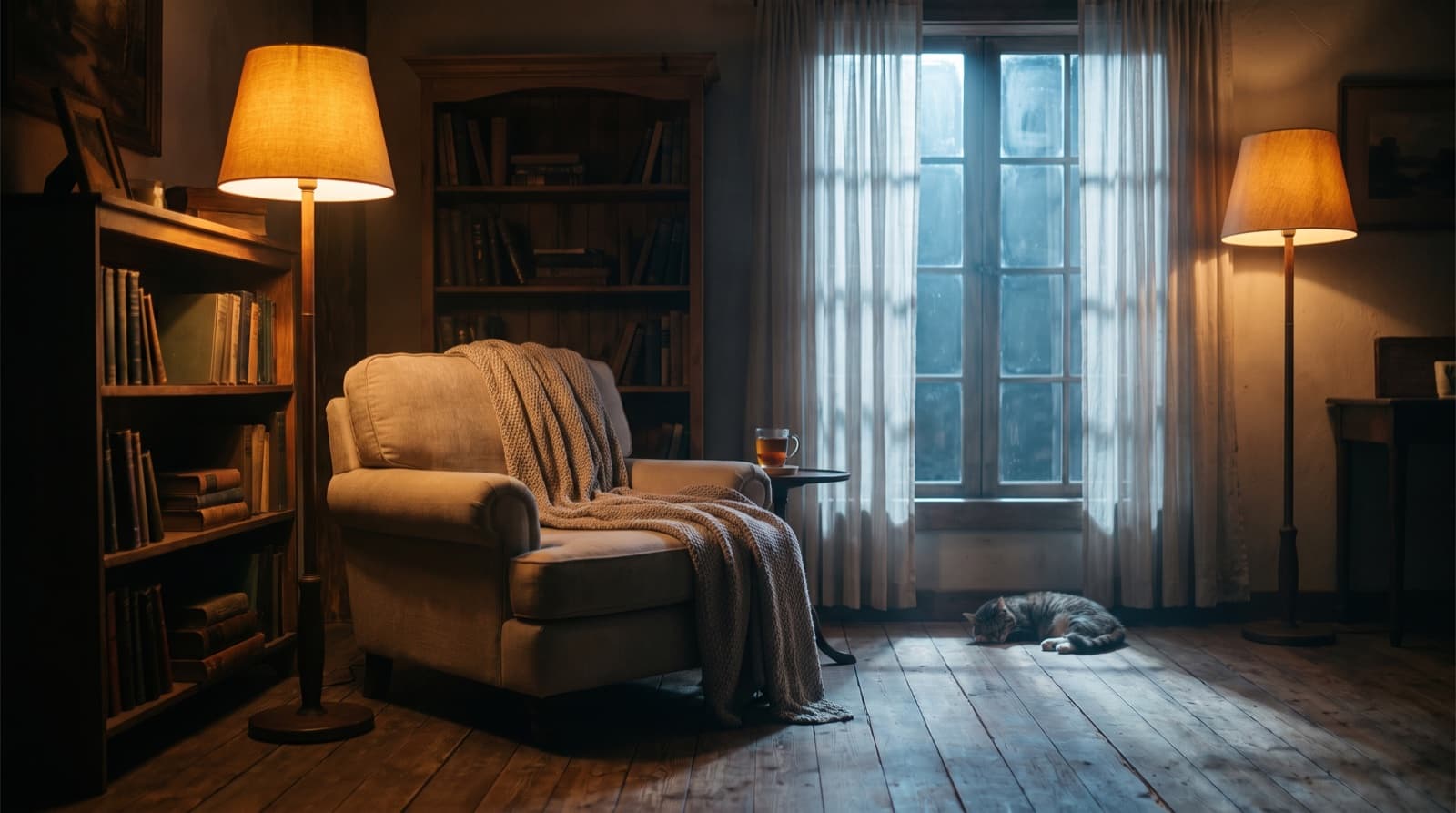
Warm light is gentler on that system. It carries less of the blue wavelengths your clock reads as daytime, so a warm, dim room sends a much softer message than a cool, bright one. This is why candlelit dinners feel relaxing and fluorescent-lit offices feel activating — the color is doing quiet work on your physiology, not just your mood. The goal after sunset is warm and low, not merely low, since a dim but cool light is still cooler than ideal.
Setting up your home
Go warm after dark
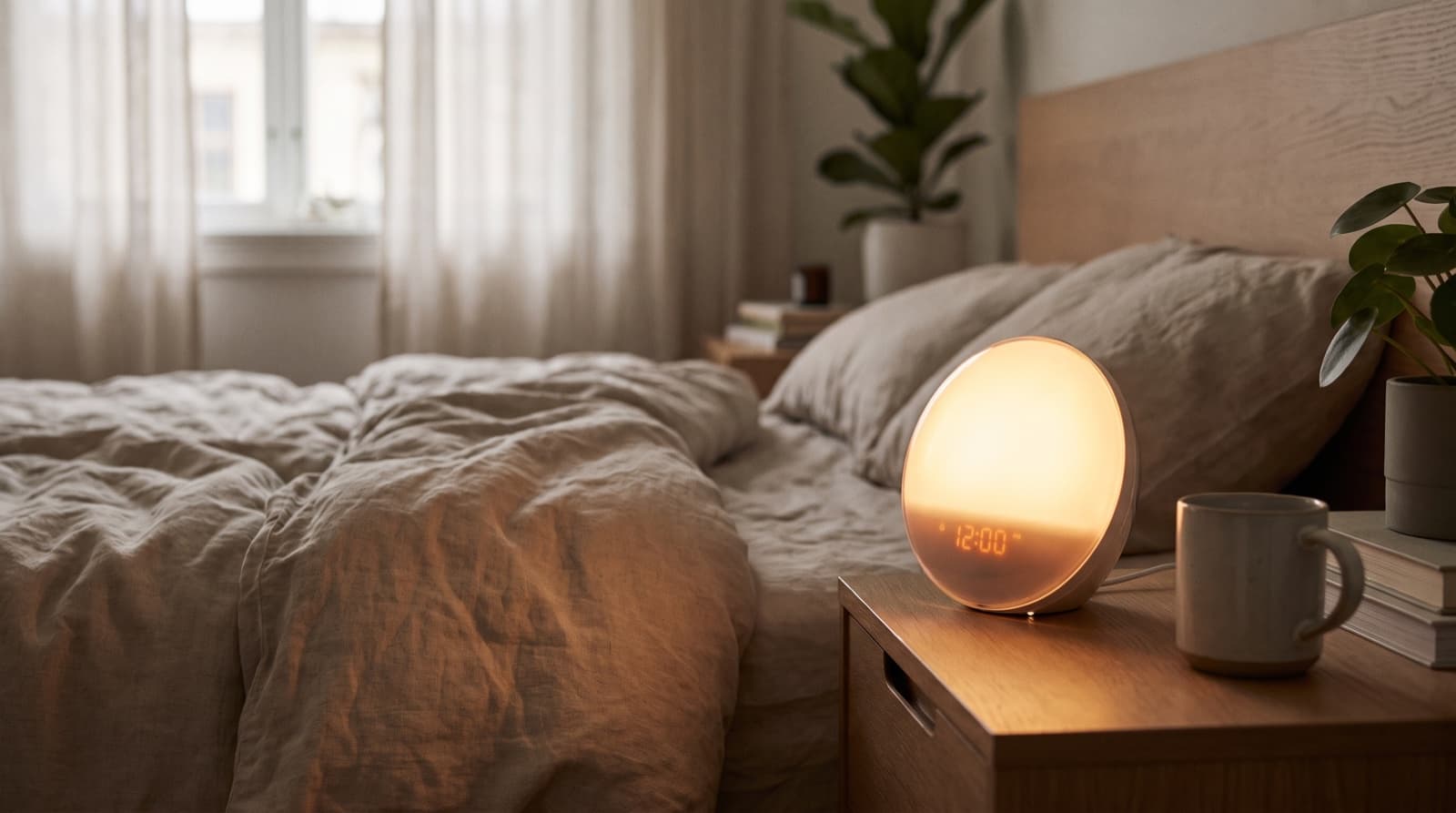
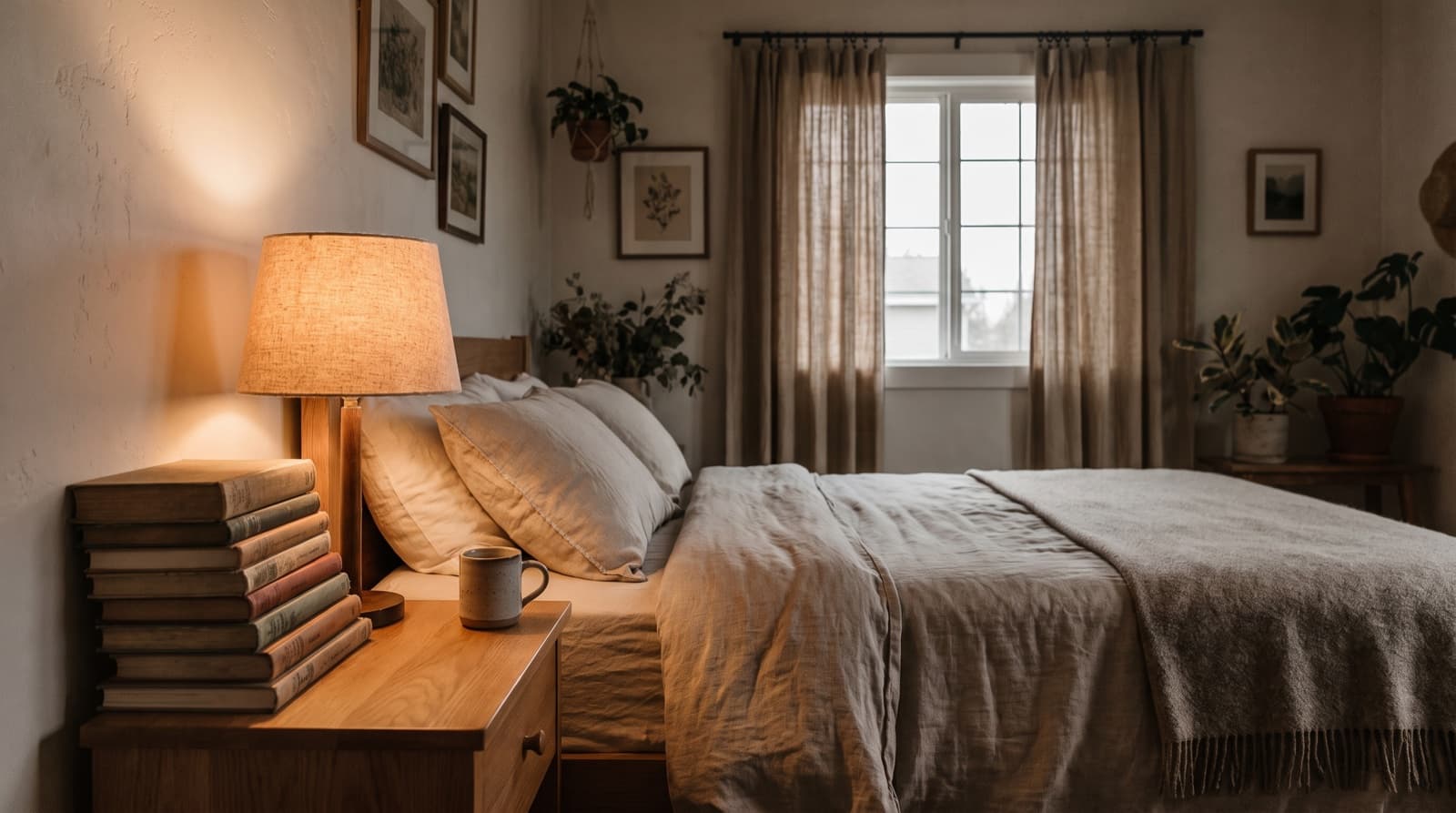
Choose bulbs in the 2,000 to 2,700 kelvin range for lamps you use in the evening. The look is soft and amber, closer to firelight than daylight.
Stay bright and cool by day
Keep cooler, brighter light for mornings and work hours. That daytime contrast is what makes the evening wind-down feel meaningful to your body.
Add dimmers everywhere
A dimmer turns one fixture into a day fixture and a night fixture. Dropping the level in the last hour is one of the easiest wins available.
Let smart bulbs do the shifting
Tunable bulbs can move from cool and bright to warm and dim on a schedule, so your lighting changes with the clock without you lifting a finger.
You do not need to replace every bulb at once. Start with the one or two lamps you actually use in the last hour of the day, since those are the fixtures shaping your evenings the most.
The simplest place to start
If all of this feels like a lot, begin with a single change tonight. Turn off the overhead light in whatever room you wind down in and switch on a warm lamp instead. That one swap shifts both the color and the height of the light, and most people feel the difference immediately. For a full walk-through of levels and timing, see how to dim your home at night.
When you cannot change the bulbs
Renters, hotel rooms, and shared offices do not always give you control over the fixtures overhead. In those situations you have two practical options. The first is to bring your own warm, dim light — a small plug-in lamp or a book light can rescue an otherwise cool room. The second is to filter the blue-rich light before it reaches your eyes with evening glasses, which travel well and work regardless of whose bulbs are installed.
Warm and cool are not good and bad; they are simply signals with a time and place. Bright and cool belongs to the daytime, when you want to feel awake and sharp. Warm and low belongs to the evening, when you want your body to understand that the day is winding down. Give each its proper hours and your lighting starts working for your sleep instead of against it.
References
- Sleep Foundation — Light and Sleep Sleep Foundation ↗
- NIH NIGMS — Circadian Rhythms NIH ↗
- Harvard Health — Blue light has a dark side Harvard Health ↗
Placeholder bio. Jordan translates sleep and nutrition research into practical guidance. Replace with a real contributor before publishing.
Read full bio →