You have probably seen the lists — the ten plants that purify your bedroom air while you sleep. It is a lovely idea. It is also, unfortunately, mostly a myth. So let us separate what actually helps from what just looks good on a windowsill.
The plant myth, gently corrected
The studies people cite for air-purifying plants were done in sealed laboratory chambers, not real bedrooms with doors, windows, and airflow. To match those results in your home, you would need dozens of plants per room. A few pots on a shelf simply cannot move enough air to change what you breathe.
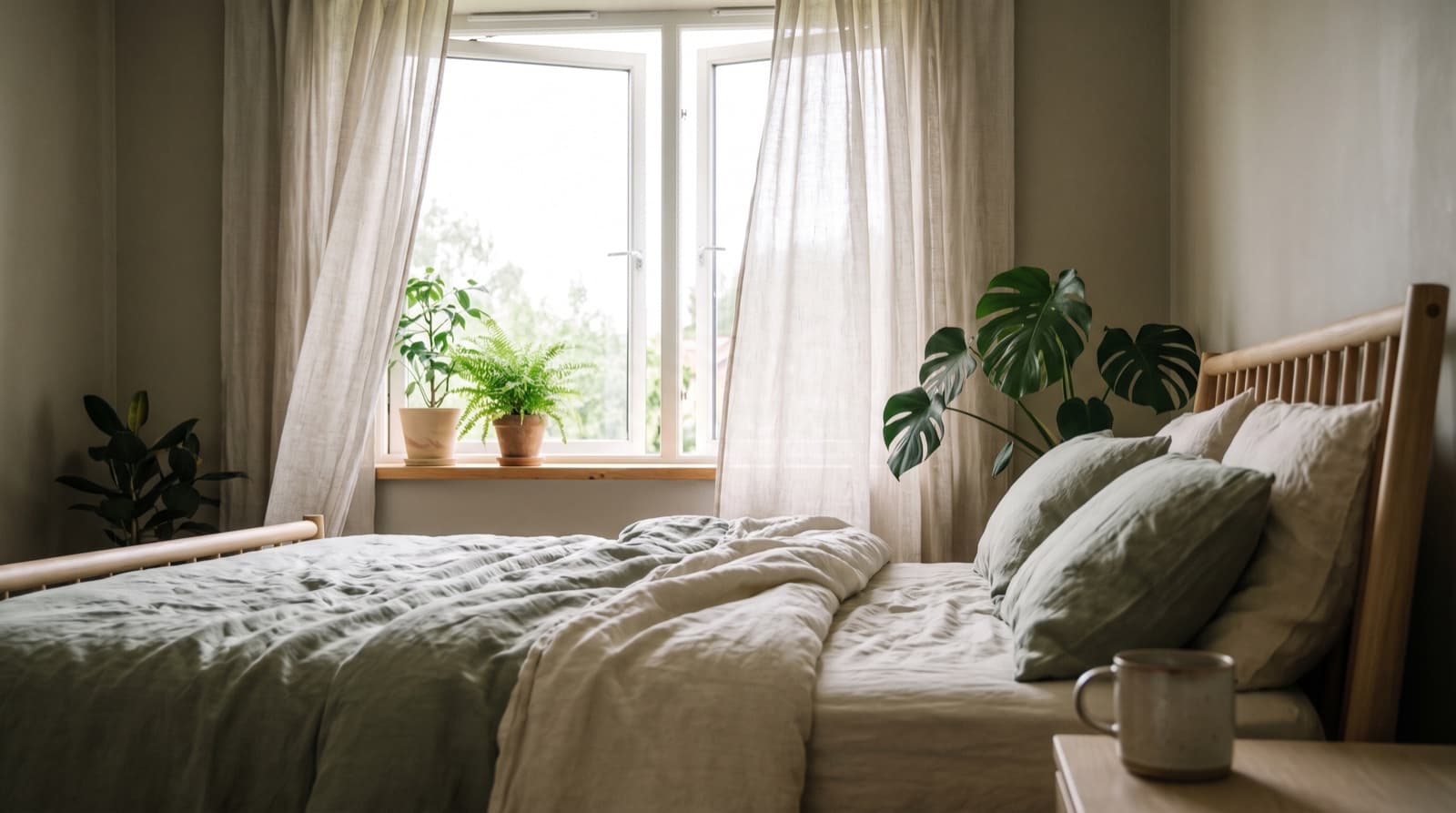
That does not make plants pointless. A calm, green room can lower stress and make a space feel restful — and a restful space is easier to sleep in. Just do not expect them to clean the air.
What actually improves your bedroom air
Ventilation
Fresh airflow does the heavy lifting. Cracking a window or running a fan clears the carbon dioxide and stuffiness that build up overnight.
Fewer sources
Skip heavy fragrances, sprays, and dust traps in the bedroom. Removing pollutants beats trying to filter them out later.
The right humidity
Air that is too dry or too damp makes for restless nights. A comfortable middle range keeps your airways happy.
Cooler, fresher air also supports the natural drop in body temperature that helps you drift off — which is why a stuffy, warm room so often feels hard to sleep in.
A simple plan
Open a window for a few minutes before bed, or run a quiet fan to keep air moving. Keep the room clean and low on strong scents. If your air runs dry in winter, a small humidifier can help — more on that in humidity and sleep.
By all means keep your plants. Tend them because they make the room feel calm and alive — just pair them with real airflow, which is what your lungs actually notice.
The takeaway
Bedroom air is worth caring about, but the lever is ventilation, not vegetation. Move some fresh air, cut the pollutants, and keep the humidity comfortable. Do that and the room feels lighter the moment you walk in — and easier to fall asleep in when you lie down.
References
- Sleep Foundation — Bedroom Environment Sleep Foundation ↗
- Mayo Clinic — Sleep Tips Mayo Clinic ↗
- NIH NHLBI — Your Guide to Healthy Sleep NIH ↗
Placeholder bio. Morgan oversees editorial standards and the fact-check process. Replace with a real editor before publishing.
Read full bio →