
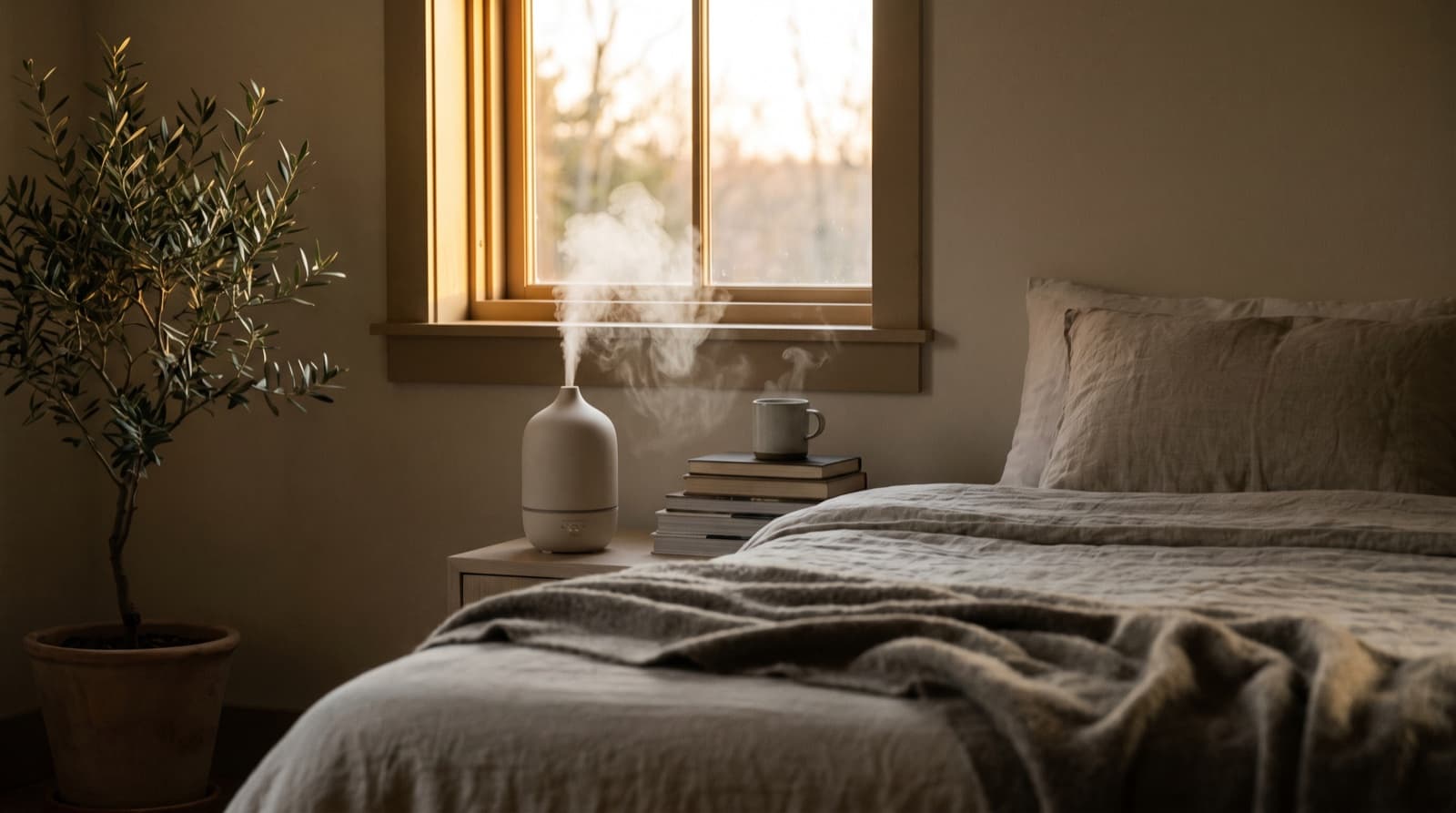
We fuss over mattresses, pillows, and room temperature, but the air itself rarely gets a thought. Yet how moist or dry your bedroom air is can shape how comfortably you breathe, how your skin and throat feel at 3 a.m., and whether you drift through the night or keep surfacing. Humidity is the quiet variable in the sleep environment, and it is an easy one to get right.
What humidity does to your night
Humidity is simply how much water vapor is hanging in the air. Too little and the air pulls moisture from you, drying out your nose, throat, and skin. Too much and the air feels heavy and stuffy, trapping heat against your body and making it harder to cool down for sleep.
Both extremes chip away at comfort in ways that are easy to blame on other things. That dry, scratchy throat, the stuffy nose that will not clear, the sense that the room is warmer than the thermostat claims — all can trace back to air that is too dry or too damp.
Finding a comfortable range
Most people sleep best when the air sits in a moderate middle band, not desert-dry, not tropical. Many experts suggest aiming somewhere around 30 to 50 percent relative humidity, though the exact number matters less than avoiding the extremes. If the air feels parched or clammy, it probably is, and your body will notice even if you do not.
An inexpensive hygrometer takes the guesswork out. It is a small gauge that reads the humidity in the room, so you can see where you stand before deciding whether to add moisture or take it away.
Getting your air into range
Once you know which way your air leans, the fixes are straightforward.
If the air is too dry, add moisture
A humidifier is the direct fix, especially in winter when heating dries the air. Keep it clean and refill it with fresh water so you are adding moisture, not mustiness.
If the air is too damp, dry it out
Improve airflow, crack a window, run an extractor fan, or use a dehumidifier. Lowering the moisture also discourages the mustiness and mold that thrive in damp rooms.
Ventilate either way
Fresh air keeps the room from feeling stale and helps hold humidity steady. A little daily airing goes a long way toward air that feels clean and easy to breathe.
Humidity works hand in hand with warmth, so it is worth reading alongside the ideal bedroom temperature — the two together decide how the air actually feels.
Checking in with your nose in the morning is a good clue. Waking with a dry throat or scratchy nose points to air that is too dry, while a stuffy, sweaty, heavy feeling usually means it is too damp.
The whole-environment view
Getting humidity right is one piece of a larger picture. Temperature, darkness, noise, and light all pull on the same lever, how easily your body slips into and stays in sleep. Air that is comfortable to breathe removes one more reason to surface during the night, letting the deeper stages do their work.
It helps to think of the bedroom as a system rather than a checklist. A cool, dark, quiet room with comfortable air gives your body every signal it is looking for, and each element makes the others easier to feel. Fix the glaring problem first — often that is dryness in winter or stuffiness in summer — then fine-tune from there.
Small tweaks, steadier sleep
You do not need lab-grade control over your bedroom air. You need to avoid the extremes and keep things comfortable. A cheap gauge to see where you stand, a humidifier or a little ventilation to nudge the level, and a habit of airing the room will handle almost every bedroom.
Humidity will never be the flashiest part of your sleep setup. But get it into a comfortable range and it quietly removes a source of 3 a.m. discomfort you might not even have known was there — one more way to make the whole night feel easier.
References
- Sleep Foundation — The Best Temperature for Sleep Sleep Foundation ↗
- Mayo Clinic — Humidifiers and easing breathing symptoms Mayo Clinic ↗
- Cleveland Clinic — Humidifier Benefits and Risks Cleveland Clinic ↗
Placeholder bio. Jordan translates sleep and nutrition research into practical guidance. Replace with a real contributor before publishing.
Read full bio →