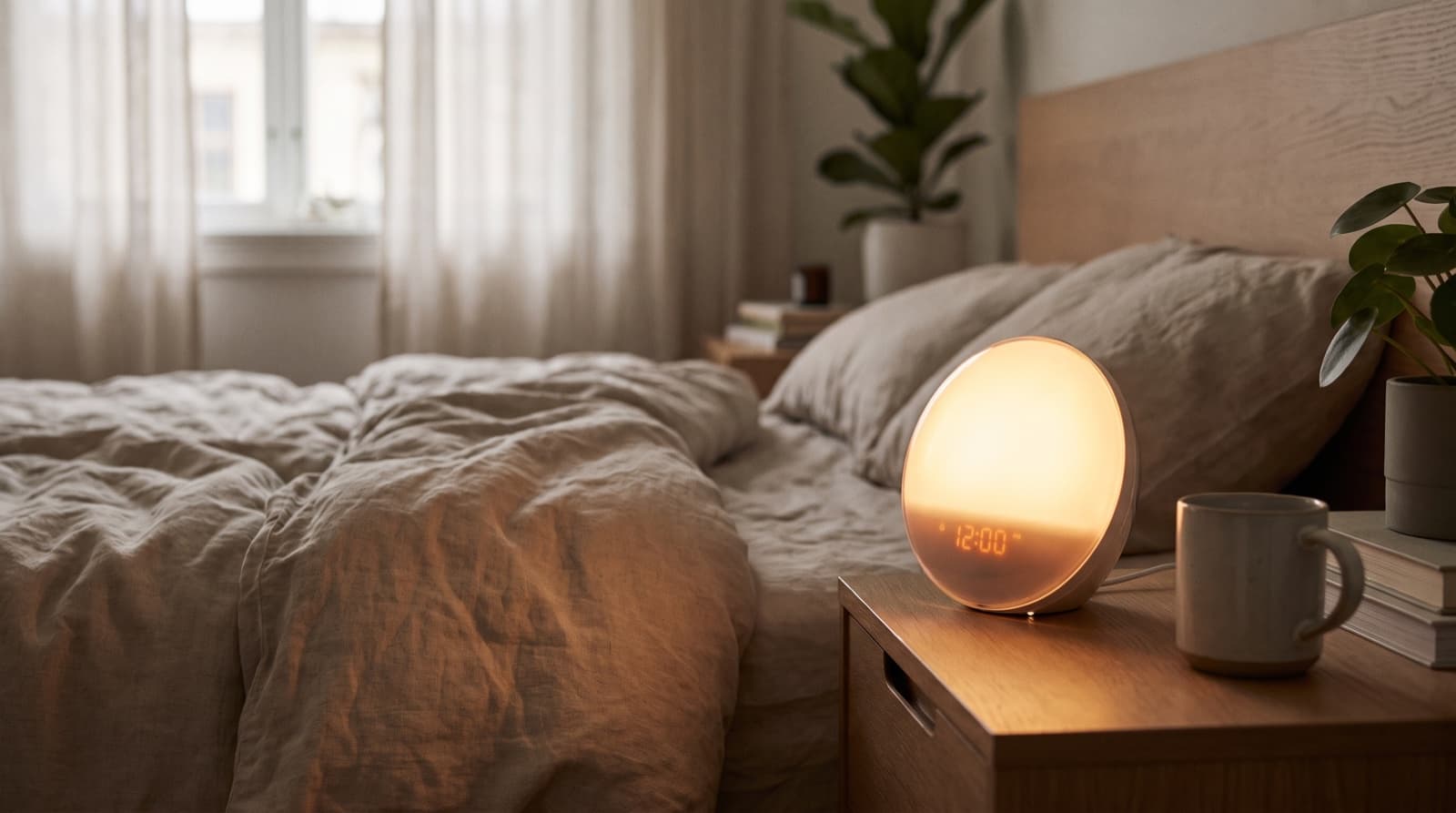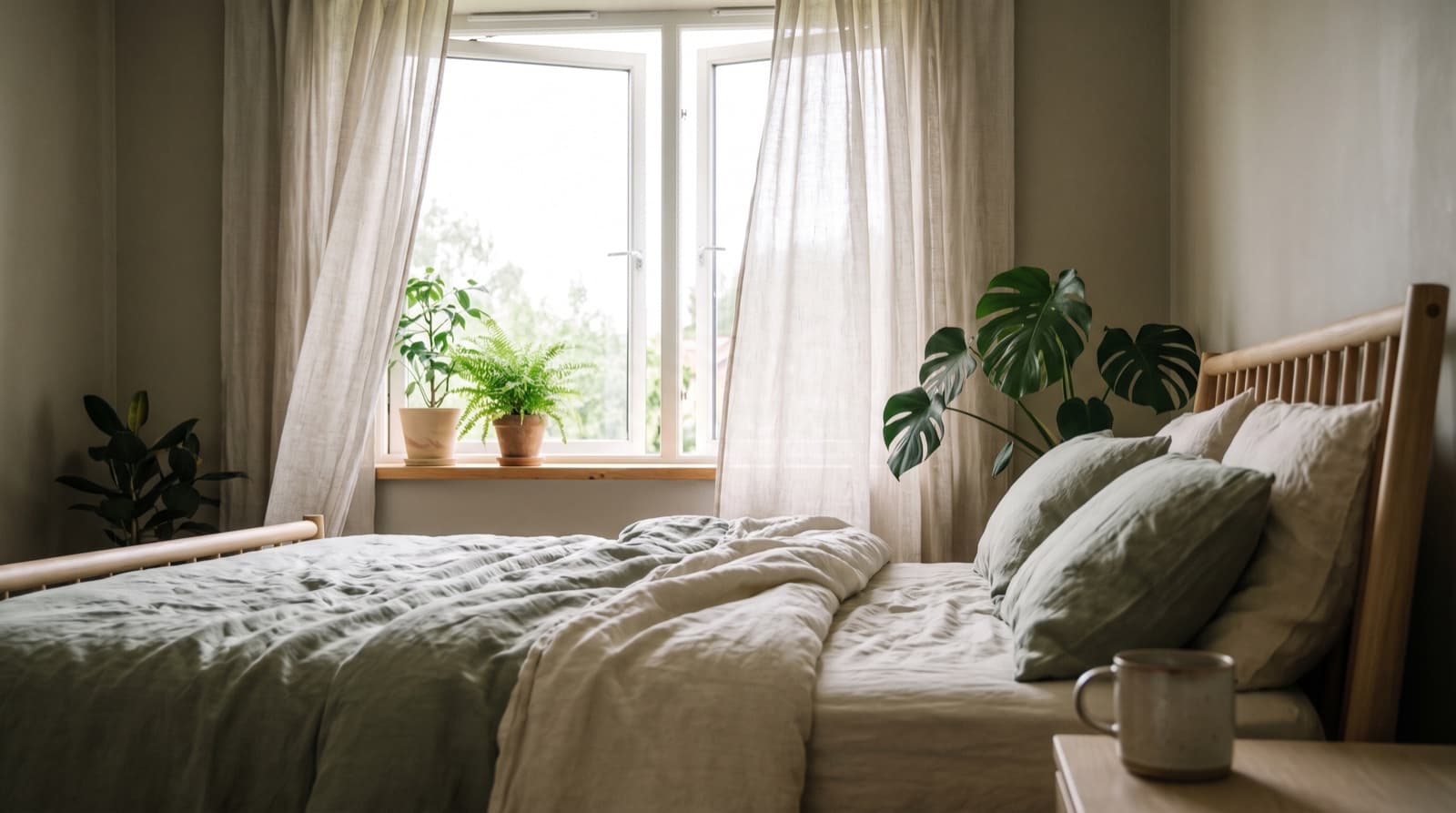
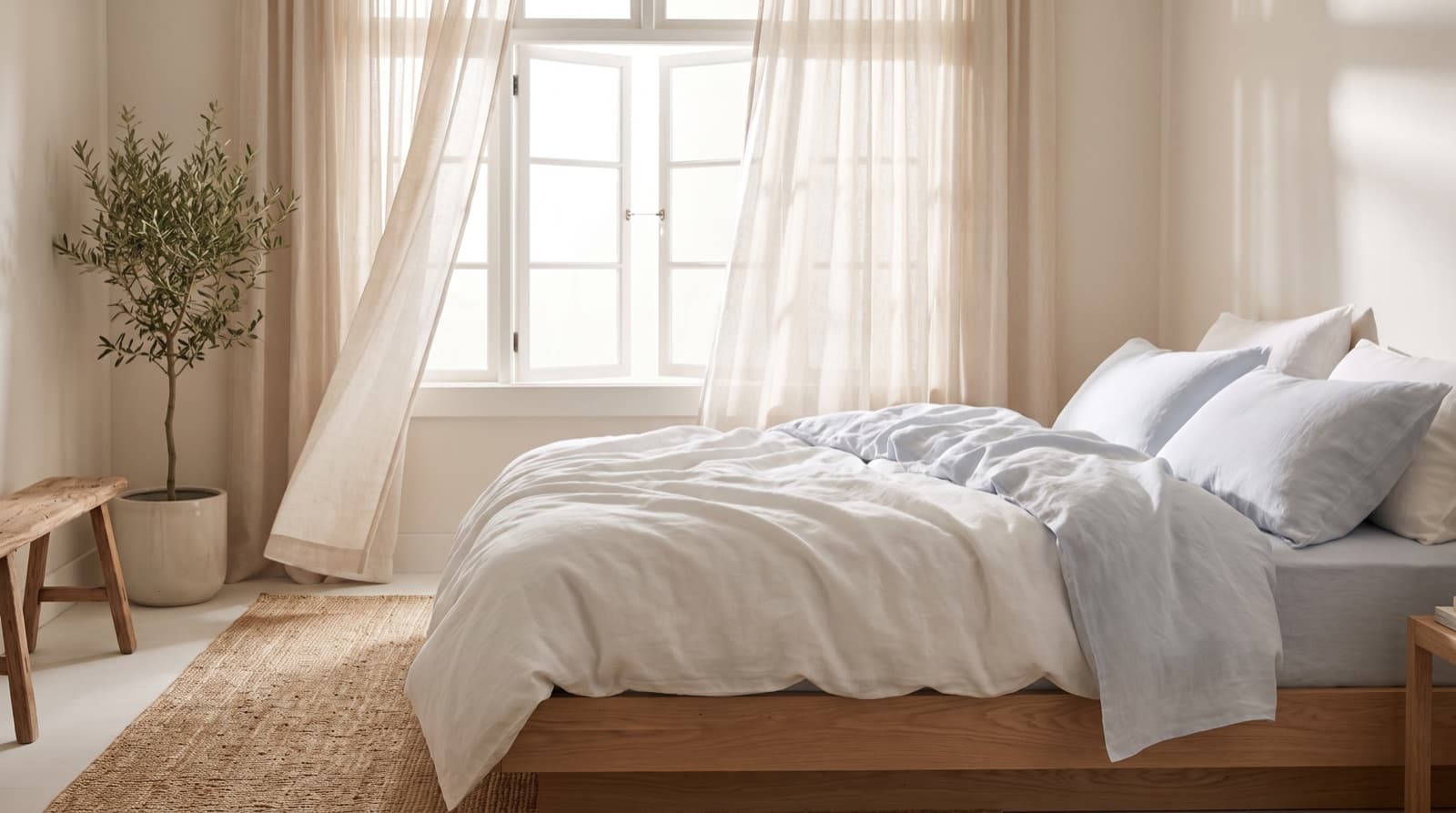
You can do everything else right — a dark room, no late caffeine, a sensible bedtime — and still lie there flipping the pillow to the cool side at midnight. When that happens, the culprit is often hiding in plain sight. The room is simply too warm.
Temperature is one of the most overlooked levers in a good night of sleep, and it is also one of the easiest to adjust. Here is why a cooler bedroom helps, the range most experts point to, and a few low-effort ways to get there.
Your body has to cool down to fall asleep
Falling asleep is not just a mental switch. It is a physical process that begins with a small, natural drop in your core body temperature. As bedtime approaches, your internal clock signals your body to shed heat — mostly through the skin of your hands and feet — which lowers your core temperature by roughly a degree and helps set the stage for sleep.
This dip works hand in hand with melatonin, the hormone that rises in the evening and nudges you toward rest. A cool environment supports the whole handoff. A warm one fights it. If the air around you keeps your body from releasing heat, that core-temperature drop stalls, and you stay in that frustrating not-quite-asleep zone.
According to the Sleep Foundation, a bedroom that runs too hot is one of the more common environmental reasons people struggle to drift off and to stay asleep through the night.
The range that works
For most adults, a bedroom around 65 to 68 degrees Fahrenheit (about 18 to 20 degrees Celsius) tends to support the natural drop in body temperature that sleep depends on. Treat it as a starting point and adjust to what feels right for you.
There is nothing magic about a single number. Your ideal setting depends on your bedding, what you wear, and your own comfort. But the direction is consistent across most guidance — cooler beats warmer. Cleveland Clinic and the NIH both point to a cool, slightly-below-room-temperature bedroom as the friendlier setting for sleep. If you tend to run cold, nudge toward the upper end of the range and add a light blanket rather than cranking the thermostat.
Humidity and bedding matter too
Air temperature is only part of the picture. High humidity makes a warm room feel warmer because it slows the evaporation of sweat, one of the ways your body sheds heat. Keeping humidity in a comfortable middle range — not swampy, not bone-dry — helps the room do its job.
Bedding is the other half. Breathable, natural fibers like cotton and linen let heat and moisture escape instead of trapping it against you. If you wake up damp or throw the covers off in the small hours, your bedding may be holding in more warmth than you realize. Lighter layers you can add or remove beat one heavy comforter you are stuck with all night.
The warm-bath paradox
Here is the part that surprises people. A warm bath or shower an hour or two before bed can actually help you sleep — even though the goal is to cool down. It sounds backward, but the mechanism makes sense.
Warming your skin in a bath draws blood toward the surface. When you step out, that widened blood flow helps your body release heat quickly, and your core temperature drops faster than it otherwise would. The warm bath is not fighting the cool-down. It is kick-starting it. Pair that with a cool bedroom and you have two forces pushing in the same direction.
Timing is the trick. Give yourself a window of an hour or so between the bath and bed so the cool-down has time to work. It fits neatly into the ideal wind-down routine and asks very little of you.
Easy ways to keep the room cool
You do not need to overhaul your bedroom. A few small moves usually do it.
Set the thermostat before bed
Program it to drop into the mid-60s about an hour before you turn in, so the room is already cool when you lie down.
Move air, not just cold
A fan helps sweat evaporate and keeps the air from feeling stagnant, which can make a room feel cooler than the thermostat alone suggests.
Block the day's heat
Close blinds or curtains in the afternoon so your bedroom is not radiating stored warmth by the time you go to sleep.
Choose breathable layers
Swap heavy synthetic bedding for cotton or linen, and keep a light blanket handy instead of one thick duvet.
The takeaway
A cooler bedroom is one of the rare sleep upgrades that is cheap, fast, and easy to test tonight. Aim for the mid-60s, keep the air moving, pick breathable bedding, and let a warm bath do its quiet work beforehand. Work with your body's natural cool-down instead of against it, and falling asleep tends to get a little easier.
References
- Sleep Foundation — Best Temperature for Sleep Sleep Foundation ↗
- Cleveland Clinic — What Is the Best Temperature for Sleep Cleveland Clinic ↗
- NIH NHLBI — Your Guide to Healthy Sleep NIH ↗
Placeholder bio. Jordan translates sleep and nutrition research into practical guidance. Replace with a real contributor before publishing.
Read full bio →