There is a special misery to a jarring alarm in a pitch-black room. One second you are asleep, the next a buzzer is dragging you up by the collar. Sunrise alarm clocks promise a kinder exit — a slow glow that brightens over half an hour so you drift awake instead of getting yanked. The question is whether that gentler morning is real, or just a nicer story.
What a sunrise alarm actually does
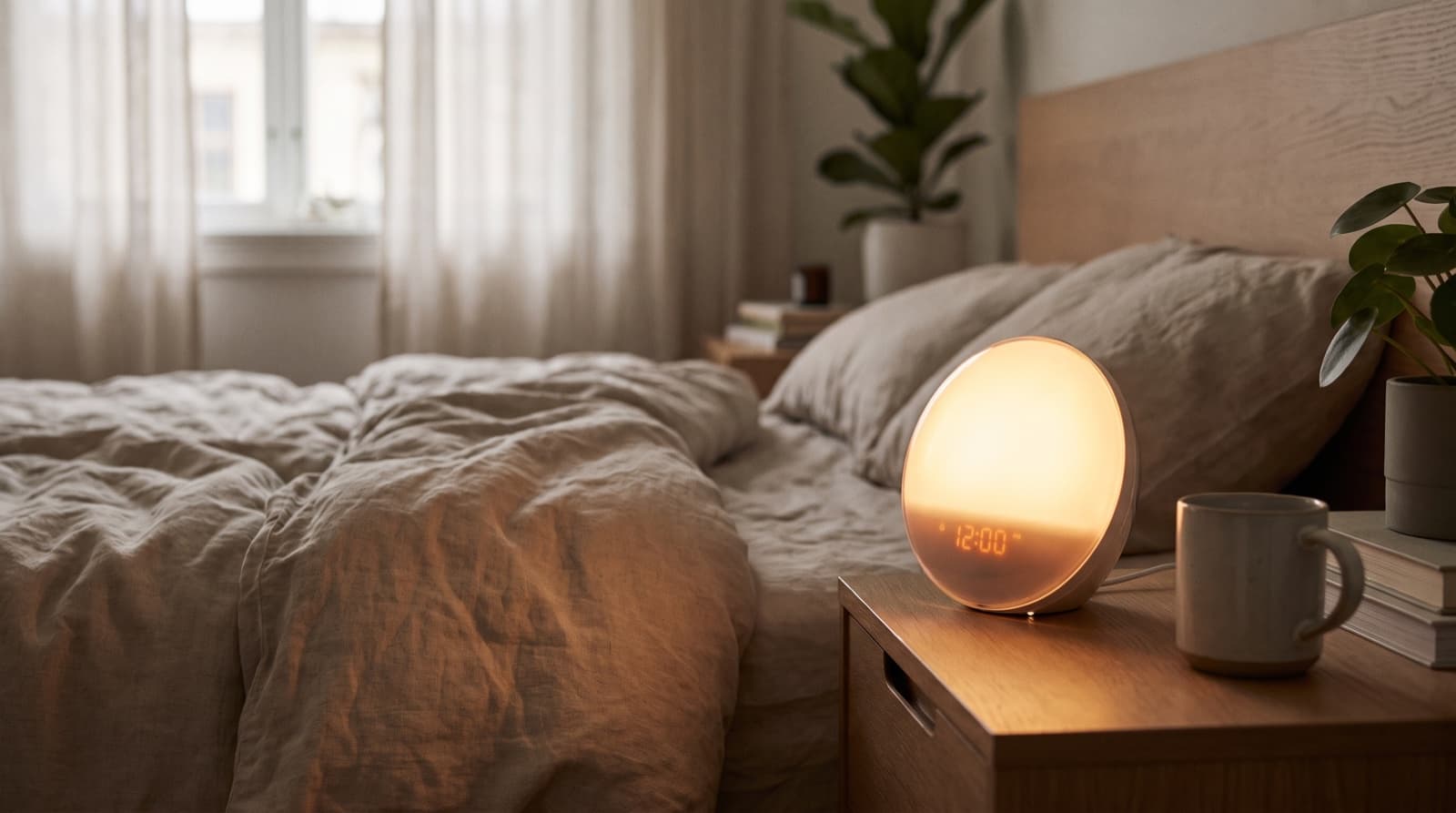
A sunrise alarm is a lamp on a timer. Set your wake hour and it begins to glow faintly some twenty to forty minutes beforehand, slowly climbing to full brightness, often with a soft sound to finish the job. The idea is to mimic a natural dawn creeping through the curtains rather than a horn going off in the dark.
Waking a little more gently
There is a sensible mechanism behind the appeal. Your brain keeps tracking light even while your eyes are closed, and a slow brightening in the room can ease you out of the deepest stages of sleep before the final cue arrives. Instead of being ripped out of a heavy sleep, you tend to surface from a lighter one, which simply feels less brutal.
The grogginess question
That fuzzy, heavy feeling in the first minutes after waking is often the culprit behind hating your alarm. By nudging you awake during lighter sleep, a sunrise alarm may take the edge off that grogginess, so the handoff into the day is smoother. Plenty of people who switch report that mornings feel calmer, even if the total sleep did not change.
Where they fall short
Here is the honest limit. The light from a bedside sunrise clock, however pleasant, is dim compared with the outdoors. Even a modest, cloudy morning outside is dramatically brighter than a glowing lamp a couple of feet from your face, and it is that outdoor intensity your body clock is really built to read.
So a sunrise alarm is a good way to wake, but it is a weak way to set your rhythm. It can make the moment of waking gentler without delivering the strong, clock-anchoring signal that keeps your sleep and energy on time. Treat it as the opening act, not the whole show.
Set it to your real wake time
Choose one consistent wake hour and let the light begin brightening twenty to thirty minutes before it. Consistency matters more than the exact minute you pick.
Let the glow do the waking
Keep the device across the room or on the nightstand and let the gradual light ease you up. Skip the snooze so you finish waking during that lighter, gentler window.
Then get outside
Within an hour of getting up, step into real daylight for ten to thirty minutes. This is where the actual clock-setting happens, and no lamp fully replaces it.
Think of the sunrise alarm and the morning walk as a pair. The alarm handles a softer wake-up indoors, and the outdoor light handles the deeper job of anchoring your rhythm for the day.
If you want the science of why that outdoor step matters so much, it comes down to the power of morning sunlight and the signal it sends your clock.
Who might like one
A sunrise alarm earns its keep in a few situations. If you wake before the actual sunrise for much of the year, it hands you a dawn that the season is withholding. If you share a room and cannot fling the curtains open at will, the lamp gives you a private glow. And if you simply dread your buzzer, a gentler wake-up can make the whole morning feel less like a fight.
It is not magic, and it will not fix a schedule that is genuinely off. If you are going to bed too late or sleeping too little, a prettier alarm cannot make up the difference. The device improves how you wake, not how much or how well you slept.
The bottom line
Do sunrise alarm clocks work? For a softer, less groggy wake-up, many people find they help, and there is a reasonable rationale for it. Just keep your expectations honest. Use one to leave sleep more gently, then follow it with real outdoor light to actually set your clock. The gentle glow gets you out of bed. The morning sun keeps your rhythm running.
References
- Sleep Foundation — Light and Sleep Sleep Foundation ↗
- NIH NIGMS — Circadian Rhythms NIH ↗
- Harvard Health — Blue Light Has a Dark Side Harvard Health ↗
Placeholder bio. Jordan translates sleep and nutrition research into practical guidance. Replace with a real contributor before publishing.
Read full bio →