The trick to falling asleep quickly at night has less to do with your bedtime routine than you would think. It starts about sixteen hours earlier, in the first hour after you open your eyes. What you do with morning light quietly sets the timing for everything that follows — including how easily you drift off once it gets dark.
Your body runs on a clock, and light sets it
Deep in your brain sits a master clock that keeps your body on a roughly 24-hour schedule. It governs when you feel alert, when your temperature rises and falls, and when the sleep hormone melatonin is released. Left completely alone, this clock tends to drift a little longer than 24 hours, so it needs a daily signal to stay accurate. That signal is light.
The cells that read the morning
Your eyes contain a special set of light-sensing cells called ipRGCs. They are not the cells you use to see faces or read words. Their job is simply to measure how much bright, blue-rich light is around and report it to the master clock. When those cells catch strong morning light, they send a clear message that the day has begun. That message anchors the clock, which in turn schedules your melatonin release for roughly fourteen to sixteen hours later — right around bedtime.
Miss that morning signal and the clock has nothing firm to lock onto. It drifts, your melatonin timing gets fuzzy, and you end up wide awake at midnight wondering why.
Morning light and the cortisol wave
There is a second reason the first hour matters. Shortly after you wake, your body produces a natural surge of cortisol. Cortisol has a bad reputation, but this morning wave is a good thing. It is the hormone of getting going, lifting your alertness, focus, and mood for the day ahead.
Bright morning light helps reinforce this cortisol rhythm, giving you a cleaner, more energetic start. A strong morning peak is also associated with a healthier dip later on, which is part of what lets you wind down at night. In other words, a bright morning and a sleepy evening are two ends of the same wave.
How much light, and when
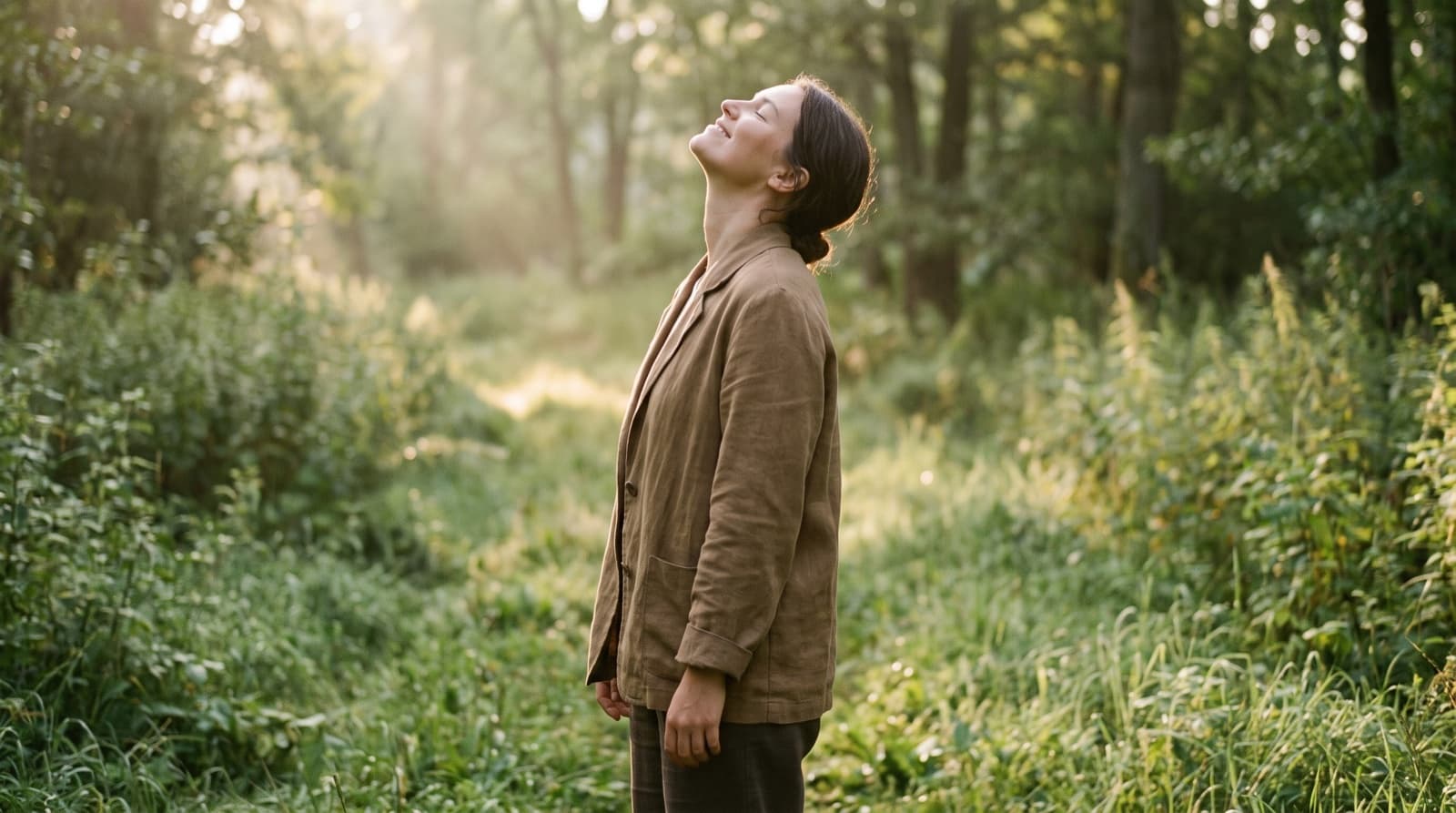
The timing is simple. Aim to get outside within the first hour of waking. On a clear, sunny morning, ten to twenty minutes is a reasonable target. Outdoor light is dramatically brighter than anything indoors, even on a gray day, which is why stepping outside beats sitting under your kitchen lights.
On dim, overcast, or winter mornings you simply need more time — closer to thirty minutes or more — because the available light is weaker. The good news is that clouds do not cancel the benefit. Overcast daylight still delivers far more of the signal your ipRGCs are looking for than any lamp in your home.
A few easy ways to get it in:
Take a short morning walk
A ten to twenty minute walk soon after waking is the gold standard. You get the light, some gentle movement, and a clear cue to your brain that the day has started.
Drink your coffee outside
Move your first cup to a porch, balcony, or backyard. You are already sitting still for a few minutes, so let it double as your light appointment.
Sit by the brightest window
On days you truly cannot get out, park yourself next to the largest, sunniest window you have. It is a weaker dose than real daylight, so give it more time and open the blinds all the way.
Skip sunglasses for these few minutes so the light can reach your eyes — but never look directly at the sun. Ordinary indirect daylight is all your clock needs.
This habit stacks neatly onto things you already do, which is what makes it stick. It works best alongside a steady wake time, since a consistent morning is one of the strongest ways to keep your circadian rhythm on track.
The flip side is guarding your eyes at night
Here is where it all connects. The very system that helps you in the morning can work against you after sunset. Those same light-sensing cells cannot tell the difference between the sun and a bright screen or ceiling light. Feed them a lot of blue-rich light late in the evening and they send the daytime message all over again, pushing your melatonin later and undoing the clean signal you built that morning.
So the strategy has two halves. Chase bright light early, then dial it down late. Get outside soon after waking to anchor the clock, then in the last hour or two before bed keep your surroundings dim and filter the blue-rich light reaching your eyes. Done together, these two habits point the same direction — telling your body clearly when it is day and when it is night.
You cannot control every variable that affects your sleep. But morning light is free, it takes minutes, and it may be the single most powerful lever you are not yet pulling. Tomorrow, before you reach for your phone, open the door and step into the light. Your midnight self will thank you.
References
- Sleep Foundation — Light and Sleep Sleep Foundation ↗
- NIH NIGMS — Circadian Rhythms NIH ↗
- Harvard Health — Blue light has a dark side Harvard Health ↗
Placeholder bio. Jordan translates sleep and nutrition research into practical guidance. Replace with a real contributor before publishing.
Read full bio →