Naps have a reputation problem. Depending on who you ask, they are either the secret to a sharp afternoon or the reason you cannot sleep at night. The truth is that a nap is neither good nor bad on its own — what decides the outcome is how long you sleep and when you do it.
What a nap does to your night
To understand naps, it helps to understand the pressure that builds sleep. From the moment you wake, a chemical called adenosine slowly accumulates in your brain. The longer you are awake, the more it builds, and the stronger your urge to sleep becomes by evening. That mounting drive is your sleep pressure, and it is a big part of why you drop off easily at night after a long, full day.
Here is the catch. Sleeping — even for twenty minutes in the afternoon — bleeds off some of that pressure. A short nap releases just a little, leaving plenty for bedtime. A long or late nap releases a lot, and you arrive at night without enough drive to fall asleep cleanly. Same activity, very different result.
The short, early nap that helps
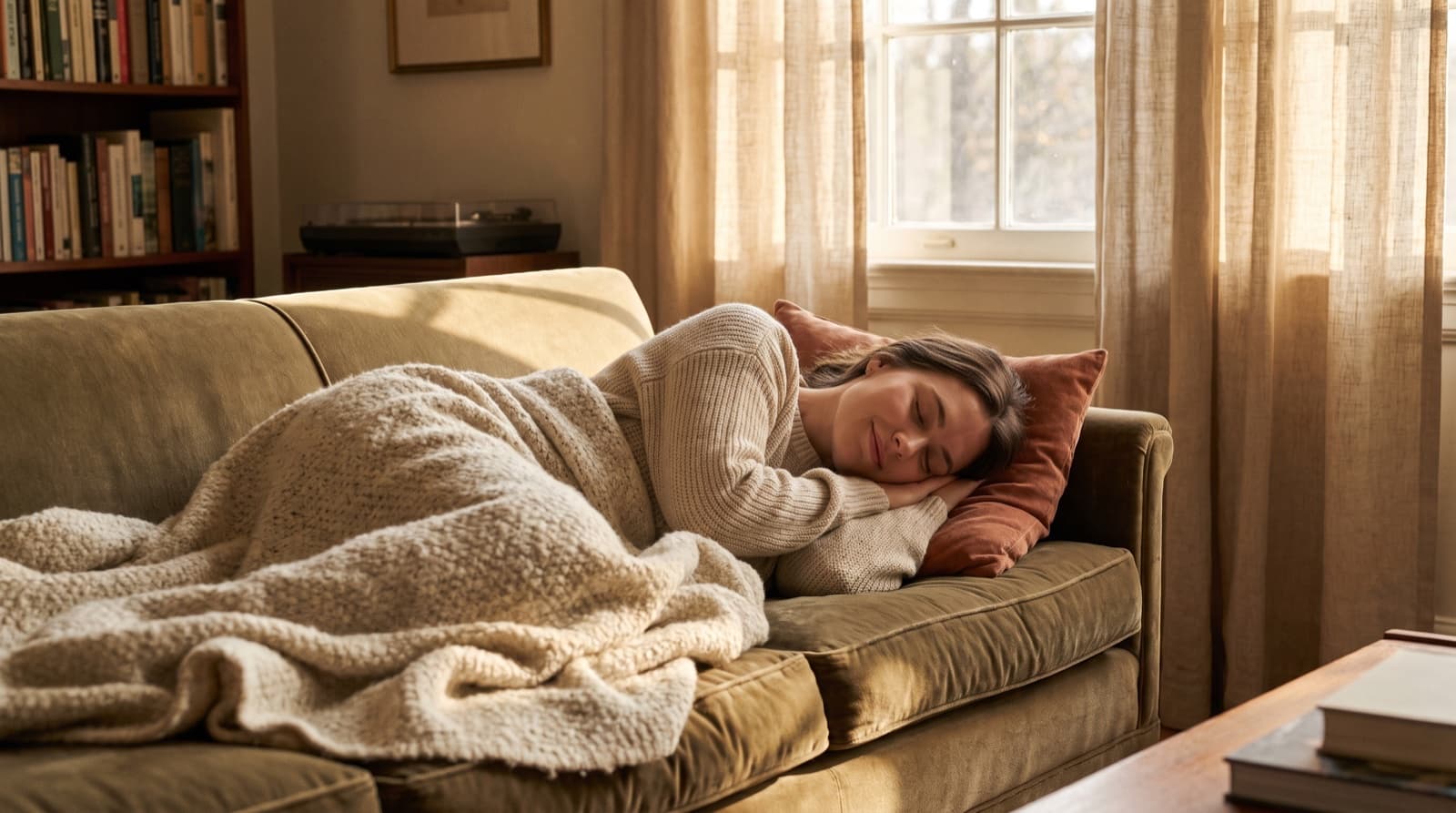
Used well, a nap can be a genuine boost. A brief rest in the early afternoon lines up with the natural dip in alertness most people feel after lunch, and it can restore focus and mood without stealing from the night ahead.
Set an alarm before you lie down. Keeping a nap short is the whole game, and it is far easier to wake on cue than to trust yourself to surface after exactly twenty minutes.
The reason short wins is simple. Stay under about twenty minutes and you tend to stay in lighter stages of sleep, so you wake up clear-headed. Drift past that and you can slip into deep sleep, where being woken leaves you foggy — a state that can last far longer than the nap itself.
There is even a small trick worth knowing. Some people drink a coffee right before a short nap, so the caffeine kicks in around the twenty-minute mark and helps them wake up sharp. It is not magic, but it lines up two mild boosts at once. Just keep that caffeine to the early afternoon, since a late cup can linger for hours and quietly work against you when you finally want to sleep for real.
The long, late nap that hurts
The naps that wreck your night share two traits: they run long, and they happen late. A ninety-minute nap at five in the evening feels wonderful and then quietly drains the sleep pressure you needed for bedtime. Hours later you are lying awake, blaming stress or screens, when the real culprit was that late-afternoon sprawl on the couch.
If you notice you are relying on long daily naps just to get through, treat that as information rather than a habit to lean on. Persistent daytime sleepiness usually means the nights are not doing their job, and the better fix is upstream — steadier sleep timing, brighter mornings, and a darker, calmer evening.
How to nap well
For most people, the recipe is short and simple. Keep it to roughly ten to twenty minutes, take it in the early afternoon rather than the evening, and make it the exception rather than the daily default. Do that and a nap can top up your afternoon without touching your night.
It also helps to nap somewhere that already feels like rest. A dim, cool spot with the blinds drawn signals your body far better than a bright room with sun streaming in, and it lets you drift off quickly instead of lying there burning through your short window. The same darkness that helps you sleep at night helps you nap in the afternoon.
A few people should be more cautious. If you already struggle to fall asleep or stay asleep, napping at all can make the night harder, and you may rest better by skipping the nap and channeling that tiredness into an earlier, easier bedtime. And if you feel you need long naps most days no matter how much you sleep, that is worth mentioning to a clinician rather than managing alone.
A nap is a tool, not a treat or a crime. Keep it short, keep it early, and it stays firmly on your side — a small recharge that leaves your nighttime sleep exactly where you need it.
References
- Mayo Clinic — Napping Do's and Don'ts for Healthy Adults Mayo Clinic ↗
- Sleep Foundation — Napping Sleep Foundation ↗
- NIH NIGMS — Circadian Rhythms NIH ↗
Placeholder bio. Jordan translates sleep and nutrition research into practical guidance. Replace with a real contributor before publishing.
Read full bio →