Here is something that surprises most people — feeling sleepy is not only about how long you have been awake. It is also about your temperature. Your body has to shed a little heat before it will let you fall asleep, and that drop is on a schedule set by your internal clock.
Understand this rhythm and a lot of scattered sleep advice suddenly clicks into place.
Your temperature runs on a clock
Your core body temperature is not constant. It rises through the day, peaks in the early evening, then falls through the night to its lowest point in the early morning hours. That evening decline is one of the signals that opens the door to sleep — and the morning rise helps bring you back up to wakefulness.
That rhythm is governed by the same master clock that controls melatonin and alertness. And like the rest of that clock, it takes its cues from light. Bright morning light and dark evenings keep the temperature rhythm anchored where it should be.
The warm-to-cool trick
This is where it gets counterintuitive. Warming your skin actually helps your core cool down. A warm shower or bath, or even just warm socks, sends blood to the surface of your skin, and that helps your body release heat afterward — nudging the core-temperature drop that invites sleep.
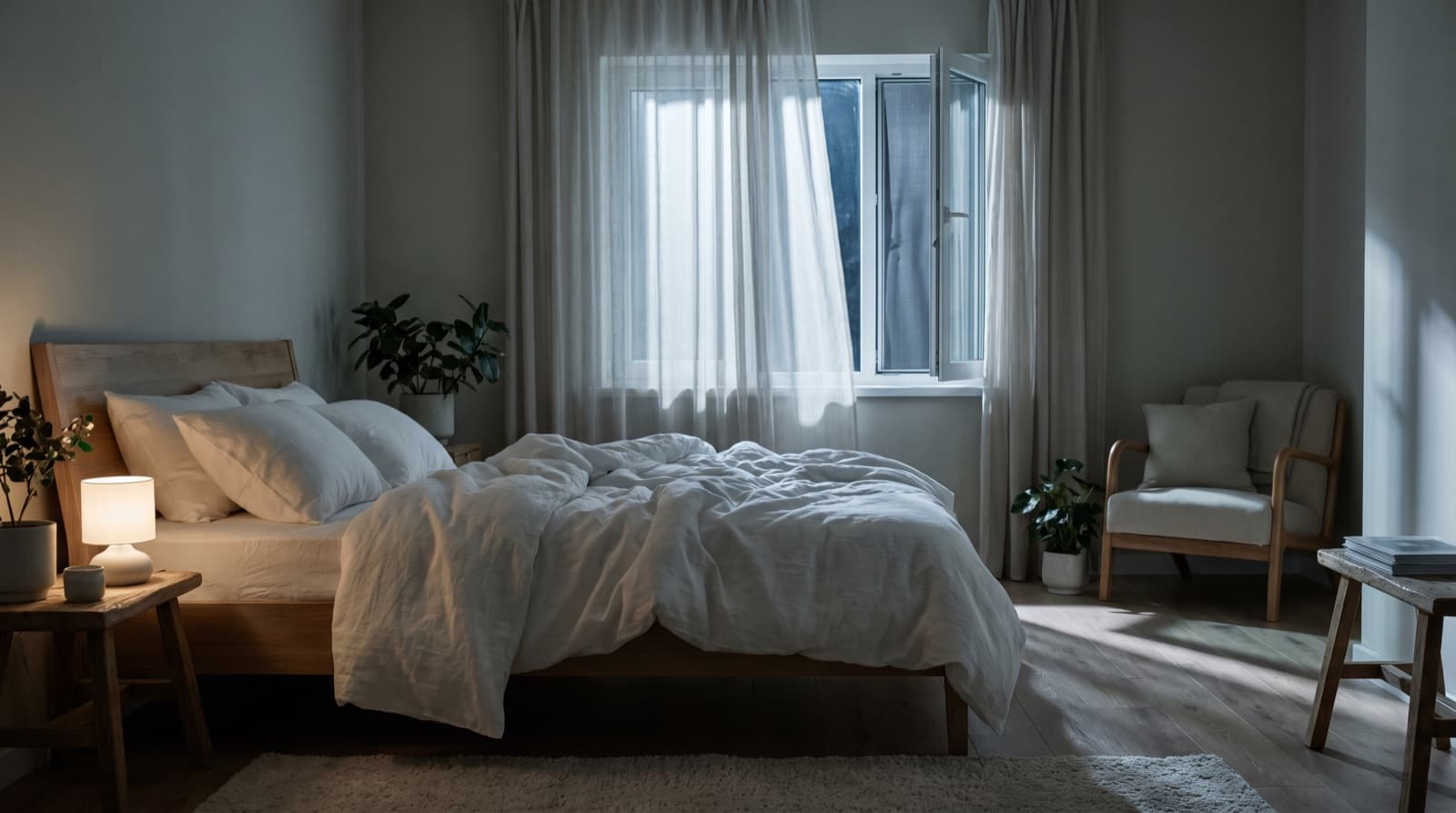
It is also why a hot, stuffy bedroom feels so hard to sleep in. If the room cannot pull heat away from you, your body cannot make the drop it is trying to make.
How to work with the rhythm
You cannot feel your core temperature changing, but you can set the stage for it. Keep the bedroom cool. Give yourself a warm shower an hour or so before bed. And protect the clock that drives the whole rhythm by getting bright light in the morning and keeping your evenings dim — the same habits behind the ideal bedroom temperature.
If you tend to run hot at night, try lighter bedding and a cooler room before anything else. Helping heat escape is usually easier than forcing yourself to feel sleepy.
The bottom line
Sleep is a temperature event as much as a tiredness event. Your body wants to cool down on a nightly schedule — your job is to let it. Keep the room cool, use the warm-to-cool trick, and protect the light-driven clock behind it all, and you are working with one of the oldest signals your body has.
References
- NIH NIGMS — Circadian Rhythms NIH ↗
- Sleep Foundation — Best Temperature for Sleep Sleep Foundation ↗
- Cleveland Clinic — Best Temperature for Sleep Cleveland Clinic ↗
Placeholder bio. Morgan oversees editorial standards and the fact-check process. Replace with a real editor before publishing.
Read full bio →