Sleep experts love to say it — keep screens out of the bedroom. And they are not wrong. But for most people, a total ban collides with real life, where the phone is the alarm, the book, and the wind-down all at once. So let us look at why the advice exists, and what to do if you are not ready to give up your screens entirely.
Why screens and beds are a tricky mix
Screens work against sleep two different ways. The first is light — the blue-rich glow of a phone or TV signals daytime to your brain and holds back melatonin. The second is engagement. Feeds, shows, and messages keep your mind alert exactly when it should be powering down.
There is also a quieter, third problem — association. Every night you spend lying in bed scrolling teaches your brain that the bed is a place to be awake and stimulated. Over time, that makes it harder to fall asleep there at all.
The case for a screen-free bedroom
A cleaner sleep signal
With no glowing screens, your brain gets the darkness it needs to wind down and keep melatonin flowing.
A stronger bed–sleep link
When the bed is used for sleep and not scrolling, lying down becomes a cue to feel sleepy rather than switched on.
Fewer late-night rabbit holes
Leaving the phone in another room removes the just-five-more-minutes trap that quietly steals an hour.
A realistic middle ground
If a full ban is not going to happen, do not let perfect be the enemy of good. You can keep the screens and still protect your sleep by handling the two real problems.
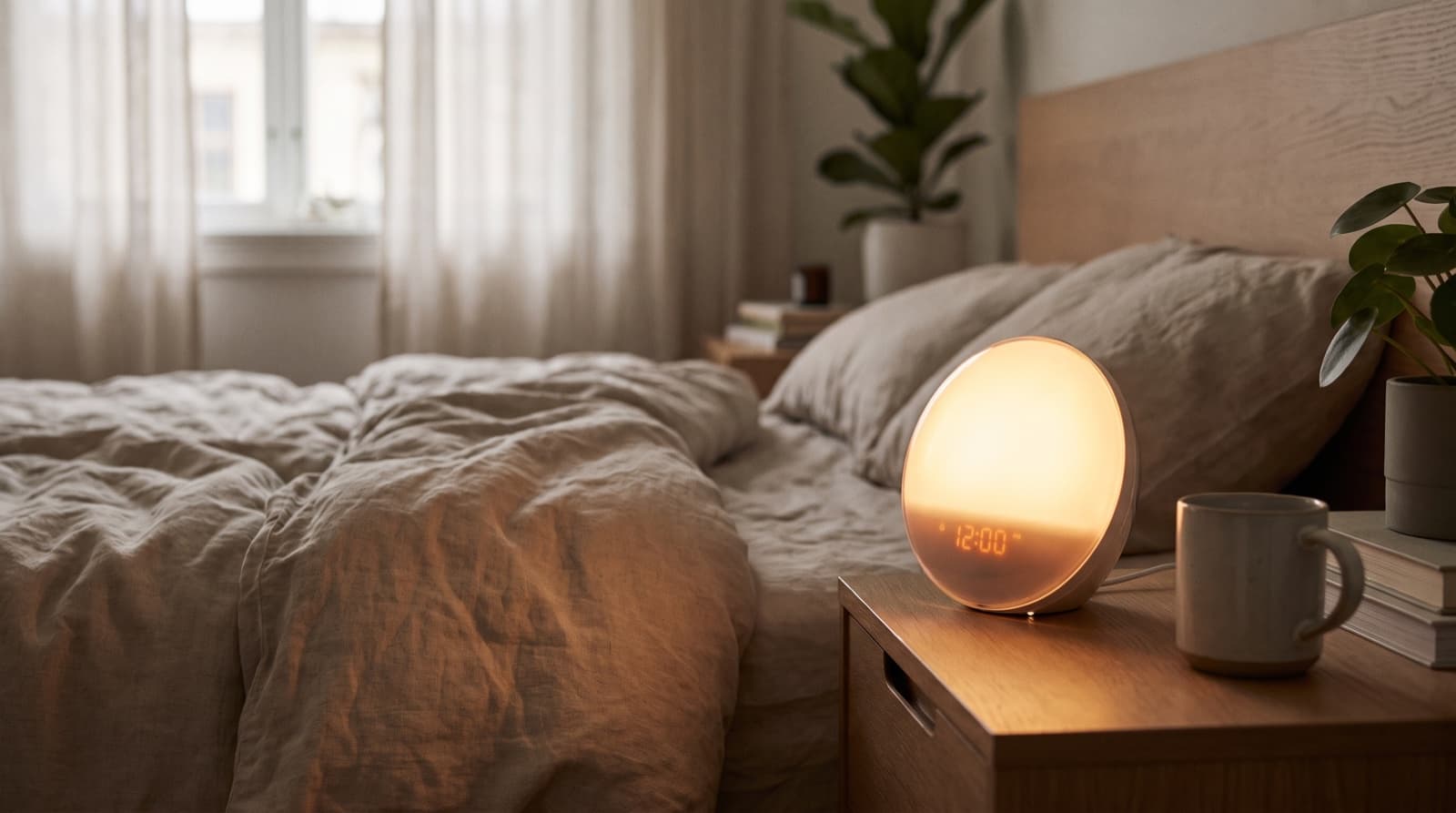
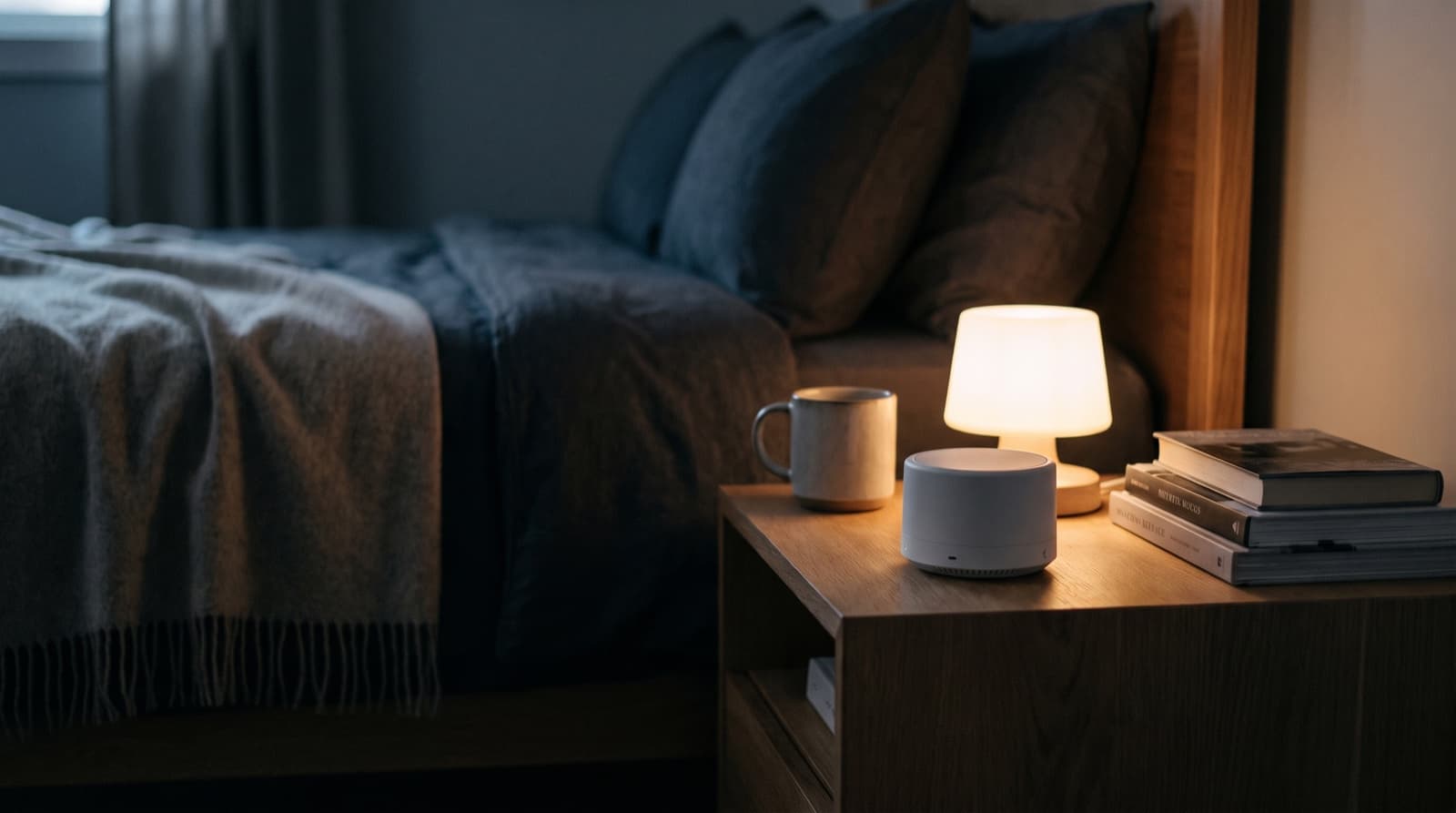
For engagement, set a soft cut-off and swap the phone alarm for a simple clock so the phone can live across the room. For light, dim and warm your screens after sunset — and filter the light that reaches your eyes so the glow stops reading as daytime.
Try a one-week experiment — charge your phone in the kitchen and use a cheap alarm clock. Most people are surprised how much faster they fall asleep when the bed is just for sleep.
Where to land
You do not have to choose between a monastery and the status quo. If you can move screens out of the bedroom, do it — it is the cleanest option. If you cannot, manage the light and the timing so the bed stays a place for rest. For more on the light side of the equation, see why you cannot sleep after screens.
Either way, the aim is the same — when you lie down, your brain should think sleep, not screen.
References
- Sleep Foundation — How Electronics Affect Sleep Sleep Foundation ↗
- Cleveland Clinic — Put the Phone Away Before Bed Cleveland Clinic ↗
- Harvard Health — Blue light has a dark side Harvard Health ↗
Placeholder bio. Jordan translates sleep and nutrition research into practical guidance. Replace with a real contributor before publishing.
Read full bio →