If your street, your neighbors, or a snoring partner keep jolting you awake, steady background sound can genuinely help. It works by narrowing the gap between quiet and loud — so a slamming door or a passing car no longer stands out sharply enough to pull you out of sleep.
But once you start looking, you find a rainbow of options — white, pink, brown, even green noise. Here is what the labels actually mean.
What the colors mean
White noise
Equal energy across all frequencies at once, like radio static or a fan. It masks a wide range of sounds, though some people find it a little harsh.
Pink noise
More energy in the lower frequencies, so it sounds softer and fuller — think steady rain or wind. Many people find it more soothing than white.
Brown noise
Even more weight in the low end, a deep rumble like a waterfall or distant thunder. It is the gentlest of the three for a lot of listeners.
Which one should you use?
There is no single winner. The best sound is the one that fades into the background for you and covers the disruptions in your particular home. If white noise feels sharp, drop to pink or brown. If you sleep near traffic, the low rumble of brown noise often masks it well.
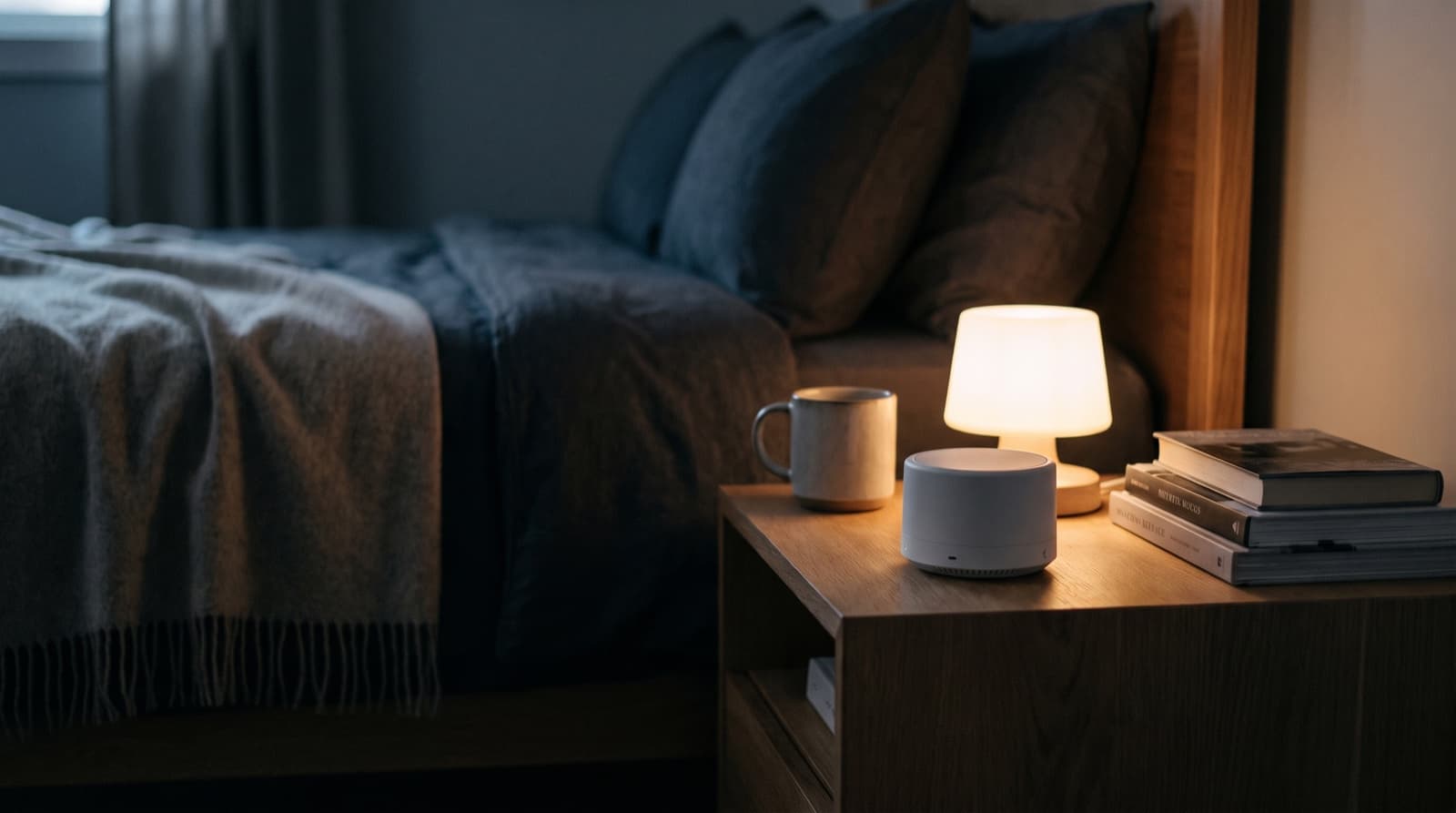
The delivery matters too. A dedicated sound machine tends to loop more smoothly than a phone app — and it keeps the phone, and its bright screen, out of the bed entirely.
Use it well
Keep the volume low — just loud enough to soften intrusions, not to become an intrusion itself. Aim for a steady sound rather than music with lyrics or big dynamic swings, which can pull your attention. And place the machine between you and the noise source when you can.
Try one color for a few nights before switching. Give your brain time to stop noticing it — that is exactly when it is doing its job.
The bigger picture
Sound is a helper, not the whole story. It pairs best with the other pillars of a good sleep environment — a dark, cool room and a calm wind-down. If you are building your space from scratch, start with the best bedroom setup and add sound where noise is the problem you actually have.
Get the room quiet enough — or masked well enough — and one of the most common reasons for 3 a.m. wake-ups simply stops happening.
References
- Sleep Foundation — White Noise Sleep Foundation ↗
- Cleveland Clinic — Colors of Noise Cleveland Clinic ↗
- NIH NHLBI — Your Guide to Healthy Sleep NIH ↗
Placeholder bio. Jordan translates sleep and nutrition research into practical guidance. Replace with a real contributor before publishing.
Read full bio →