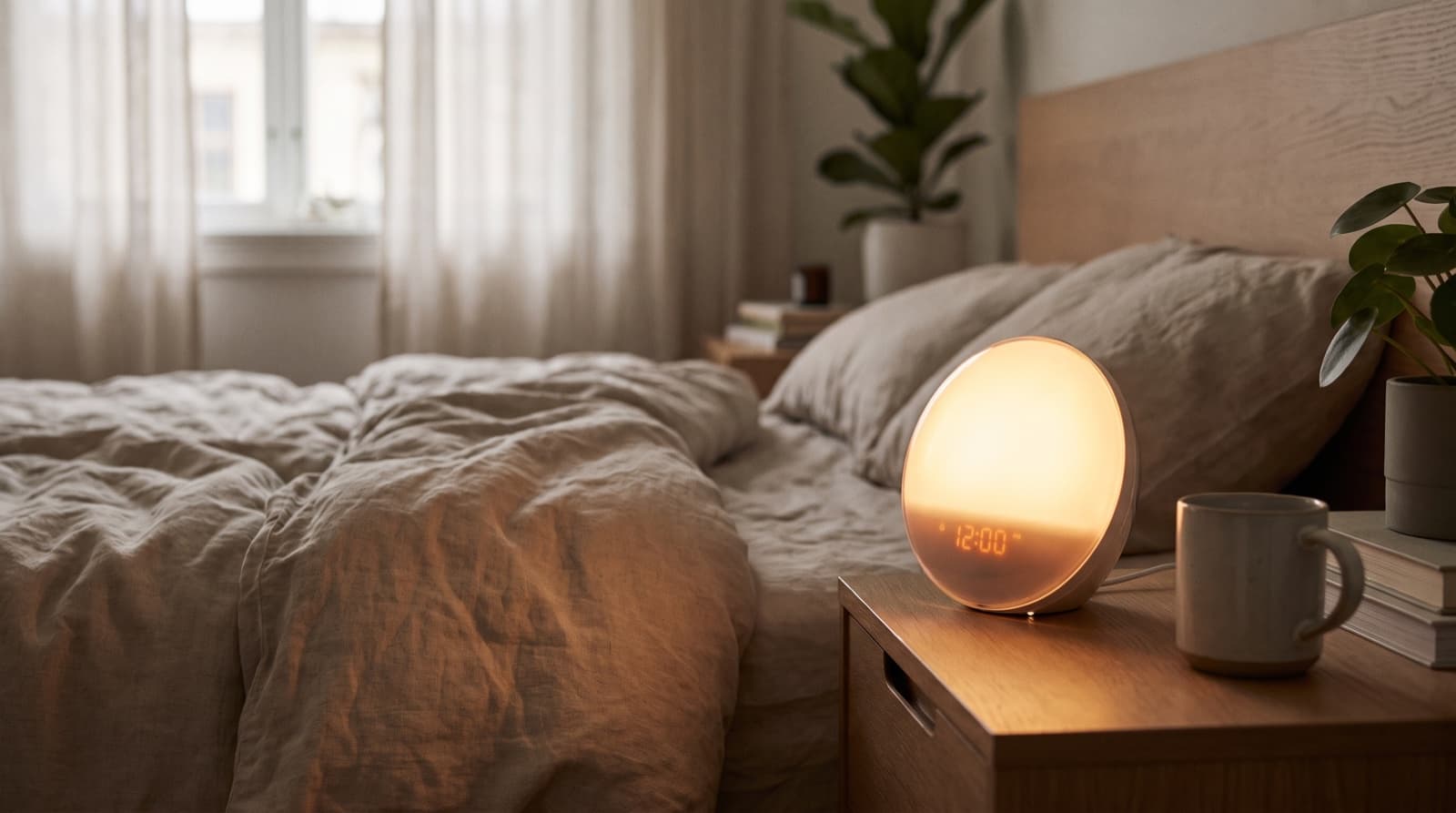
Your bedroom is a tool. Long before willpower or supplements enter the picture, the room itself is quietly telling your brain whether it is safe to power down. Get the room right and sleep gets easier on its own.
The good news is that a great sleep environment is not expensive or complicated. It comes down to four pillars — and the most important one is completely free.
The four pillars
Dark
Darkness is the signal your body uses to release melatonin. Block outside light, cover glowing electronics, and — just as importantly — manage the light you take in during the last hour before bed.
Cool
Falling asleep depends on your core temperature dropping. A room around 65 to 68 degrees Fahrenheit helps that happen instead of fighting it.
Quiet
Sudden noises pull you out of deep sleep even if you do not fully wake. Steady, gentle sound can mask the disruptions you cannot remove.
Calm
An uncluttered room used mainly for sleep helps your brain associate the bed with rest rather than work or worry.
Start with light
If you only change one thing, change the light. Blackout curtains or a good sleep mask handle the light coming in, and a strip of tape over that bright router LED handles the light already in the room.
But the light that matters most is the light in the hour before you lie down. Bright, blue-rich light from screens and overhead bulbs in the evening pushes your body clock later and holds melatonin back. Dimming and warming your lighting after sunset — the heart of the 20-minute bedroom reset — is the single highest-leverage move in the whole room.
Then temperature, sound, and calm
Once the light is handled, work down the list. Nudge the thermostat cooler, or use lighter bedding and a fan. Add steady sound if your street or household is unpredictable. And clear the surfaces — a calm room is a small daily cue that the day is done.
Do a two-minute walk-through tonight. Stand in your dark bedroom and look for any glowing light, listen for any hum, and notice the temperature. Fix the most obvious thing first, then revisit next week.
Put it together
You do not need the perfect setup to sleep better — you need the room working with your biology instead of against it. Dark, cool, quiet, calm. Handle the light first, then the rest falls into place, and most nights your brain gets the message that it is finally safe to let go.
References
- Sleep Foundation — Bedroom Environment Sleep Foundation ↗
- NIH NHLBI — Your Guide to Healthy Sleep NIH ↗
- Cleveland Clinic — Sleep Hygiene Tips Cleveland Clinic ↗
Placeholder bio. Morgan oversees editorial standards and the fact-check process. Replace with a real editor before publishing.
Read full bio →