You can nail your bedtime and still sleep badly if the room is working against you. The good news: your bedroom is one of the few sleep factors you fully control, and most of the wins take a single evening to set up. Below are the four levers that matter, ranked from most to least impactful — light, temperature, sound, and comfort. Give this reset about 20 minutes tonight and let the room do the heavy lifting.
Lever 1: Light (the big one)
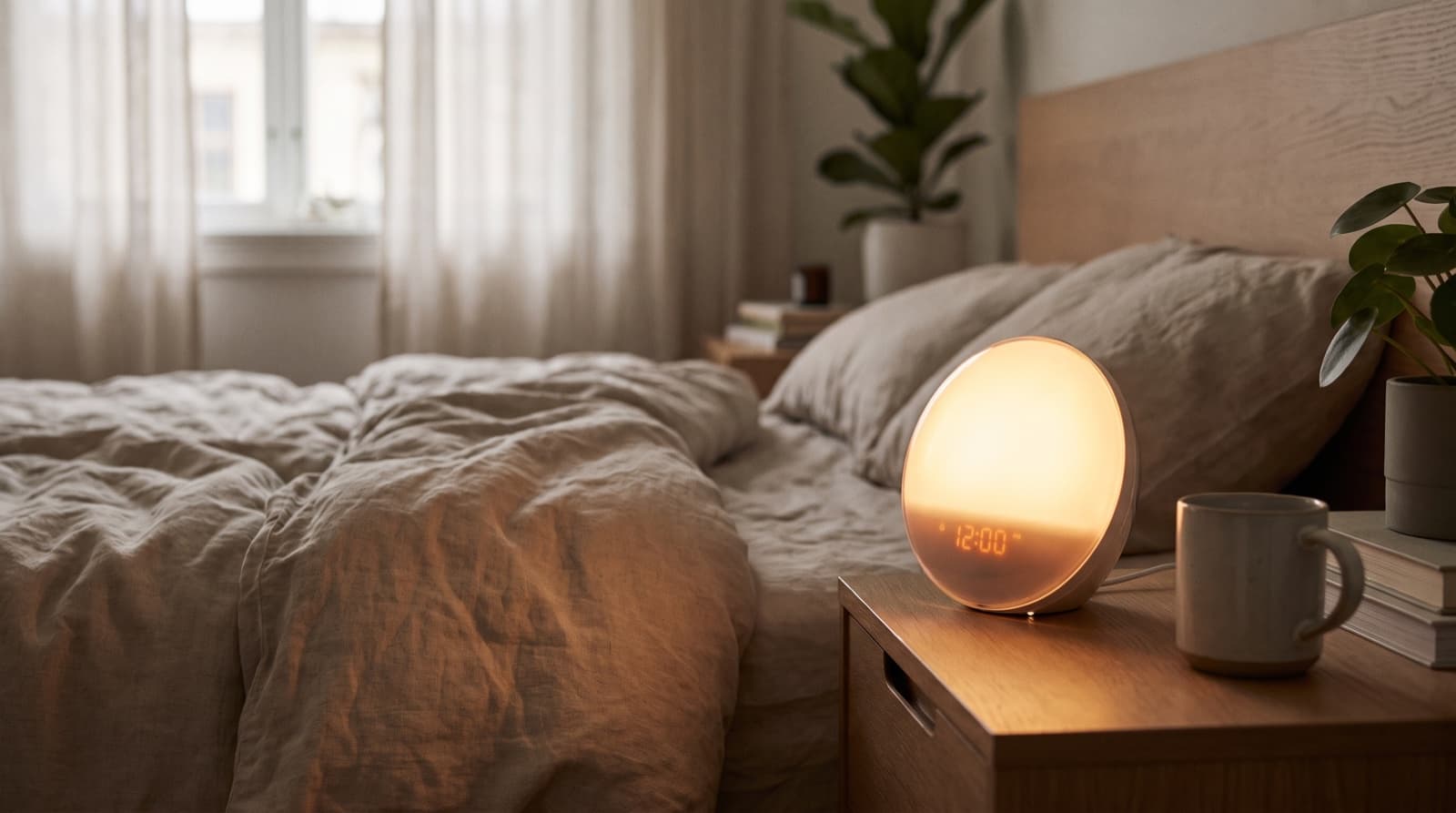
Light is the master switch for your sleep clock, which is why it tops this list. Your goal is a room dark enough that you can't see your hand in front of your face. Start with blackout curtains or a well-fitted shade to keep streetlights and early sunrises out. Then hunt down the little offenders: the standby LED on the TV, the glowing charger, the bright alarm clock. A strip of electrical tape over each one is designed to buy back real darkness for pennies.
But the room is only half the story. The light you take in during the hour before bed matters just as much as the darkness you sleep in. Bright, blue- and green-rich light from screens and LED bulbs late in the evening can delay the release of melatonin, the hormone that helps tip you into sleep — which is exactly why you can feel "tired but wired." (We break down the mechanism in why evening light keeps you awake.)
The most realistic fix isn't sitting in the dark — it's dimming what you can and filtering the rest. Drop your overhead lights in favor of a low lamp, switch devices to night mode, and consider filtering the evening light that reaches your eyes.
Lever 2: Temperature
Once the light is handled, temperature is your next biggest gain. As you fall asleep, your body naturally lowers its core temperature, and a cool room helps that process along. A too-warm bedroom fights it — which is why you toss, kick off the covers, and wake up at 3 a.m.
Aim for roughly 65–68°F (18–20°C). If you can't control the thermostat, a fan, breathable bedding, or a cracked window can help you land in that range.
Small adjustments add up here. Breathable cotton or linen sheets, lighter layers you can add or remove, and a fan for both airflow and steady background noise all help your body stay in its cool-down zone through the night.
Lever 3: Sound
Your brain keeps monitoring sound even while you sleep, so sudden noises — a door, a car, a snoring partner — can pull you out of deeper stages without fully waking you. The aim isn't total silence, which can actually make every stray sound stand out. The aim is steady.
A white-noise machine, a fan, or a simple app can create a consistent sound floor that masks disruptions. If noise comes from outside your control, soft foam earplugs are an inexpensive, effective backup. Experiment with what feels calming to you — some people prefer a fan's hum, others a rainfall track — and keep it consistent from night to night.
Lever 4: Comfort
Comfort is last on the list, but it's what keeps the other three from being undone by a lumpy pillow. Your mattress and pillow should support a neutral spine; if you wake up sore or find yourself endlessly repositioning, that's a signal worth listening to. A pillow suited to how you sleep — side, back, or stomach — often makes a bigger difference than people expect.
Fresh, clean bedding simply feels better to climb into, so keep a regular laundry rhythm. Finally, clear the clutter. When your bedroom doubles as an office, a gym, and a snack station, your brain stops associating it with rest. Reserving the bed for sleep helps train that connection back into place. A tidy, calm room tells your body, plainly, that it's time to power down.
Your 20-minute reset, tonight
Work the levers in order of impact: hang or adjust something to darken the room and cover any stray LEDs, nudge the temperature toward the mid-60s, set up a steady sound source, then straighten the bed and clear one surface. None of it is complicated, and none of it has to be perfect. Tune these four dials and you've built a room that's designed to help you fall asleep faster and stay asleep longer — night after night.
References
- Sleep Foundation. “Bedroom Environment.” Sleep Foundation ↗
- National Heart, Lung, and Blood Institute. “Sleep.” NIH NHLBI ↗
- Cleveland Clinic. “Health Essentials.” Cleveland Clinic ↗
Placeholder bio. Morgan oversees editorial standards and the fact-check process. Replace with a real editor before publishing.
Read full bio →