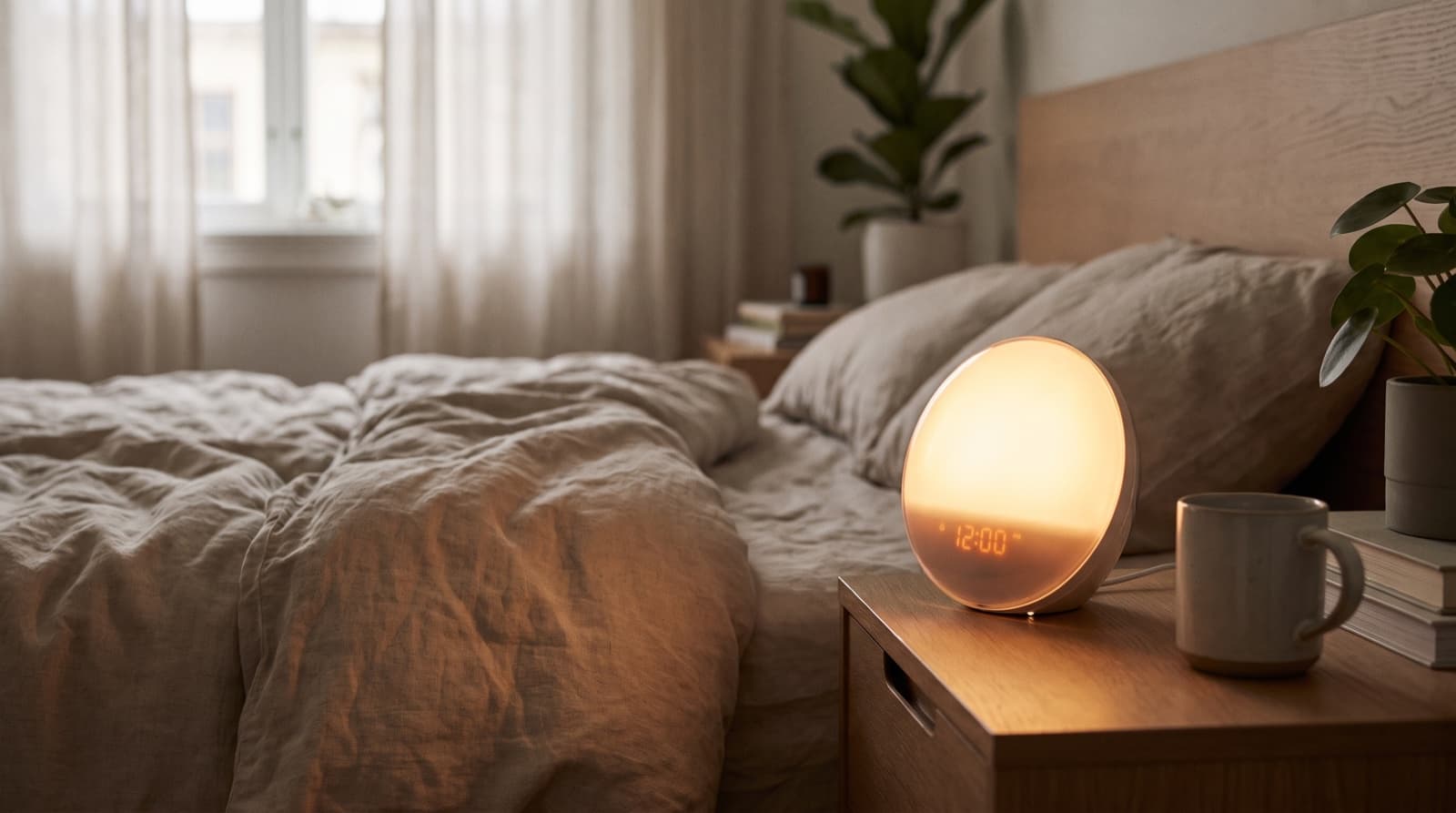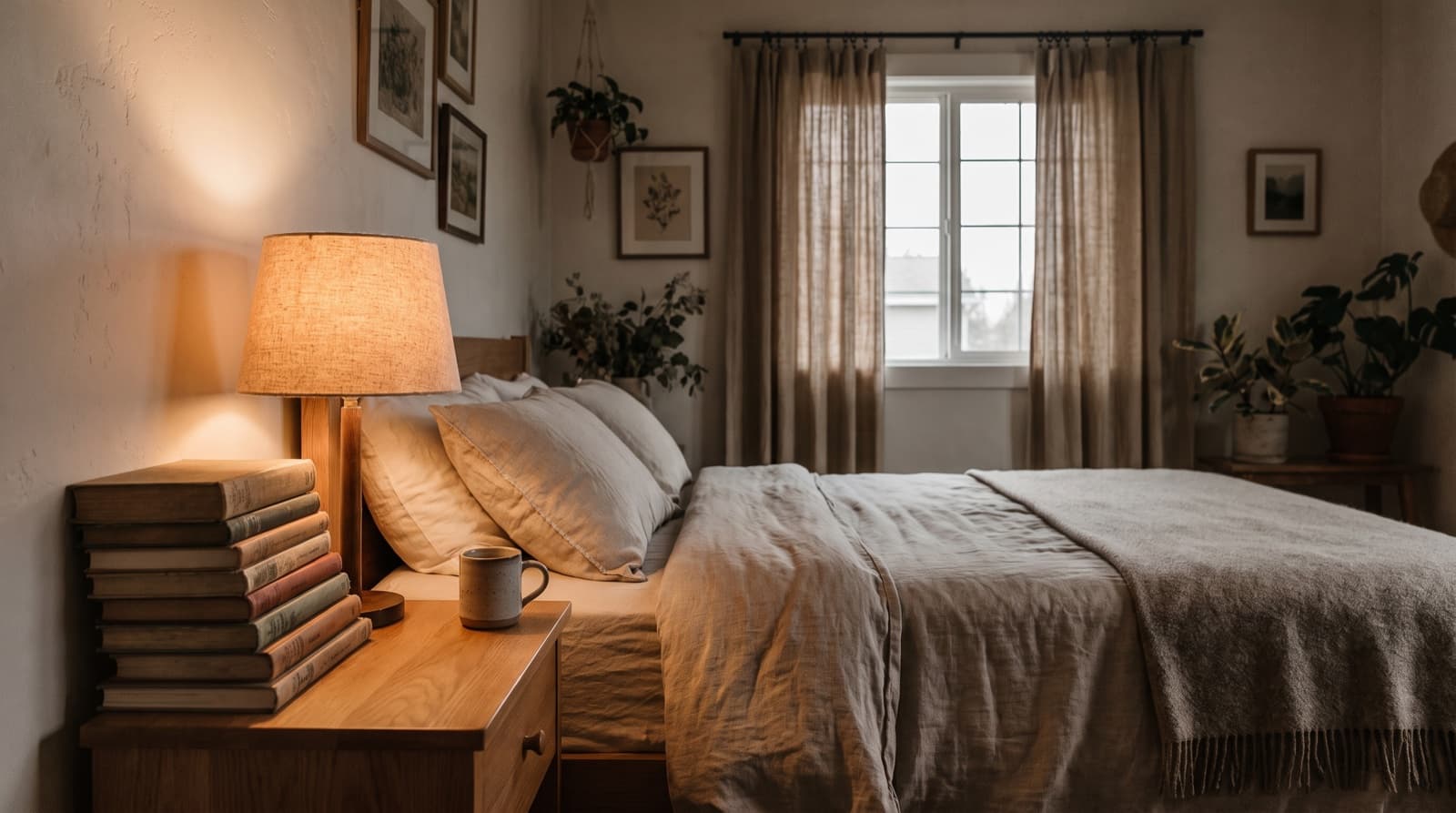
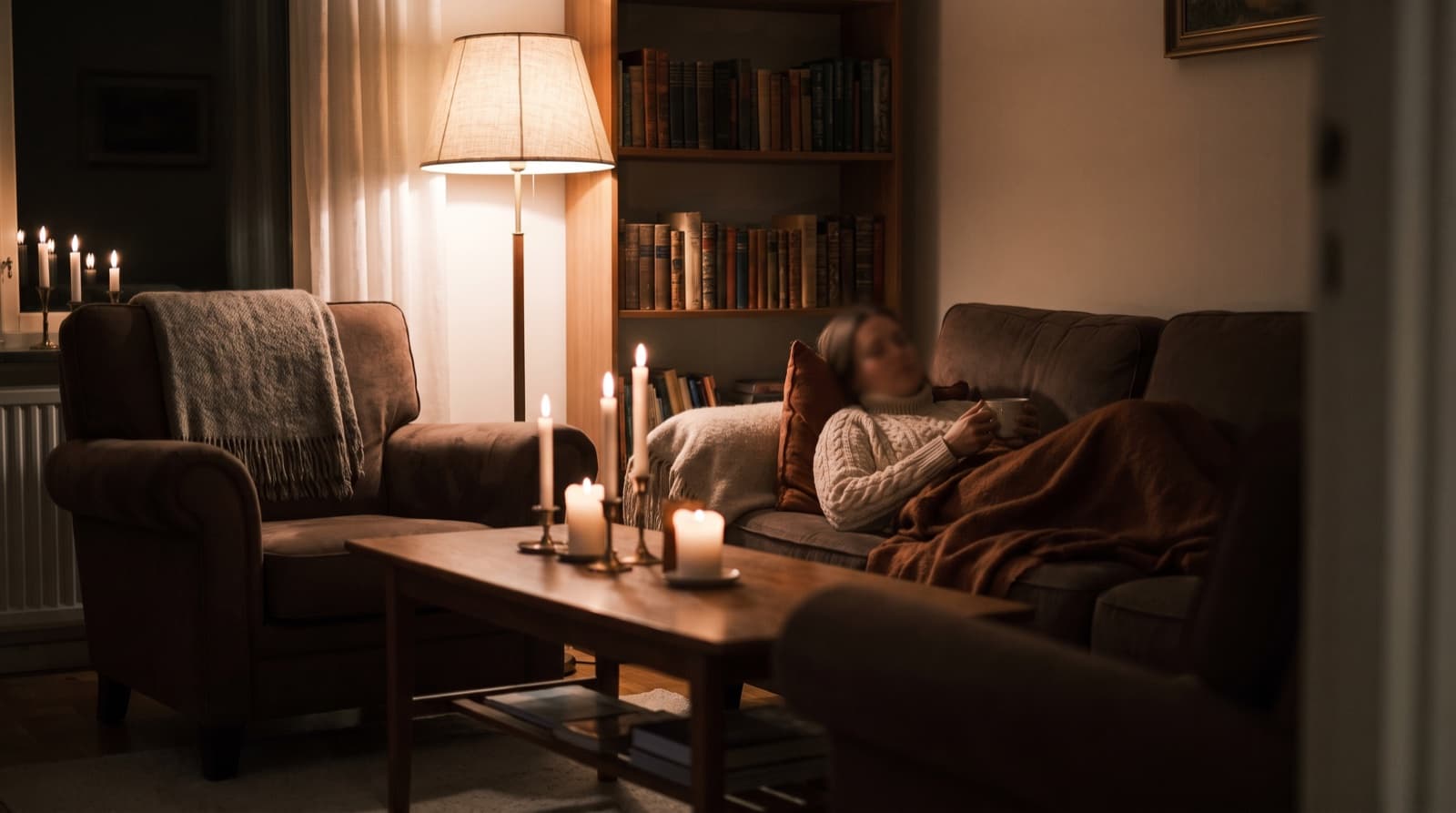
Before electric light, evenings had a built-in dimmer switch. The sun set, fires and candles took over, and the world slowly went dark — a nightly cue that told the body to start preparing for sleep. Modern homes erased that slope. Flip a switch and your living room can be as bright at eleven at night as it was at noon.
Virtual darkness is how you get the slope back. It is not about sitting in the pitch black. It is about gently lowering and warming the light around you in the last hour or two of the evening, so your home quietly tells your brain that night has arrived.
Why your brain is still watching the light
Deep in your brain, a master clock decides when you feel alert and when you feel sleepy, and it takes most of its cues from light. Special cells in your eyes constantly measure how bright and blue your surroundings are. Strong, cool light says day. Dim, warm light says night.
The trouble with a modern evening is that ceiling lights, kitchens, and screens keep flooding those cells with daytime-strength signals long after the sun has gone. Your clock reads that as one very long afternoon and holds back melatonin, the hormone that helps sleep begin. Create virtual darkness and you hand it the missing signal.
Build darkness in layers
The mistake people make is treating light as a single switch, fully on or fully off. The smarter approach is layers, each one shaving a little more brightness and blue out of your evening.
Swap in warmer bulbs
Choose warm, low-color-temperature bulbs for the rooms you use at night. Warm amber light carries far less of the blue that tells your brain it is still daytime.
Put your lights on dimmers
Dimmers turn a single bright fixture into an adjustable one. As the evening goes on, take the level down in stages so the room slides toward dusk instead of dropping off a cliff.
Use fewer, lower lights
Skip the overhead glare and lean on small lamps placed low in the room. A couple of pools of soft light are all most evenings need.
Filter the light near your eyes
Screens and stray brightness are hard to avoid entirely. Warming your screens and filtering blue-rich light close to your eyes trims the signal that survives everything else.
None of these steps is dramatic on its own. Stacked together, they turn a bright, flat evening into something that actually feels like the hours before sleep. For a room-by-room walkthrough, see how to dim your home at night.
Virtual darkness is a signal, not a sacrifice. You still want enough light to move around safely and enjoy your evening — you are simply lowering the volume, not switching everything off.
Timing matters as much as brightness
The last hour or two before bed is where virtual darkness earns its keep. That is when your body is trying to ramp up melatonin, and it is also when a bright bathroom or a late scroll can undo the whole effort. Treat that window as protected time and keep the light low and warm throughout it.
It also helps to be consistent. Your clock loves routine, so dimming the lights at roughly the same time each night reinforces the message far better than doing it only when you remember.
A home that knows what time it is
Think of virtual darkness as giving your house a sense of time. During the day you want it bright and open, matching the sun. As the evening arrives, you gradually pull the light down and warm it up until, by bedtime, your home feels like the inside of a sunset.
You do not need a full renovation or a rack of gadgets to do this. A few warm bulbs, a dimmer or two, the discipline to leave the big overhead light off, and something to soften the light reaching your eyes will carry you most of the way. Add them one at a time and let the habit build.
The payoff is subtle but real. When your surroundings agree that it is night, falling asleep stops feeling like a fight against your own living room — and starts feeling like the natural next step it was always meant to be.
References
- Sleep Foundation — Light and Sleep Sleep Foundation ↗
- Harvard Health — Blue light has a dark side Harvard Health ↗
- NIH NIGMS — Circadian Rhythms NIH ↗
Placeholder bio. Morgan oversees editorial standards and the fact-check process. Replace with a real editor before publishing.
Read full bio →