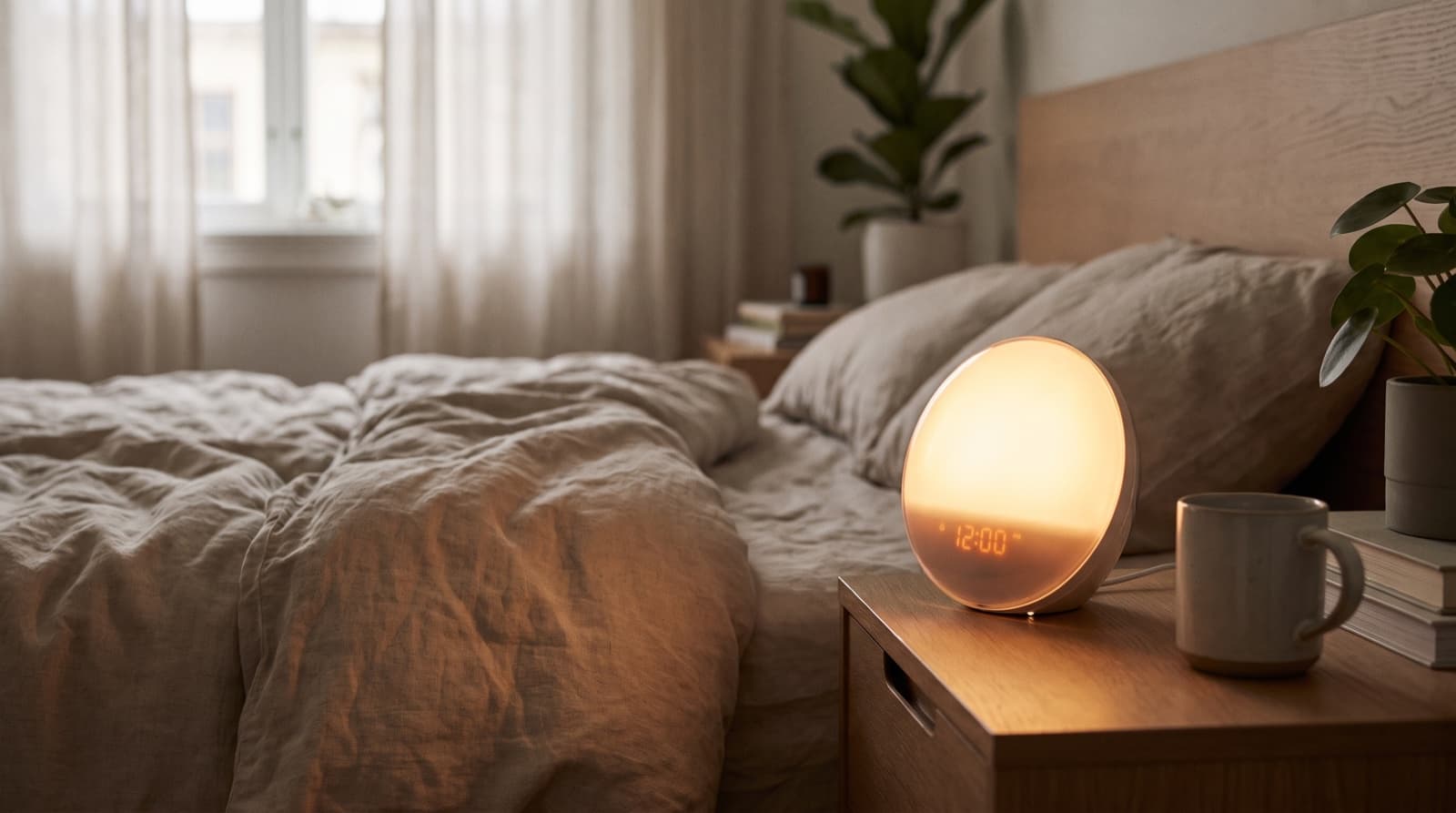

Your smartwatch says you got seven hours and twenty two minutes, with forty five minutes of deep sleep and a restlessness score of eighty one. It feels precise. But how much of that is measurement, and how much is a well educated guess? Knowing what your tracker actually does with the night is the difference between a helpful habit and a fresh source of bedtime stress.
How your tracker guesses what happened while you slept
A clinical sleep study measures brain waves, eye movement, and muscle activity to score your stages directly. Your wrist cannot see any of that. Instead, a consumer tracker watches the few things it can measure and works backward.
Movement, heart rate, and a little inference
Most wearables lean on two signals. An accelerometer tracks how much you move, since lying still tends to line up with sleep and fidgeting with being awake. Many devices add an optical heart rate sensor, and some also read heart rate variability or breathing. Software then blends these clues and makes its best estimate of when you fell asleep and which stage you were probably in.
That approach is clever, and it keeps getting better. But it is still inference. Your watch is reading the outside of sleep and guessing at the inside.
Good for the big picture, shaky on the details
Here is the honest summary. Trackers are generally decent at the coarse questions — roughly when you dozed off, roughly how long you were down, and whether this week ran shorter than last. They are much less reliable on the fine grained ones, like exactly how many minutes of deep or REM sleep you got on a given night. Independent testing tends to find that wearables do a reasonable job flagging sleep versus wake and a shakier job splitting the night into precise stages.
So treat the total and the trend as roughly trustworthy, and treat the stage by stage breakdown as a loose sketch rather than a lab report.
A single night’s stage breakdown is an estimate, not a diagnosis. If you snore heavily, gasp awake, or feel exhausted no matter what the app says, talk to a clinician — a wearable cannot rule anything in or out on its own.
When the score starts running the night
There is a modern twist worth naming. Some people grow so fixated on their nightly sleep score that the worry itself starts to disturb their sleep. Clinicians have a nickname for it — orthosomnia, the anxious pursuit of perfect tracked sleep. You lie awake wondering whether you are earning enough deep sleep, that pressure keeps you alert, and the number drops, which can make the next night feel worse.
If checking your score first thing sets your mood for the whole day, or you catch yourself doing mental math about your stages in bed, the tool has quietly become the problem. A good tracker should fade into the background, not audit you.
How to use a tracker well
The fix is not to bury the device in a drawer. It is to change what you ask of it. Zoom out, look for patterns, and let the numbers point you toward habits you can actually change.
Read the week, not the night
Ignore any single bad reading. Look at your seven day average and ask whether the trend is drifting earlier, later, shorter, or longer.
Act on habits, not the number
A low score is a nudge to check your inputs — light, caffeine timing, alcohol, a consistent wake time — not a verdict to stew over.
Check in without obsessing
Glance at the data once every week or two. If the nightly number spikes your anxiety, hide it and keep only the weekly view.
The habits that move those weekly trends are the unglamorous ones. A steady wake time, bright light early in the day, dim and low screen light late, and a cool, dark room do more for your sleep than any single metric. If the app keeps flagging restless nights, your surroundings are a good place to start — here is the best bedroom setup to work through.
Used this way, a tracker becomes what it should be — a rough compass rather than a scorecard. Let it tell you which direction to walk, then go fix the inputs and let tonight take care of itself.
References
- Sleep Foundation — Sleep Trackers and Sleep Technology Sleep Foundation ↗
- Cleveland Clinic — Orthosomnia and the Pursuit of Perfect Sleep Cleveland Clinic ↗
- Mayo Clinic — Sleep Tips for Better Rest Mayo Clinic ↗
Placeholder bio. Morgan oversees editorial standards and the fact-check process. Replace with a real editor before publishing.
Read full bio →