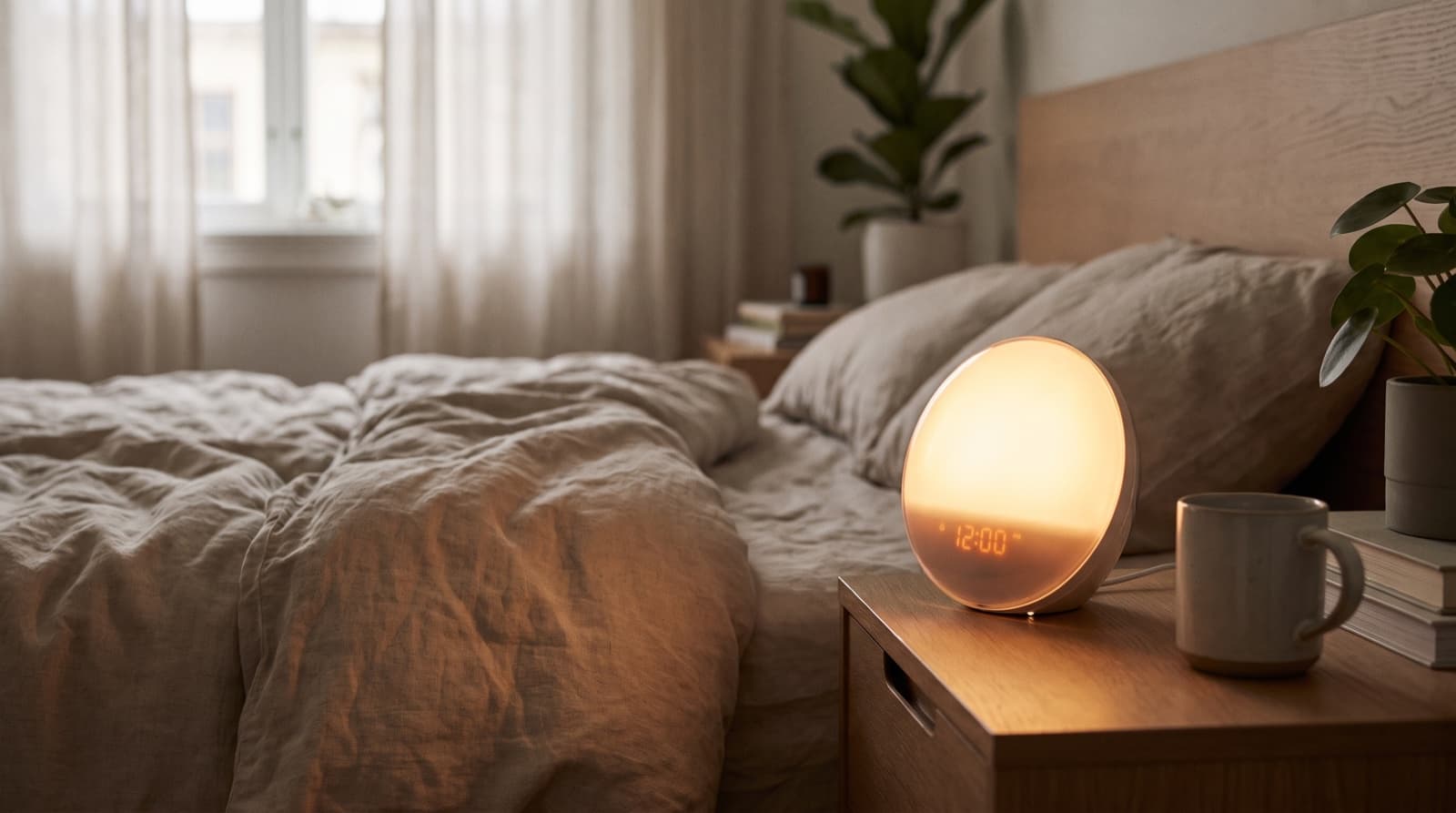
Your body clock keeps decent time, but it is not self-winding. Every day it needs a burst of bright light to stay accurate, and for most of human history the sun handled that job on schedule. Modern life makes it harder. Short winter days, dark commutes, and indoor jobs can leave you starved of the morning signal your clock depends on. A light therapy lamp is a practical stand-in — a box built to deliver the one thing your indoor lighting cannot.
What a light box actually does
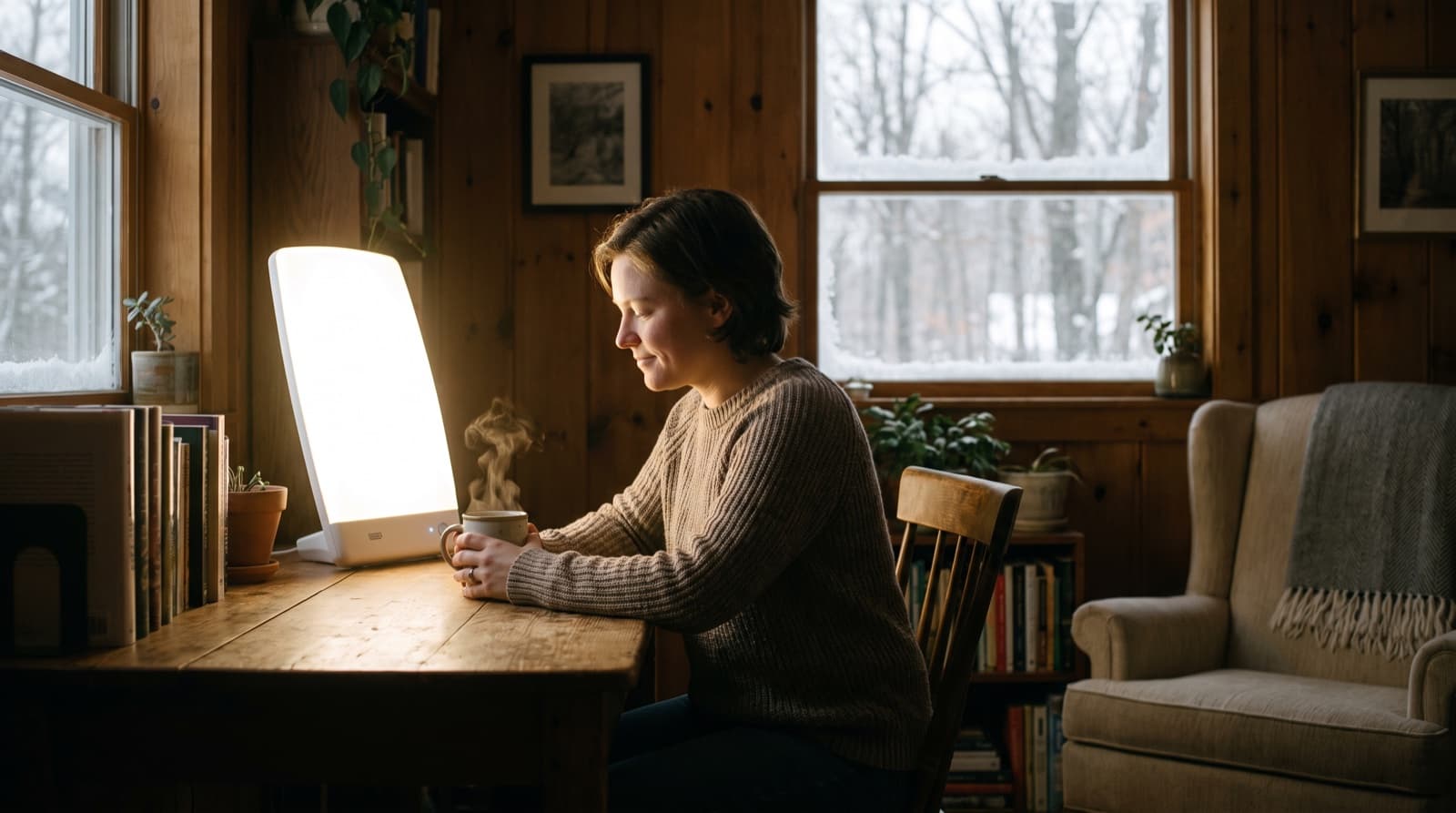
A light therapy lamp, sometimes called a light box, produces a bright, broad-spectrum glow that mimics outdoor daylight. It is not about seeing better. It is about feeding the special light-sensing cells in your eyes that report to your master clock. When those cells catch strong light early in the day, they help lock your rhythm in place and schedule your melatonin release for roughly fourteen to sixteen hours later — right around bedtime.
The reason a lamp is worth considering is a matter of raw numbers. A bright office might reach a few hundred units of light intensity. A dedicated light box is built to deliver far more at a close distance, which is closer to the outdoor range your clock is really looking for. That gap is why sitting under ordinary ceiling lights does so little, while a light box can move the needle.
The three dials that matter
Buying a lamp is the easy part. Using it well comes down to three settings you control, not the brand on the box.
Brightness
Look for a lamp designed for circadian use and rated for a high intensity at a stated distance. The label usually names the distance where the box hits its target, so trust that number rather than how bright it looks to your eye.
Distance and angle
Sit within the distance the maker specifies, with the light off to one side and slightly above eye level. You do not stare into it — you let it wash over your face while you read, eat, or work.
Timing
Most people use a box soon after waking, often for about twenty to thirty minutes. Morning use supports an earlier, steadier rhythm. Bright light late in the evening does the opposite, so keep sessions early.
A light box is a general wellness tool, not a treatment plan. If you take medication that affects light sensitivity, have an eye condition, or think you may have a seasonal or mood disorder, talk with a clinician before starting — and never use a lamp as a substitute for care you need.
Who tends to benefit most
Light boxes earn their keep for people whose lives simply do not include enough morning sun. Through the short, dark days of winter, a lamp can supply the early signal the sky is withholding. Shift workers wrestling with schedules that fight their biology may use timed light to help anchor a rhythm that would otherwise drift. And anyone stuck indoors through the bright part of the day — windowless offices, long hospital shifts, back-to-back calls — can use a box to reclaim a dose they would otherwise miss.
If any of that sounds like your week, a lamp is one of the few pieces of gear that targets the root of the problem rather than the symptoms.
Real daylight is still the gold standard
Here is the honest part a lamp company might not lead with: when you can get outside, outdoor daylight still wins. Even an overcast morning is dramatically brighter than most indoor light boxes, and stepping outside gives you fresh air and a little movement along with the signal. A lamp is best understood as a backup for the days the sky cannot deliver, not a replacement for the sky itself. There is more on getting the signal without sun if your mornings are genuinely dark.
So use the lamp when you need it, and lean on the real thing whenever the weather and your schedule allow. Chase your bright light early, from whichever source you can reach.
Do not forget the other half of the day
A light box only tells half the story. The same cells that respond to bright morning light also respond to bright light at night — and they cannot tell your ceiling lamp or phone from the sun. Flood your eyes with light late in the evening and you send the daytime message all over again, undoing the clean signal your morning session worked to build.
So pair the two halves. Get your bright dose early, whether from the sky or a box, then ease the light down in the last hour or two before bed. Bright mornings and dim evenings are not competing habits. They are two ends of the same clear message to your body about when it is day and when it is night.
References
- Mayo Clinic — Light Therapy Mayo Clinic ↗
- Sleep Foundation — Light and Sleep Sleep Foundation ↗
- NIH NIGMS — Circadian Rhythms NIH ↗
Placeholder bio. Jordan translates sleep and nutrition research into practical guidance. Replace with a real contributor before publishing.
Read full bio →