When the temperature climbs after dark, sleep is often the first thing to suffer. You flip the pillow to the cool side, push off the sheet, and lie there wondering why rest feels so far away. It is not just in your head. Heat works directly against one of the quiet mechanisms your body leans on to fall asleep — and once you understand that mechanism, sleeping through a hot night gets a lot more manageable.
Why heat makes it so hard to sleep
Falling asleep is not only about feeling tired. It is also about cooling down. In the hour or two before bed, your core body temperature naturally begins to dip, and that gentle decline is one of the signals that helps set sleep in motion. A cooler body is, in a real sense, a sleepier body.
To make that dip happen, your body has to shed heat. It does this mostly by sending warm blood toward the surface of your skin — especially your hands and feet — where it can radiate away into the surrounding air. That only works when the air around you is cooler than you are. When the bedroom is warm and stuffy, the heat has nowhere to go, your core stays elevated, and the signal to sleep never fully arrives.
The body has to shed heat to drift off
This is why hot nights tend to bring lighter, more broken sleep. Warmth can make it harder to settle into the deeper, more restorative stages and can nudge you toward waking more often. So the goal is not to force sleep — it is to help your body do what it is already trying to do, which is get rid of heat.
What actually helps on a hot night
A handful of simple, low-cost habits can make a warm room far more sleepable. Almost all of them work by doing one of two things: lowering the temperature around you, or helping your skin release heat faster.
Cool the room and keep air moving
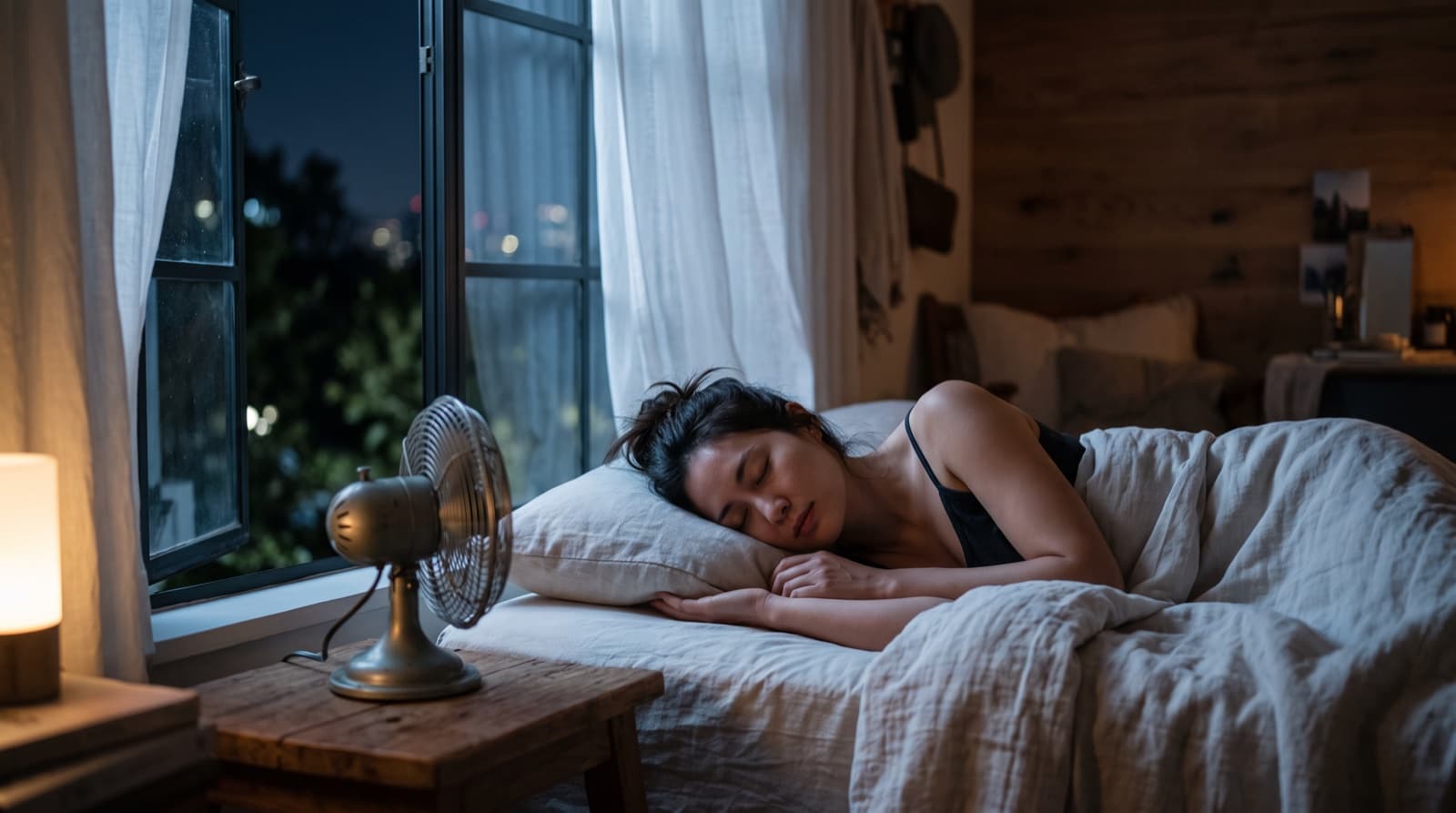
Air conditioning helps, but even without it a fan makes a real difference. Moving air carries heat away from your skin and speeds up the cooling your body is already trying to do. Pointing a fan across the bed, or setting one near an open window once the outside air turns cooler, can quietly lower how warm you feel.
Switch to light, breathable bedding
Heavy comforters and synthetic sheets trap warmth against you. Lightweight, loosely woven cotton or linen lets heat and moisture escape, so your skin can keep doing its job. Loose, breathable sleepwear — or none at all — follows the same logic.
Take a warm shower before bed
It sounds backwards, but a warm shower an hour or so before bed brings blood to the surface of your skin, and as you dry off your body sheds that heat and cools down. That post-shower dip can help ease you toward sleep. A quick lukewarm rinse on a sweltering night works too.
Stay ahead on hydration
You lose fluid through sweat on a hot night, and even mild dehydration can leave you restless. Sipping water through the evening helps your body regulate its own temperature — just taper off close to bedtime so you are not up for the bathroom.
If the night finally cools off outside, open windows on opposite sides of your home to create a cross-breeze, then close everything up in the morning before the heat returns. You are essentially banking cooler air while you can.
Guard the room from the daytime sun
Some of the battle is won long before bedtime. A bedroom that bakes in direct sun all afternoon stores that heat and slowly releases it at night, right when you are trying to cool down. Closing blinds, curtains, or shades during the hottest part of the day keeps a good deal of that heat out, so the room starts the evening cooler. Blackout curtains do double duty here, since they cut both heat and light. If mornings are cooler where you live, that early air is worth capturing before the sun takes over.
If you have air conditioning, aim for a setting that keeps things comfortably cool rather than cold. Most sleep guidance points to keeping the bedroom on the cool side; for the specific number worth aiming for, see the ideal bedroom temperature.
Put it all together
None of these fixes is dramatic on its own. Their power is in stacking them: a shaded room during the day, light bedding, a fan moving cooler air, a warm shower, and a glass of water in the evening all push in the same direction. Each one gives your body a little more room to shed heat and let your core temperature fall. The habits are cheap, and most of them cost nothing at all beyond a little planning.
That falling temperature is the thread running through all of it. Heat disrupts sleep because it works against the cool-down your body needs, and every trick here simply clears the way for that cool-down to happen. Treat the room as something you set up in advance rather than fight at midnight. Help your body get cooler, and on even the warmest night, sleep has a much better chance of finding you.
References
- Sleep Foundation — Best Temperature for Sleep Sleep Foundation ↗
- Cleveland Clinic — How To Sleep When It Is Hot Cleveland Clinic ↗
- Mayo Clinic — Sleep tips six steps to better sleep Mayo Clinic ↗
Placeholder bio. Morgan oversees editorial standards and the fact-check process. Replace with a real editor before publishing.
Read full bio →