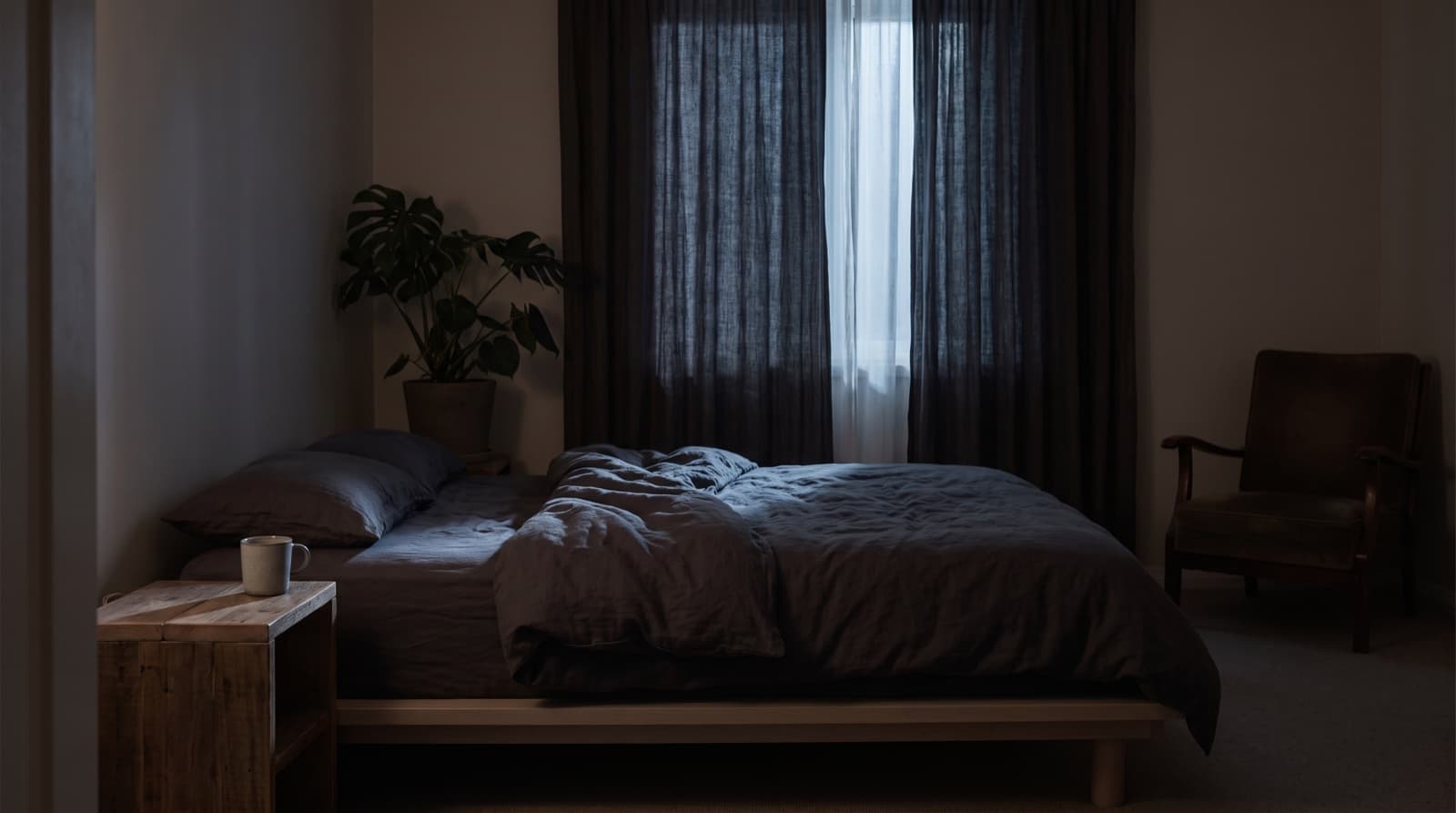
Close your eyes in most bedrooms and you will still sense light. A streetlight edging past the curtains, the glow of a charger, the little blue dot on a television that never truly sleeps. Individually these seem harmless. Together they can keep your bedroom from ever getting properly dark — and darkness is one of the simplest, most powerful ingredients of good sleep.
Why darkness does so much work
Your body treats darkness as permission. When the light around you fades and stays gone, your brain releases melatonin, the hormone that helps you fall asleep and stay asleep. Light, even fairly dim light, can blunt that release and make your sleep lighter and easier to interrupt.
The light-sensing cells in your eyes keep working even while your lids are closed, sampling the room for brightness. A dark room reassures them that it is still night. A room speckled with small lights keeps nudging them, and through them your brain, toward wakefulness. That is why chasing real darkness pays off more than almost any gadget you could buy.
The three fixes that get you there
Getting a bedroom genuinely dark is mostly a matter of hunting down light and shutting it out. Three moves cover the vast majority of bedrooms.
Block the windows
Blackout curtains or blinds are the biggest single upgrade, cutting streetlights, early sunrises, and passing headlights. Choose panels that overlap the frame so light cannot sneak around the edges.
Hunt down the little lights
Walk the room after dark and look for glowing dots — chargers, power strips, the TV, an alarm clock. Unplug what you can, turn devices to face the wall, and cover stubborn indicators with a small piece of opaque tape.
Keep a sleep mask on hand
When you cannot control the room, a partner who reads late, a hotel, or a sunrise you cannot fully block, a comfortable sleep mask brings the darkness with you. It is the most portable fix there is.
If you would rather tackle this as part of a broader tidy-up, it folds neatly into the 20-minute bedroom reset.
Do a quick lights-out audit. Turn everything off, lie down, and let your eyes adjust for a minute or two. The stray glows you missed while standing become obvious once you are flat and still.
Darkness first, then everything else
There is a reason sleep specialists talk about darkness before they talk about supplements. A dark room supports the melatonin your body already makes, on the schedule it already prefers. That is a gentler, steadier foundation than trying to override your system from the outside — and it costs far less than a drawer full of sleep aids.
None of this means every sliver of light will ruin your night. But the darker your room, the fewer small interruptions your sleeping brain has to work around, and the easier it is to sink into the deep stages that leave you rested.
What about the light you need at night
Real life includes middle-of-the-night bathroom trips and the occasional late arrival home. The trick is to keep any nighttime light dim and warm. A low, amber night-light in the hallway lets you move safely without flipping your brain back into daytime mode, and it is far kinder than a bright overhead fixture.
Make it a one-time project
The best part of a dark bedroom is that most of the work is done once. Hang the curtains, tape over the indicators, tuck a mask in the nightstand, and the darkness is simply there every night after, asking nothing more of you.
Start with the window, since that is usually the biggest offender, then sweep the room for the small lights, and finish with a mask for the nights the room fights back. Do those three things and you will have built one of the most reliable sleep upgrades available — a room that, the moment you switch off the last lamp, is genuinely, restfully dark.
References
- Sleep Foundation — Light and Sleep Sleep Foundation ↗
- NIH NIGMS — Circadian Rhythms NIH ↗
- Cleveland Clinic — Melatonin Cleveland Clinic ↗
Placeholder bio. Jordan translates sleep and nutrition research into practical guidance. Replace with a real contributor before publishing.
Read full bio →