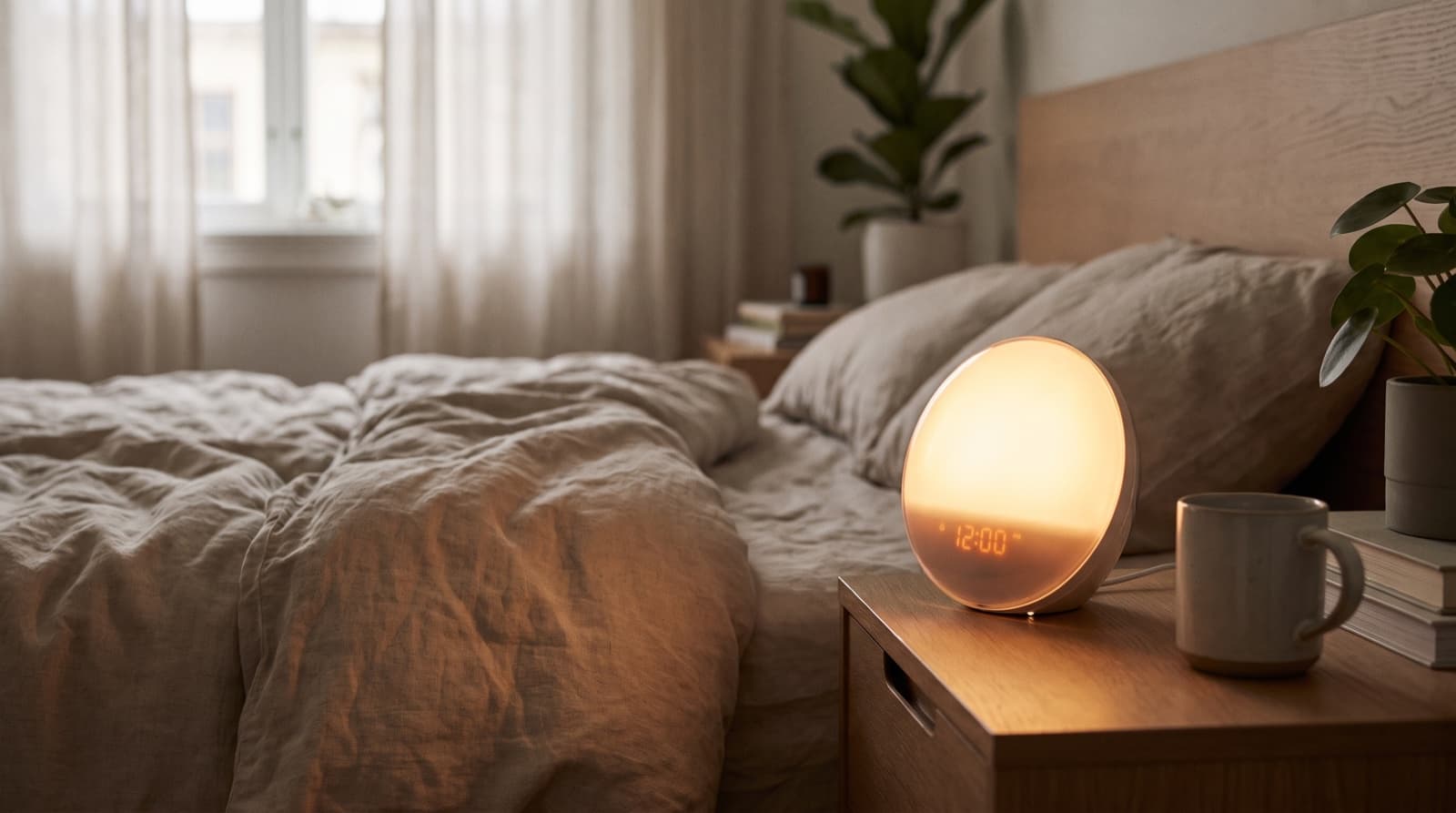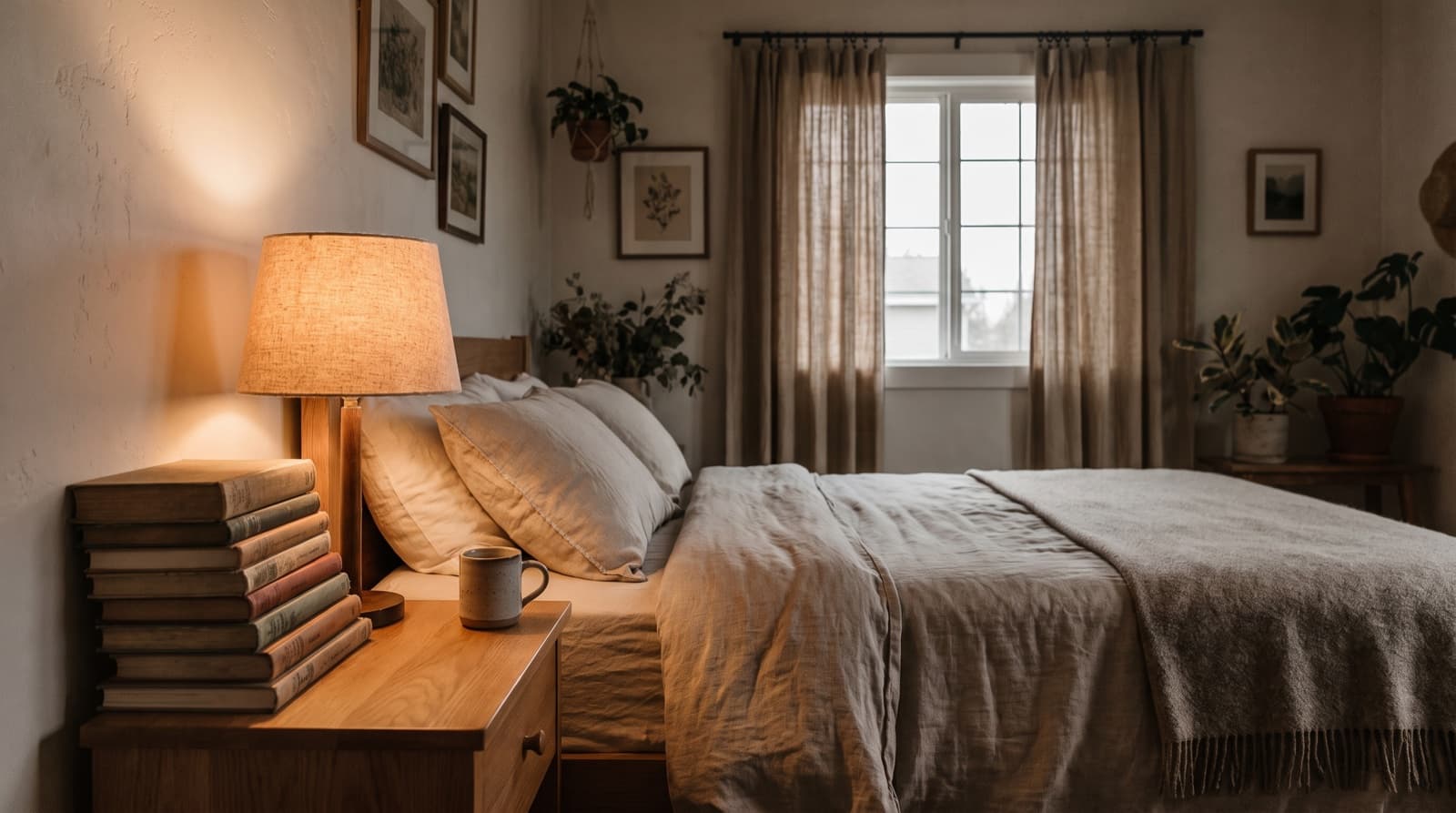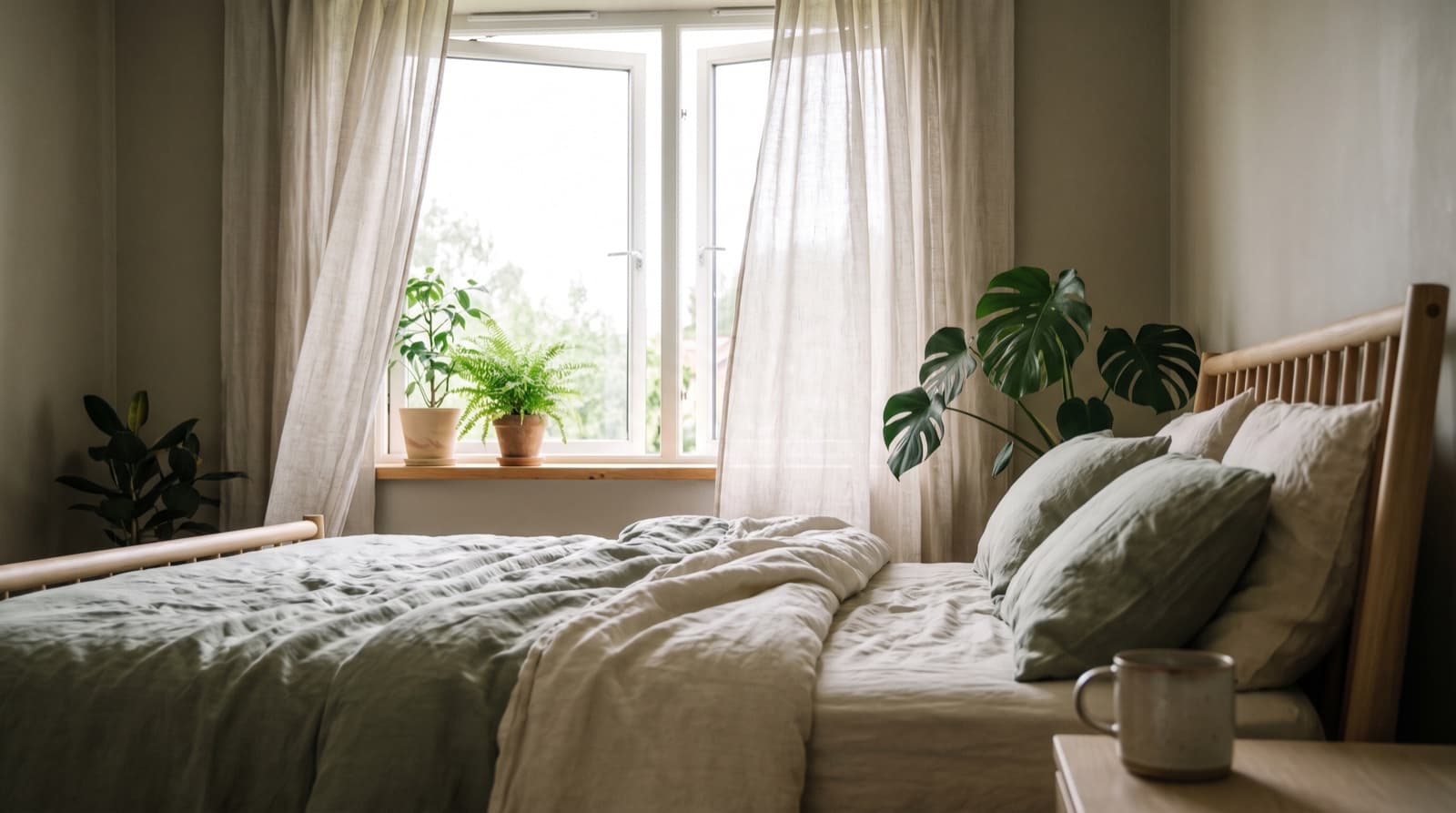
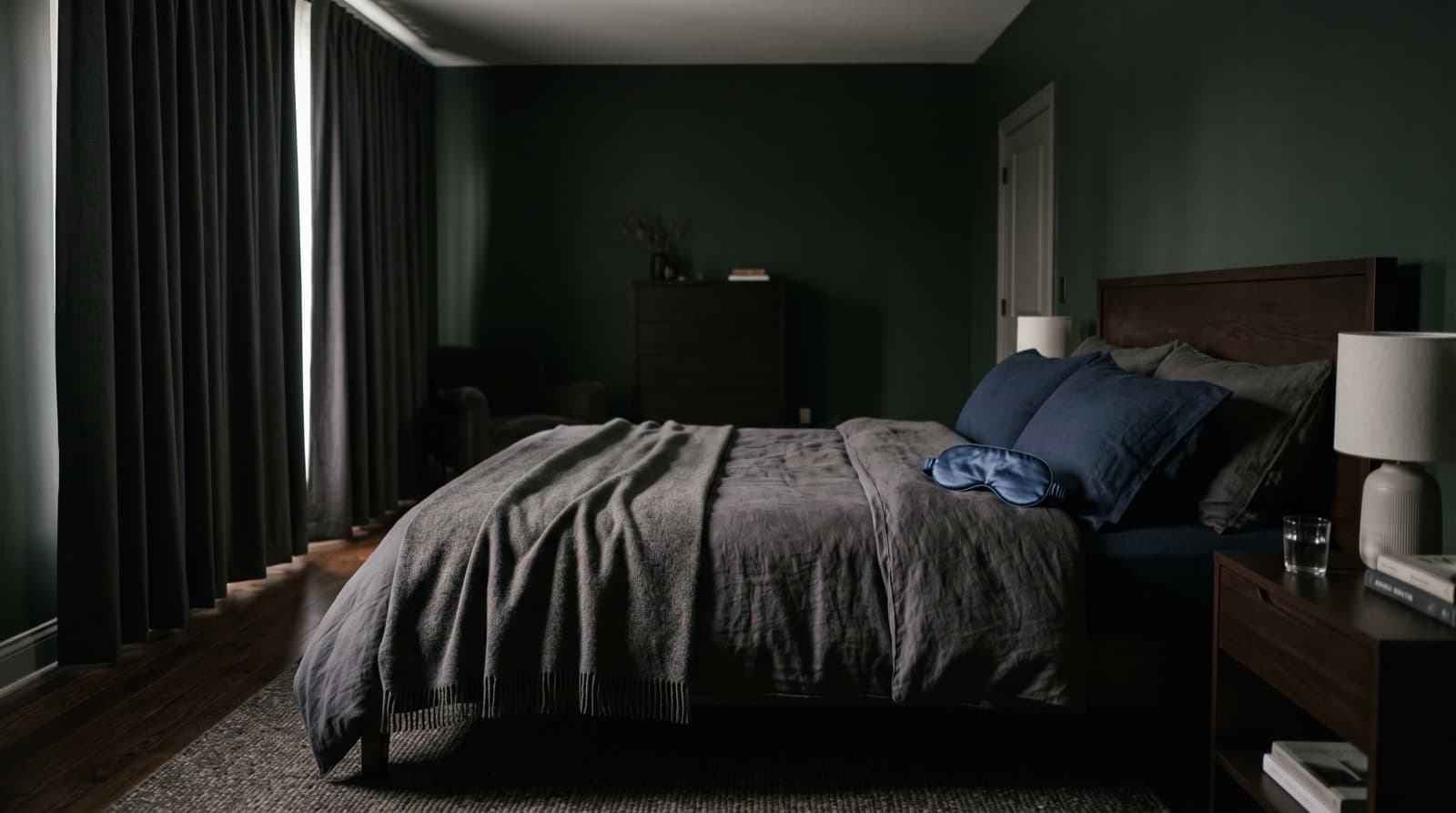
When light is stealing your sleep, two fixes come up again and again. Heavy blackout curtains over the windows, or a soft mask over your eyes. Both are trying to do the same job, keeping light from reaching you while you rest, but they go about it so differently that the better choice really depends on your room, your budget, and how much you travel.
Why either one helps
Start with what they share. Light, even at low levels, can make sleep lighter and easier to break. Your eyes keep sensing brightness through closed lids, and a brighter room can nudge your brain toward waking and blunt the melatonin that keeps you under. Block that light and you remove a whole category of small, sleep-fraying interruptions. Curtains and masks are simply two routes to the same darkness. If you want the full picture, start with how to get your bedroom truly dark.
The case for blackout curtains
Blackout curtains darken the entire room, not just your eyes. That means the darkness holds no matter how you sleep, whether you are a restless turner or share the bed with someone who steals the covers. They tame the big offenders — streetlights, early summer sunrises, the sweep of passing headlights — and once they are hung, they work every night without a thought.
The downsides are practical. Good ones cost more, they need proper installation to seal the edges where light leaks, and they stay put in one room. They do nothing for you in a hotel, on a plane, or at a friend's place.
The case for a sleep mask
A sleep mask flips the logic. Instead of darkening the room, it darkens you. It is cheap, it weighs almost nothing, and it turns any room — a bright hotel, a red-eye flight, a sunlit spare bedroom — into darkness on demand. For anyone who travels or cannot modify where they sleep, that portability is hard to beat.
The trade-offs are about comfort. A mask sits on your face, so it can feel strange at first, shift during the night, or bother side sleepers until you find one that fits well. It also does nothing for a partner who needs the same darkness.
Curtains darken the whole room
Everyone and everything in the room is covered at once, which suits couples and restless sleepers who do not want anything on their face.
Curtains are set and forget
Once installed, they work automatically every night, blocking streetlights and early sunrises without any effort from you.
A mask goes anywhere
Hotels, flights, and guest rooms become dark instantly, which makes a mask the traveler's best friend.
A mask is cheap and instant
For a few dollars and no installation, you get reliable darkness tonight, with nothing to mount or measure.
You rarely have to choose. Many people hang blackout curtains at home for effortless nightly darkness and keep a mask in their bag for everywhere else. The two cover each other's weak spots.
So which one wins
For a bedroom you own and control, blackout curtains are usually the stronger long-term investment. They darken the whole space, ask nothing of you once installed, and help everyone in the room sleep. If your nights are mostly spent in the same bed, start there.
For travel, shared or rented spaces, or a quick and inexpensive fix, the mask wins outright. It brings darkness to places you cannot renovate, and it is the only one of the two you can pack.
The honest verdict is that they are teammates more than rivals. Curtains build a dark home base; a mask extends that darkness to the rest of your life. Pick the one that solves your most common problem first, and add the other when the situation calls for it. Either way, the real winner is the same — a darker field of view while you sleep, and the deeper rest that tends to follow.
References
- Sleep Foundation — Light and Sleep Sleep Foundation ↗
- Harvard Health — Blue light has a dark side Harvard Health ↗
- NIH NIGMS — Circadian Rhythms NIH ↗
Placeholder bio. Morgan oversees editorial standards and the fact-check process. Replace with a real editor before publishing.
Read full bio →