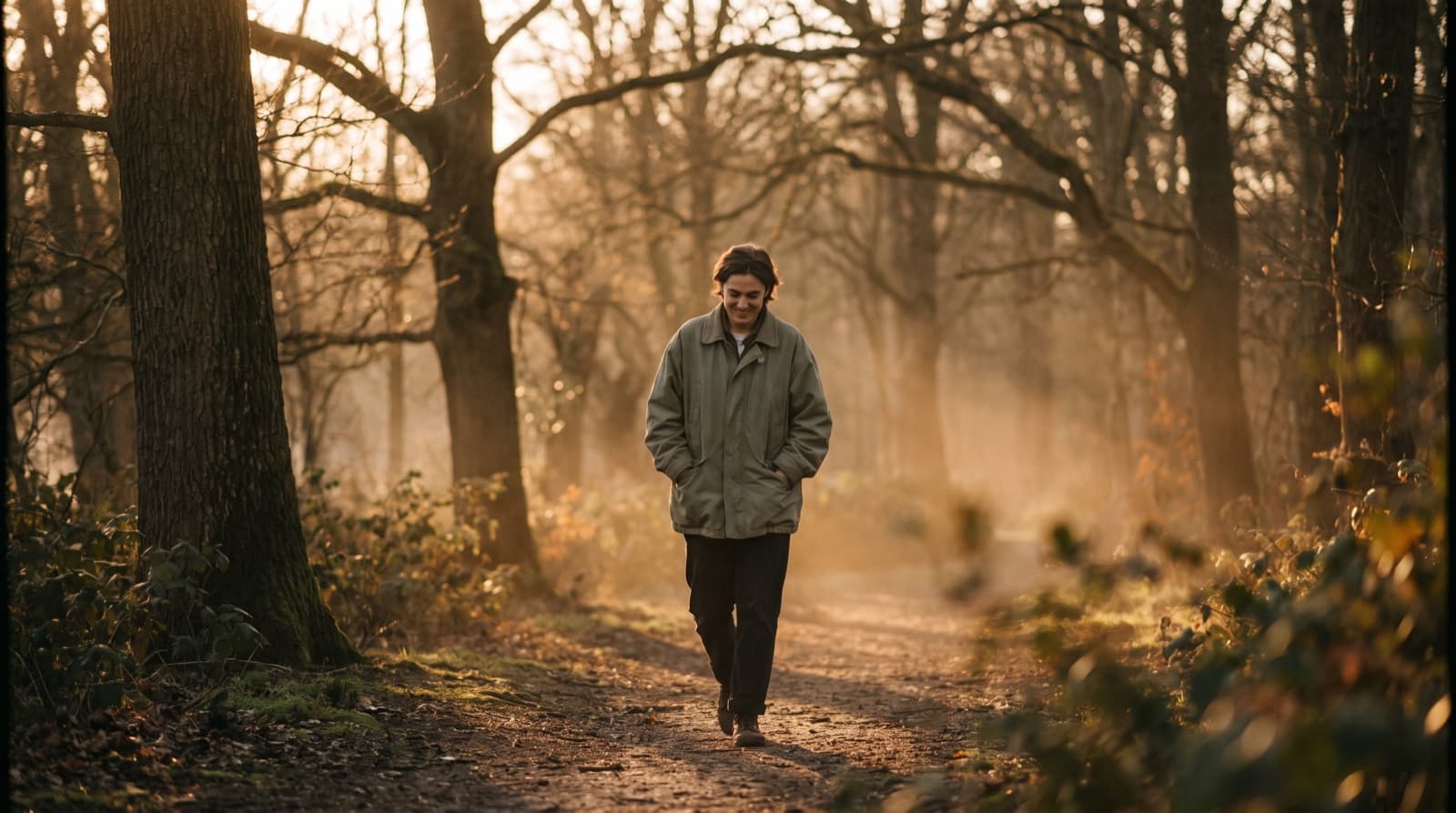
The sky at sunset does something your ceiling lights never will. As the sun drops toward the horizon, its light turns warm and gold, then orange, then dim — and your body has been reading that exact shift for a very long time. Long before lamps and screens, the fading light at the end of the day was the main cue that night was on its way. That signal still works, and an evening walk is one of the easiest ways to hand it to yourself.
The color of dusk is a signal
Deep in your brain sits a master clock that runs close to a 24-hour cycle, and it leans on light to stay accurate. During the day, bright, blue-rich light tells that clock it is daytime. As evening arrives, the light around you naturally grows warmer and weaker, and that softening is part of how your body learns the day is ending. In response, the clock begins to schedule the release of melatonin, the hormone that helps usher in sleep. Sunset light does not force anything — it gently nudges the timing so the move into night feels less abrupt.
The clock reads warmth and dimness
The light-sensing cells in your eyes that report to the clock respond most to bright, blue-heavy light. Low-angle sunset light carries far less of that signal than midday sun or an overhead bulb, so spending time in it late in the day sends a calmer, more evening-appropriate message. You still get outdoor light that is real and natural, yet already on its way down — which is closer to what your body expects at that hour than the flat, steady brightness waiting for you indoors.
Why an evening walk works
An evening walk stacks two gentle cues at once. The first is that fading natural light, quietly telling your clock the day is winding down. The second is easy movement, which can help release some of the day's tension and make the shift toward rest feel more natural. A short, relaxed walk near sunset is not a workout — the point is to be unhurried, to let your eyes take in the changing sky, and to arrive home already a step closer to calm. Think of it as bracketing your day with light, a brighter walk in the morning and a softer one at dusk.
Walk as the sun drops
Head out in the half hour or so before sunset, when the light is warm and slanting. Ten to fifteen unhurried minutes is plenty.
Let your eyes wander
Look up and around rather than down at a phone. The changing sky is the whole point, and it is the part your clock is reading.
Come home to low light
Walk back as the sky dims and carry that calm inside. Reach for lamps instead of bright overheads to keep the mood going.
There is no need to rush or track your pace. Slow and steady does more for winding down than a brisk push, which can leave you feeling revved up right when you want the opposite.
After dark, the job flips
Once the sun is fully down, the strategy changes. The same cells that welcomed the morning cannot tell the difference between the setting sun and a bright kitchen or a phone held close to your face. Flood them with blue-rich indoor and screen light after dark and they may send the daytime message all over again, nudging your melatonin later and working against the calm your walk just built. This is a big part of why evening light keeps you awake, and it is why the evening really has two distinct halves.
So the plan is simple. Chase the last of the natural light outside, then once you are back indoors, keep things dim and warm. Lower the overhead lights, lean on lamps, and soften the blue-rich light reaching your eyes in the last hour or two before bed. You are simply extending the message that sunset already started.
Make it a nightly cue
None of this asks for perfect conditions. A ten to fifteen minute walk as the light fades, followed by a dimmer, warmer home, gives your body two clear signals that night has arrived. Repeat it a few evenings in a row and it starts to feel like a cue rather than a chore. Bright mornings set your clock, and a gentle sunset walk helps close the loop — telling your body, in its oldest language, that the day is done.
References
- Sleep Foundation — Light and Sleep Sleep Foundation ↗
- NIH NIGMS — Circadian Rhythms NIH ↗
- Harvard Health — Blue light has a dark side Harvard Health ↗
Placeholder bio. Jordan translates sleep and nutrition research into practical guidance. Replace with a real contributor before publishing.
Read full bio →