For a lot of us, an evening show is not a bad habit to break — it is the reward at the end of a long day. The good news is that watching television at night and protecting your sleep are not mutually exclusive. You do not necessarily have to quit the show. You just have to be smarter about the light it throws at you, and about the room you watch it in.
Why the screen is not the whole story
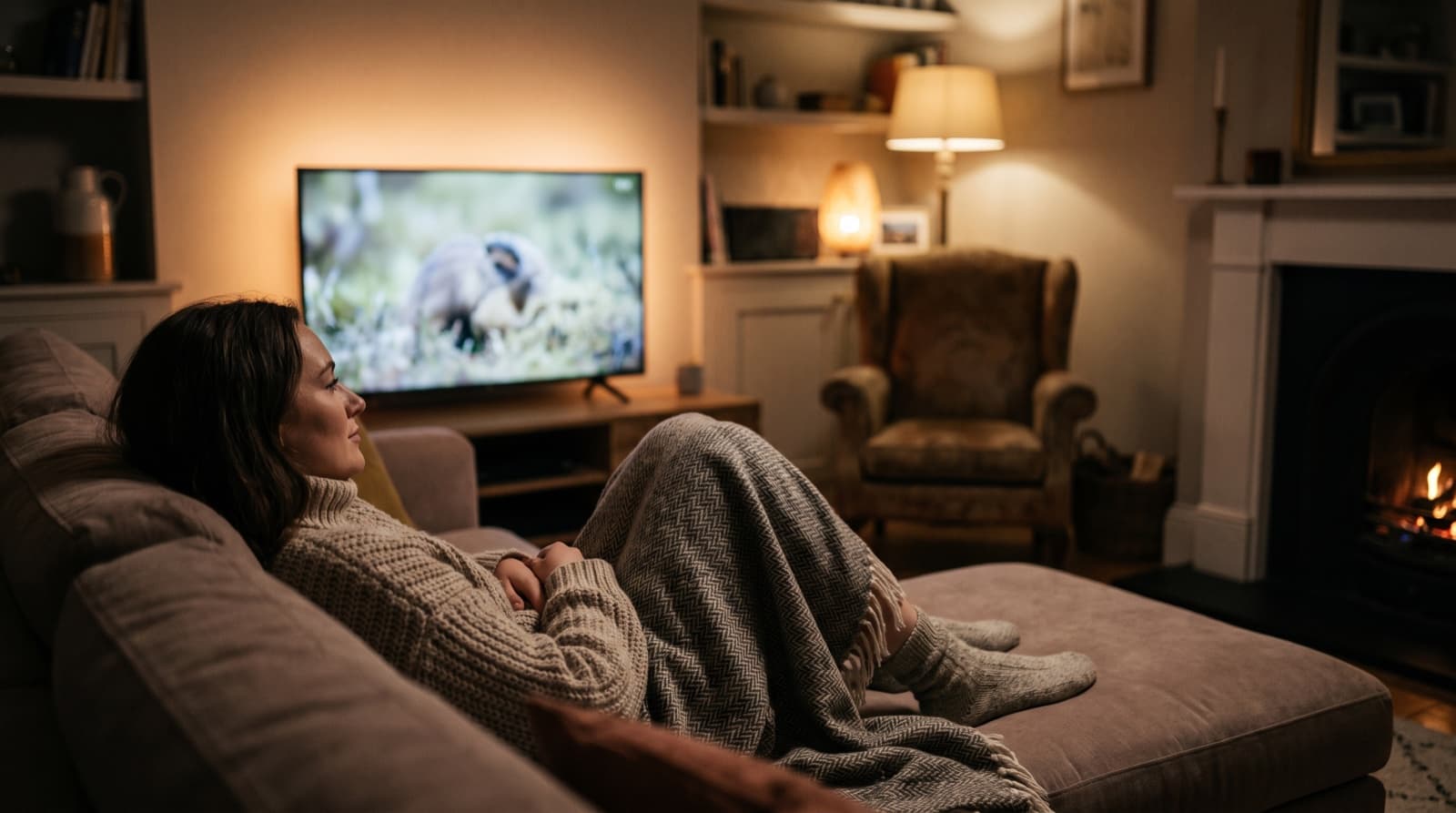
It is easy to blame the TV itself, but the bigger issue is often contrast. A bright screen glowing in an otherwise pitch-black room forces your eyes to work hard, and it delivers a concentrated dose of light straight into a dark-adapted field of view. That same screen in a gently, warmly lit room feels far easier on the eyes because the light is more evenly spread.
The color and intensity of the picture matter too. Modern screens can push a lot of bright, blue-rich light, and blue-rich light in the evening can slow the release of melatonin, the hormone that helps you feel sleepy. The aim is not to stop watching. It is to soften both the screen and its surroundings so the whole scene sends a calmer signal.
Set up your room for night viewing
Sit back a little
Distance dims the light that actually reaches your eyes. Watching from across the room instead of a foot away meaningfully reduces the dose without changing a single setting.
Add a warm bias light
Place a soft, warm lamp or a light strip behind the screen. It shrinks the harsh contrast between a bright picture and a dark wall, which eases eye strain and the overall glare.
Switch to the warm picture mode
Most TVs include a warm or filmmaker color setting and a brightness slider. Warming the picture and lowering the brightness trims the blue-rich light your body reads as daytime.
Filter the light with glasses
Evening glasses filter some of the blue-rich light before it reaches your eyes, so you can finish the episode while keeping the signal gentler.
Stacked together, these adjustments do more than any one of them alone. A warm, dimmed picture, watched from a comfortable distance in a softly lit room, is a very different experience for your body than a bright screen blazing in the dark.
Let the credits be your cue. Deciding in advance that the last episode ends at a set time keeps a relaxing wind-down from quietly turning into a three-hour marathon that outlasts your bedtime.
Content counts, gently
What you watch nudges how easily you settle afterward, too. A tense thriller or a heated news segment can leave your mind racing long after the screen goes dark, while something familiar and low-stakes tends to let you drift. You do not have to swear off gripping shows entirely — just consider saving the most activating ones for earlier in the evening and letting the final stretch before bed run calmer.
Move the finish line away from the pillow
Where you watch matters as much as how. A television in the bedroom makes it tempting to keep the light and the stimulation going right up until the moment you try to sleep, which blurs the line between wind-down and bedtime. If you can, keep the screen in the living room and let the walk to the bedroom act as a small transition — a signal that the watching is over and rest is next.
If the wired feeling after screens sounds familiar no matter what you try, it is worth understanding the mechanism behind it. Our guide on why you cannot sleep after screens breaks down what late-night light does to your body clock and why the timing is such a big deal.
None of this asks you to give up the thing you look forward to. Sit back, warm up the picture, add a soft light behind the screen, filter what reaches your eyes, and give yourself a clear stopping point. Do that and your evening show can stay exactly what it should be — a relaxing end to the day rather than the reason you are staring at the ceiling an hour later.
References
- Sleep Foundation — How Electronics Affect Sleep Sleep Foundation ↗
- Harvard Health — Blue light has a dark side Harvard Health ↗
- Sleep Foundation — Light and Sleep Sleep Foundation ↗
Placeholder bio. Morgan oversees editorial standards and the fact-check process. Replace with a real editor before publishing.
Read full bio →