
Of all the habits that reliably improve sleep, daily movement has one of the strongest track records, and it may also be the most underused. There is a persistent myth that helping your sleep this way means punishing gym sessions or long runs. It does not. The evidence points to something far gentler and more doable, which is regular, moderate activity woven into ordinary days. A brisk walk counts. So does a bike ride, a session in the garden, or an afternoon of chores.
The habit with the best track record
Among sleep researchers, physical activity is close to a consensus recommendation. People who move regularly tend to fall asleep faster, wake less during the night, and rate their sleep as more refreshing than people who are mostly sedentary. It is one of the few habits where the benefit shows up across almost every age group and fitness level, which is part of why it comes so highly recommended.
What movement does for your sleep
The effects work through several channels at once. Physical activity increases what researchers call sleep drive, the natural pressure to sleep that builds the longer you are awake and active. Move more during the day and that pressure runs higher by night, so you tend to drop off sooner. Regular activity is also linked with more deep, slow-wave sleep, the restorative stage that leaves you feeling genuinely rested rather than merely unconscious.
There is a mental side too. Movement is one of the most effective ways to burn off the day’s stress and steady your mood, and a calmer nervous system is a friendlier host for sleep. It also strengthens your daytime alertness, which sharpens the contrast between a lively day and a restful night, the very rhythm your body clock is built around.
Walking counts
If the word exercise makes you tense, drop it. The goal is simply to move your body most days, and there are countless ways in.
Take a daily walk
A brisk twenty to thirty minute walk is the workhorse of better sleep. It asks nothing of you but a pair of shoes and a little time.
Break up long sitting
Stand and move for a few minutes every hour. Short, frequent bouts add up and keep you from sliding into an entirely sedentary day.
Let chores count
Gardening, cleaning, carrying groceries, and taking the stairs are all real activity. You do not have to call it a workout for your body to log it.
Keep evenings gentle
Later in the day, favor easier movement like a relaxed stroll or light stretching so you wind down rather than rev up before bed.
If you like vigorous exercise, that is great, just give yourself a buffer before bed. Intense workouts raise your heart rate and body temperature, so most people sleep better leaving a couple of hours between the hard effort and the pillow.
Exactly when you move can fine-tune the payoff, which is what our guide on the best time to exercise for sleep digs into.
Take it outside
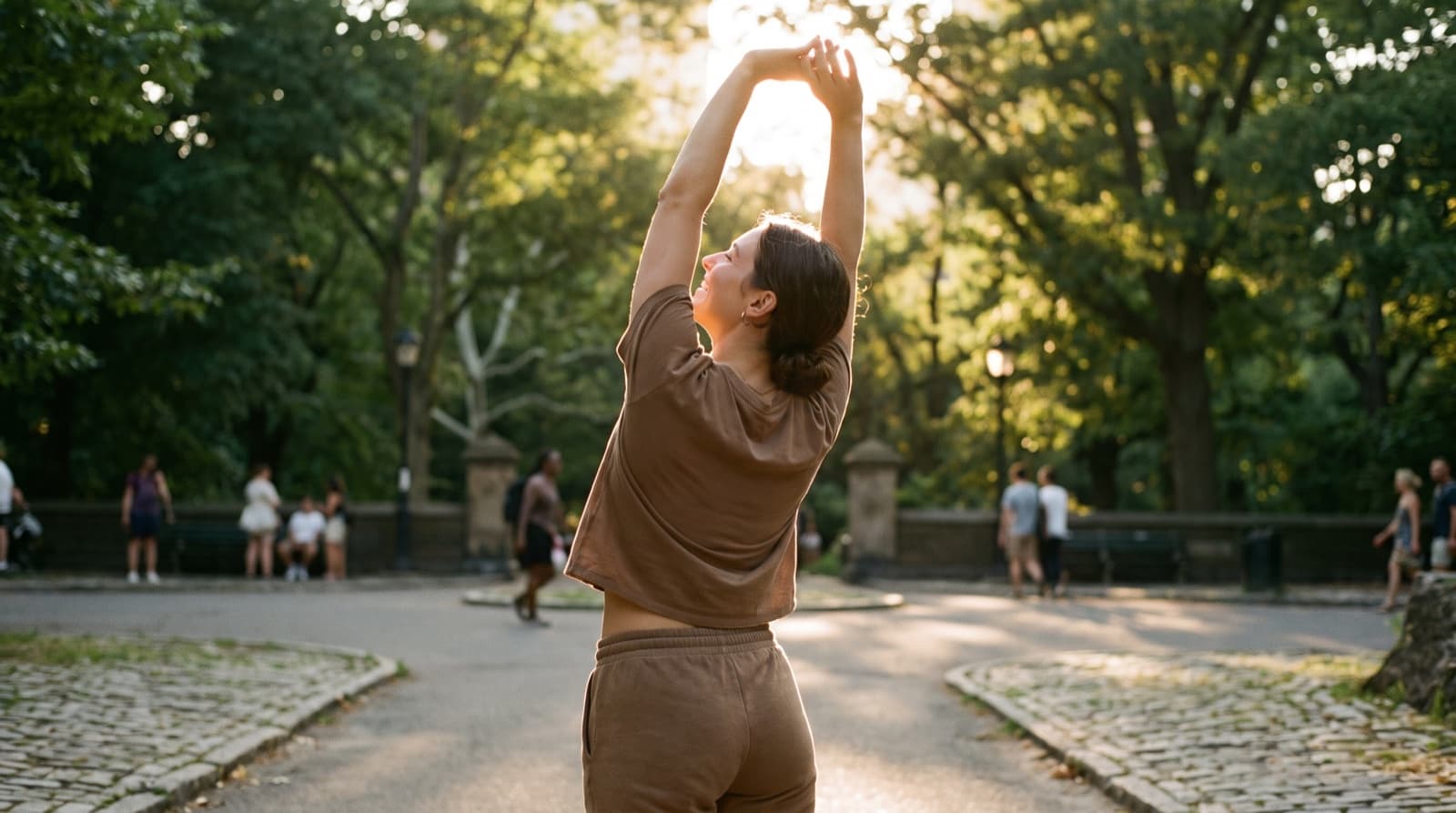
Here is the quiet bonus that makes outdoor movement especially worthwhile. When you walk or exercise outdoors, you are not just building sleep drive, you are also soaking up daylight. That morning or midday light is the master signal your body clock uses to keep its timing accurate, which schedules your sleepiness for later that night. So an outdoor walk does double duty, banking both the activity and the light your sleep depends on. A morning walk in particular is one of the most efficient sleep habits going, since it anchors your clock and starts your movement tally in a single trip out the door.
The bottom line
You do not have to overhaul your life to sleep better through movement. Consistency beats intensity here, so a modest amount most days will do far more than a heroic effort once a week. Pick something you will actually repeat, walking being the easy default, aim for it most days, and take it outside when you can. Give it a few weeks and pay attention to your nights. Of all the levers in this blog, this is among the most reliable, and one of the few that quietly improves your whole day on the way to improving your sleep.
References
- Sleep Foundation — Exercise and Sleep Sleep Foundation ↗
- Mayo Clinic — Exercise 7 benefits of regular physical activity Mayo Clinic ↗
- Harvard Health — 8 secrets to a good night’s sleep Harvard Health ↗
Placeholder bio. Morgan oversees editorial standards and the fact-check process. Replace with a real editor before publishing.
Read full bio →