We spend a lot of energy asking what to eat for better sleep and far less asking when. Yet timing turns out to be one of the simplest levers you can pull. Your body is not equally ready for food at every hour, and a heavy plate too close to lights-out asks it to do two demanding jobs at once, digest and fall asleep. It rarely does both well.
You have a clock in your gut
Your body clock does not just govern sleep and wakefulness. It also tunes your digestion and how you handle a meal. Earlier in the day your system is primed to process food efficiently. As the evening wears on, that machinery gradually powers down along with the rest of you. Eat a large meal late, and you are feeding a system that is already trying to close up shop for the night. This is the idea behind chrononutrition, the simple notion that meals land better when they line up with your internal clock.
Why late, heavy meals backfire
A big meal shortly before bed can disturb sleep in a few ways. Digestion is metabolically busy work that keeps your body warm and active precisely when it should be cooling and quieting for sleep. Lying down soon after eating also makes heartburn and reflux more likely, since gravity is no longer helping keep stomach contents where they belong. And rich, fatty, or spicy foods take longer to break down, so they tend to sit with you and keep the whole system revved when you would rather be drifting off.
None of this means you should go to bed hungry. An empty, growling stomach can wake you just as surely as an overfull one. The aim is a comfortable middle, where dinner has largely settled before your head hits the pillow.
A simple timing plan
You do not need a rigid schedule, just a loose rhythm that most nights can follow.
Anchor your biggest meal earlier
Where your day allows, make lunch or an early dinner your largest meal, when your body is best set up to handle it.
Finish dinner a couple of hours out
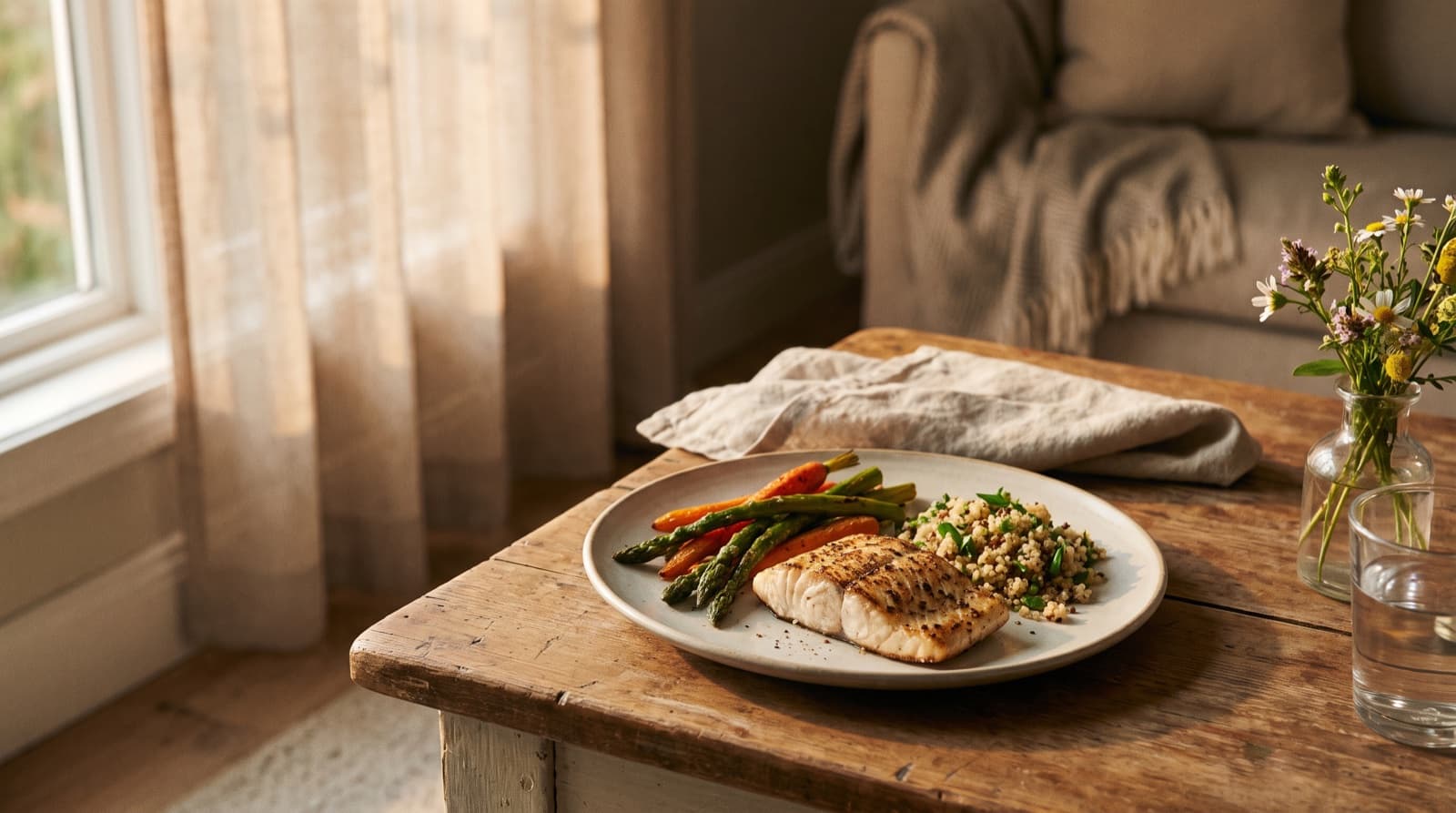
Aim to wrap up larger meals roughly two to three hours before bed. That window gives digestion time to settle before you lie down.
Go lighter as it gets late
If you are eating close to bedtime, keep it small and simple. Skip the heavy, greasy, or very spicy plates that tend to linger.
Watch the evening drinks too. Caffeine late in the day and alcohol near bedtime can undo good meal timing, so treat what is in your glass with the same care as what is on your plate.
If you are wondering where a bedtime bite fits into all of this, our guide on should you eat before bed walks through when a snack helps and when it hurts.
The light-snack exception
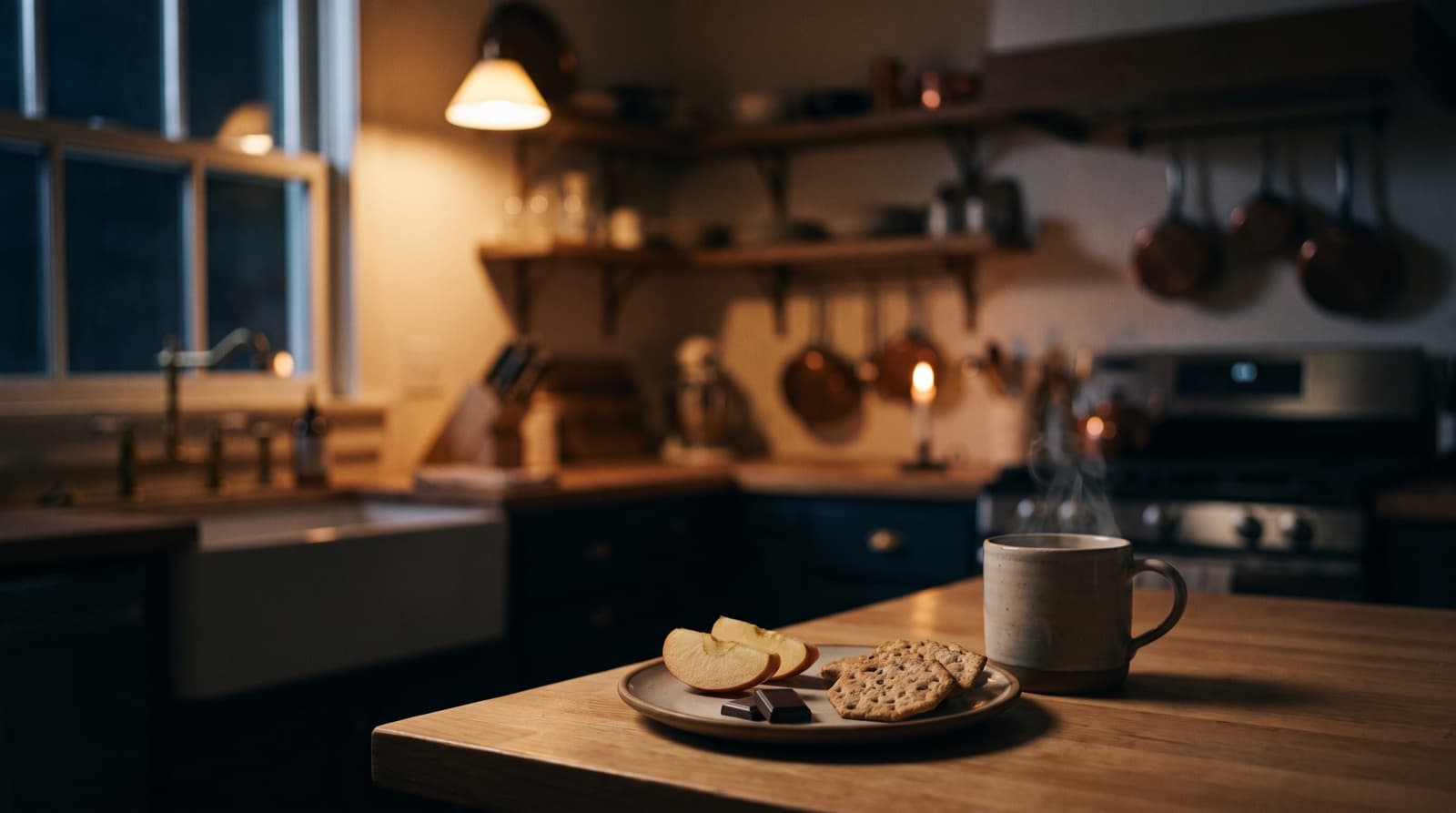
Here is the reassuring part. Finishing your big meals earlier does not mean policing every bite after dark. If you are genuinely hungry before bed, a small, light snack is usually fine and can even help you sleep by keeping hunger from waking you later. The trick is to keep it modest and easy to digest. A little yogurt, a piece of fruit, a small handful of nuts, or some whole-grain crackers will quiet your stomach without giving your digestion a full night shift. What you want to avoid is the second dinner, the large late plate that turns a snack into a project.
The bottom line
Meal timing is a moderate lever, not a magic one. It will not rescue a night wrecked by stress or a noisy room. But it is easy, free, and entirely within your control, which is more than you can say for most sleep advice. Try shifting your heaviest meal a little earlier, leave a couple of hours between dinner and bed, and keep anything late small and gentle. Line your eating up with your body clock, and you take one more quiet obstacle out of sleep’s way.
References
- Sleep Foundation — Nutrition and Sleep Sleep Foundation ↗
- Mayo Clinic — Sleep tips 6 steps to better sleep Mayo Clinic ↗
- Harvard Health — 8 secrets to a good night’s sleep Harvard Health ↗
Placeholder bio. Jordan translates sleep and nutrition research into practical guidance. Replace with a real contributor before publishing.
Read full bio →