
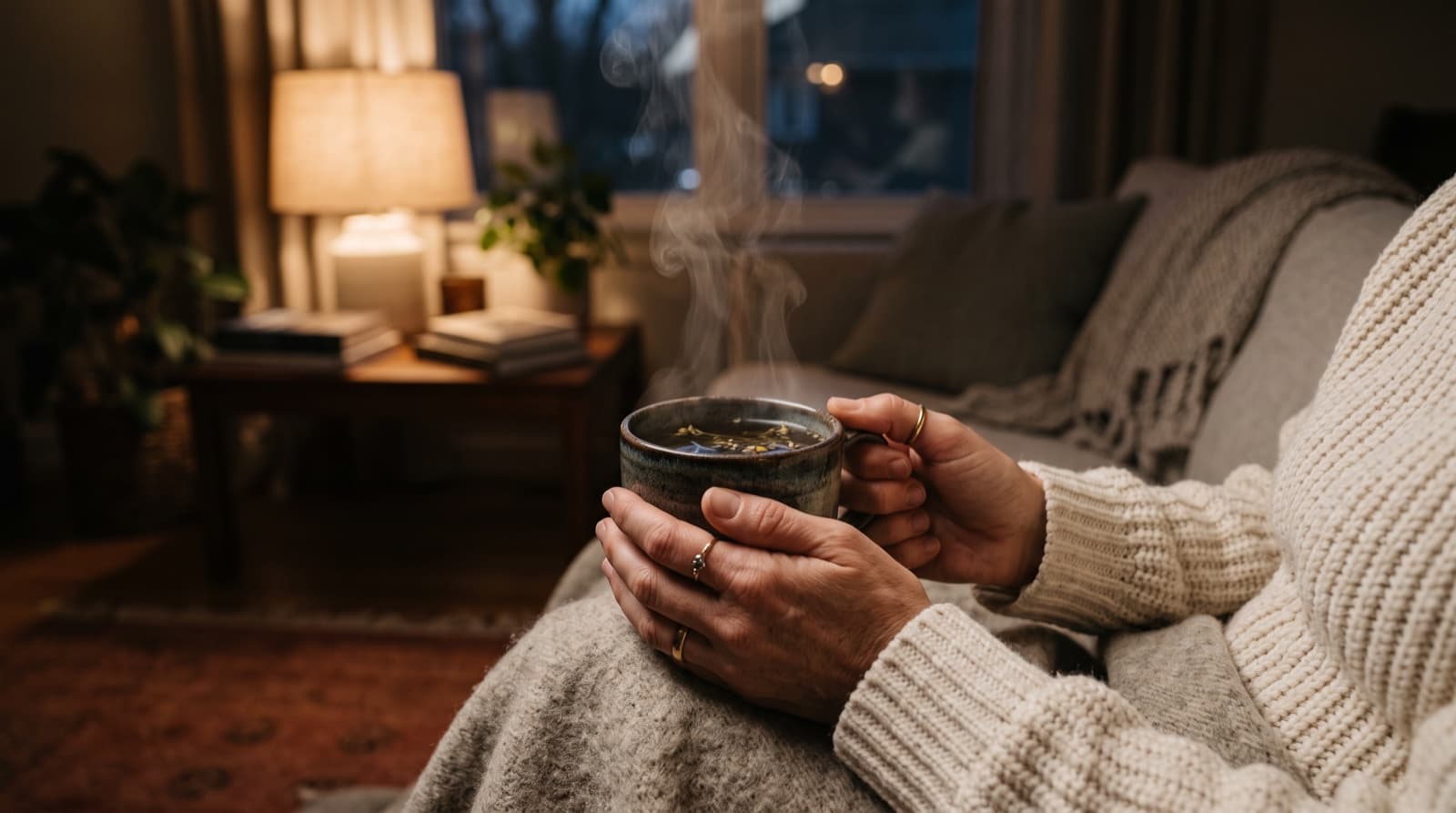
A warm mug before bed is one of the oldest comfort rituals there is, and the shelves are full of teas promising deeper sleep. So it is worth asking a plain question: does the tea itself do the work, or is it the ritual around it? The honest answer is a bit of both, and knowing the difference helps you use tea well without expecting too much of it.
What the evidence actually shows
Let me set expectations first. The research on herbal teas and sleep is thin and mostly small-scale, so the effects that show up tend to be modest. That does not make these teas useless. It just means they belong in the gentle-nudge category, not the fix-it category.
Chamomile
Chamomile is the classic. It contains a compound called apigenin that binds to certain receptors in the brain associated with calm, and some small studies link it to modest improvements in sleep quality, especially in people who are stressed. The signal is real but soft. Think of chamomile as a pleasant, low-risk part of settling down rather than a sedative.
Valerian, and its quieter cousins
Valerian root has been used for centuries and is among the more studied sleep herbs, yet the findings are genuinely mixed — some people report falling asleep more easily, while controlled trials often show only small or inconsistent effects. Lemon balm, passionflower, and lavender show up in the research too, usually with the same pattern of being promising, gentle, and far from proven. If you try them, treat them as an experiment of one and notice how you actually respond.
The ritual may matter as much as the herb
Here is the part that often gets overlooked. Making and sipping a warm, caffeine-free drink is a slow, repeatable signal to your body that the day is winding down. That cue — the same mug, the same time, the same dim kitchen — can be quietly powerful, and it stacks neatly onto the rest of a good evening. You can fold it into the ideal wind-down routine so the tea becomes one step in a larger pattern rather than a lone fix.
Brew something caffeine-free
Reach for chamomile, rooibos, lemon balm, or a labeled bedtime blend. Skip green, black, and white teas at night, since they carry caffeine that can linger for hours.
Let it become your signal
Sip it at roughly the same time each night, in low light, away from screens. The repetition is what turns a drink into a genuine cue for sleep.
Finish a little before bed
Give yourself time between the last sip and lights-out so a full bladder does not wake you later. A calm ten or fifteen minutes is plenty.
Herbal does not automatically mean risk-free. Teas are not regulated as tightly as medicines, strengths vary between brands, and some herbs — valerian among them — can interact with medications or add to the effect of sedatives. If you are pregnant, nursing, taking other medications, or managing a health condition, check with a clinician before making any herb a nightly habit.
How to use tea without overselling it
If you enjoy a bedtime cup, keep enjoying it — just point it in the right direction. Choose caffeine-free, keep the portion modest so you are not up at 3 a.m., and let the tea mark the start of your wind-down rather than carry the whole evening. Pair it with the habits that reliably move the needle, like dim, warm light in the last hour, a consistent bedtime, and a cool, dark room.
It also helps to be honest with yourself about what a tea can and cannot do. It will not undo a late scroll under bright light, a double espresso after dinner, or a chaotic schedule. What it can do is add a small, comforting layer of calm to an evening that is already pointed toward sleep.
So brew the chamomile if it makes your evening feel softer. Just treat it as the warm, familiar ritual it is — a gentle punctuation mark at the end of the day — and let your light and your routine do the heavier work of getting you to sleep.
References
- Sleep Foundation — Natural Sleep Aids Sleep Foundation ↗
- NIH Office of Dietary Supplements — Valerian Fact Sheet for Health Professionals NIH ↗
- Cleveland Clinic — Is Chamomile Tea Good for You Cleveland Clinic ↗
Placeholder bio. Jordan translates sleep and nutrition research into practical guidance. Replace with a real contributor before publishing.
Read full bio →