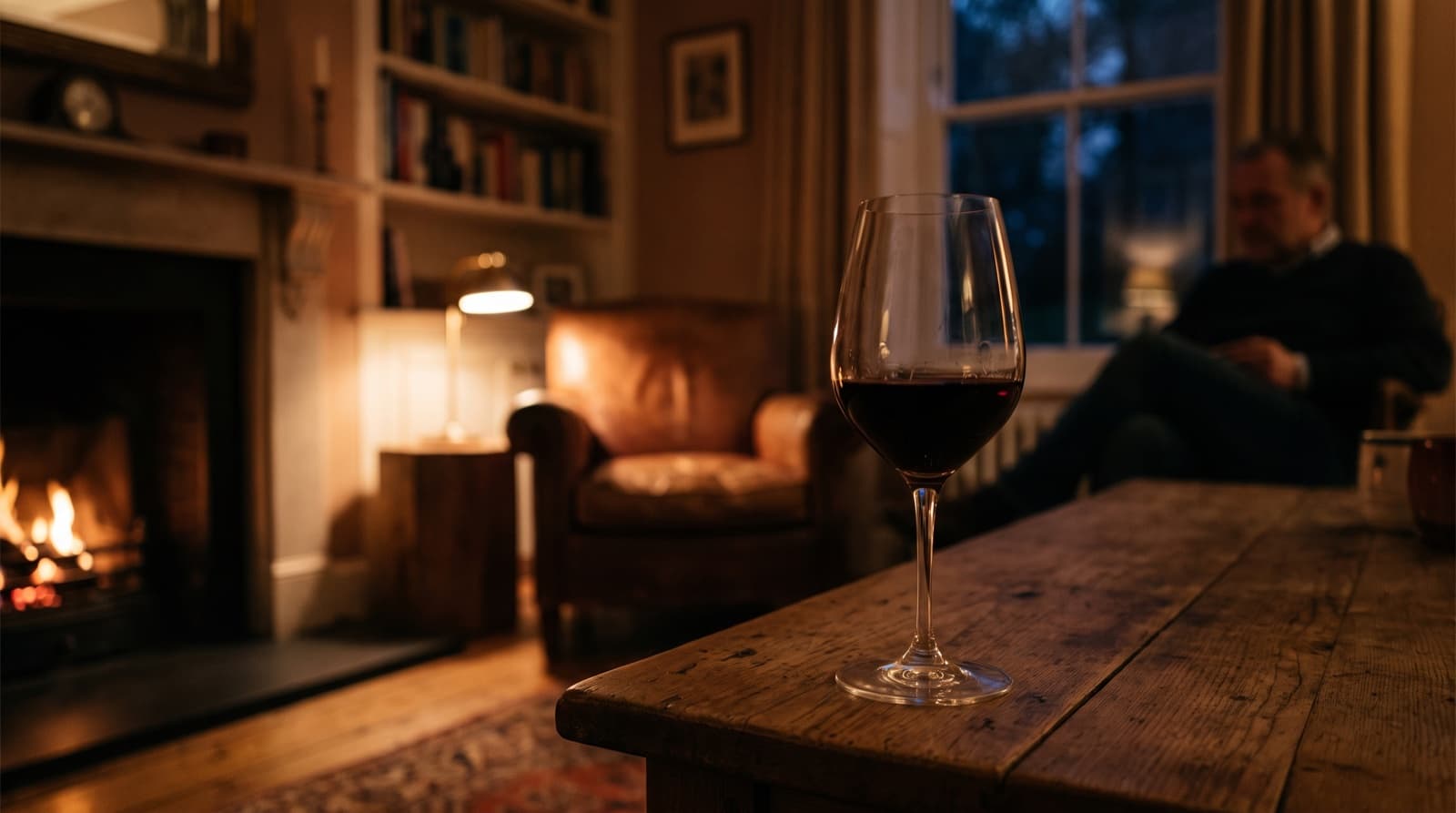
The nightcap is one of the most convincing illusions in all of sleep. A drink or two in the evening really does make you feel loose, warm, and pleasantly drowsy, and you may well fall asleep faster than usual. That is exactly why the habit is so easy to keep. The catch is that alcohol collects on the back end of the night, and what it gives you early it takes back with interest a few hours later.
The nightcap myth
Alcohol is a sedative, and there is no arguing with how it feels going down. It quiets the nervous system, eases you toward sleep, and can shorten the time it takes to nod off. If falling asleep were the whole story, the nightcap would be a fine idea. But sleep is not one long uniform state. It moves through cycles and stages across the night, and alcohol distorts the shape of those cycles in ways you sleep right through and only feel the next day.
The two halves of the night
Think of your night in two halves. In the first half, while your body is still absorbing the alcohol, its sedative effect dominates and you sleep heavily. Then comes the turn. As your body metabolizes and clears the alcohol, that sedation gives way to a rebound. Your sleep grows lighter and more fragile, and brief awakenings multiply, many so short you never remember them but which chip away at how rested you feel.
Alcohol also interferes with REM sleep, the dream-rich stage tied to memory, learning, and emotional balance. Drinking tends to push REM later and reduce how much of it you get, especially in that troubled second half. On top of that, alcohol relaxes the muscles of the airway, which can worsen snoring and disrupted breathing for people already prone to it. The overall picture is a night that looks like sleep but delivers less of its restorative work, which is why a boozy evening so often ends in a groggy, unrefreshed morning even after a full stretch in bed.
What to do instead
The good news is that the thing you actually want from a nightcap, a sense of calm and release at the end of the day, can come from a wind-down that does not sabotage the hours ahead.
Set a wind-down cue
Pick a signal that the day is closing, like dimming the lights an hour before bed. Lower, warmer light tells your body that night has arrived.
Swap the glass for a ritual
Trade the drink for something soothing you can repeat, a warm caffeine-free tea, a few pages of a book, some easy stretching, or slow breathing.
Ease the mind, not just the body
If it is stress you are drinking to quiet, meet it directly with a short journal entry, a gratitude note, or a few minutes of stillness before bed.
Give any change a couple of weeks before you judge it. If the nightcap has been a nightly habit, your sleep may feel unsettled at first as your body readjusts, and then tends to steady into something deeper.
For a fuller playbook on the hour before bed, our guide to the ideal wind-down routine pulls these pieces together.
If you do choose to drink
None of this has to mean going without entirely. If you enjoy a drink, a few habits soften the hit to your sleep. Timing helps most, so finishing your last drink several hours before bed gives your body a head start on clearing it before you lie down. Keeping the amount modest matters too, since more alcohol means a rockier second half of the night. Drinking water alongside and eating something can slow absorption and ease the morning after. And it is worth being honest with yourself about frequency, because an occasional glass with dinner is a very different thing from a drink every night just to fall asleep.
The bottom line
The nightcap is a trade that looks good at bedtime and quietly bills you later. Alcohol can speed you into sleep, but it fragments the night, trims your REM, and leaves you shortchanged by morning. The relief it offers is real, which is why the better move is not willpower but replacement. Give yourself a wind-down that genuinely calms you, dim the lights, and let your sleep run its natural course. You will likely find the mornings are where you notice the difference first.
References
- Sleep Foundation — Alcohol and Sleep Sleep Foundation ↗
- Mayo Clinic — Sleep tips 6 steps to better sleep Mayo Clinic ↗
- NIH NHLBI — Sleep Deprivation and Deficiency NHLBI ↗
Placeholder bio. Jordan translates sleep and nutrition research into practical guidance. Replace with a real contributor before publishing.
Read full bio →