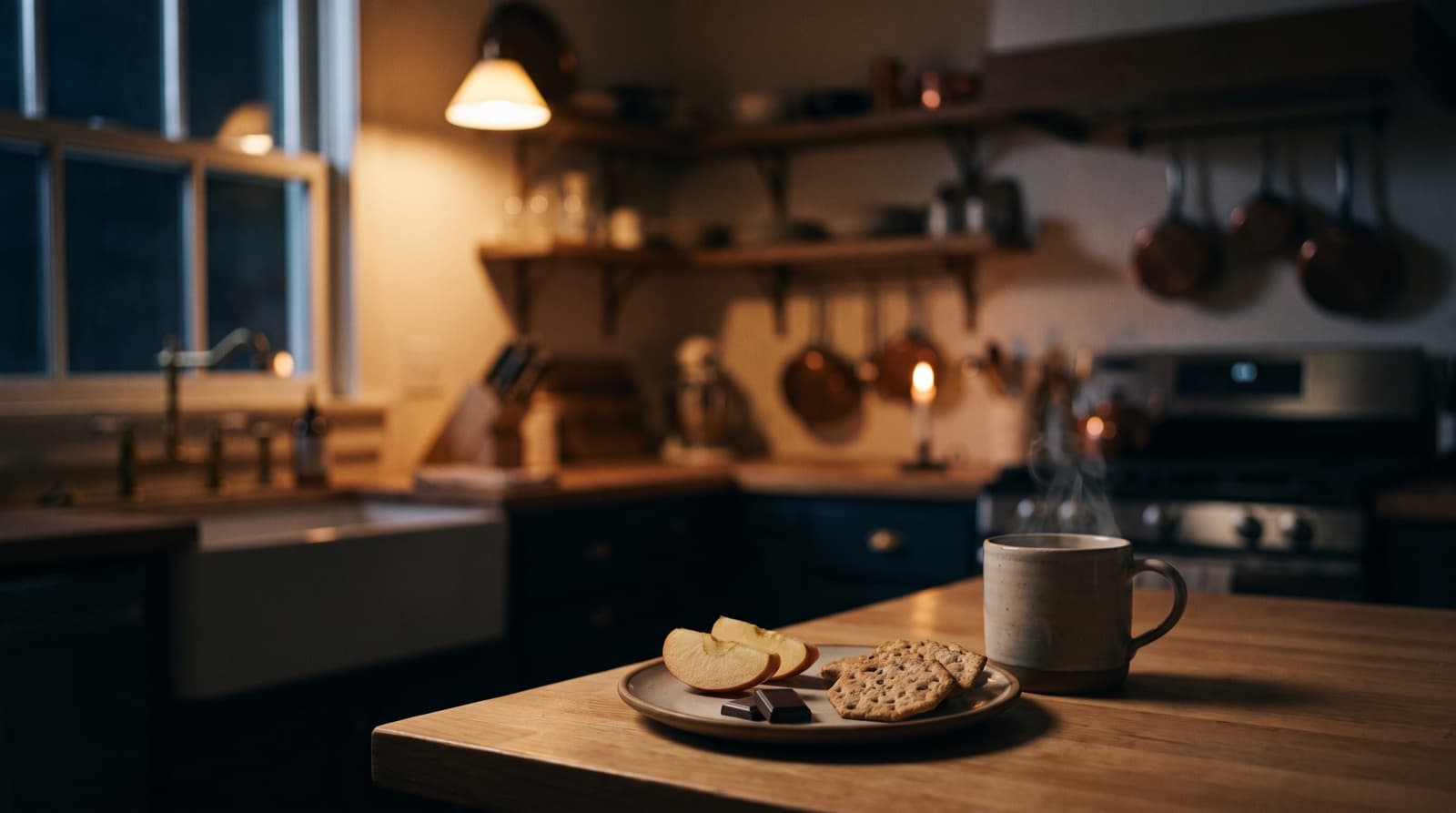
No single food will switch off your mind at night, and any headline that promises a magic bedtime bite is overselling. What you eat across the whole day, though, does quietly shape how easily you settle once it gets dark. The link between food and sleep is real, if gentle, and it rewards patience far more than any one clever snack.
Why food belongs in the sleep conversation
Your body assembles its nightly sleep signals out of raw materials that come straight from your plate. Melatonin, the hormone that tracks nightfall, sits at the end of a chemical chain that begins with a building block you can only get by eating. A well-fed day hands your evening chemistry something to work with.
That said, food is a supporting player, not the star. Bright morning light, a steady wake time, and winding down in dim light do most of the heavy lifting. Nutrition simply nudges the system in the right direction, and it does that best when it is consistent rather than heroic.
The nutrients worth knowing about
A handful of nutrients keep coming up in the research on diet and sleep. None of them work like a switch, but together they give your body a friendlier starting point each night.
Tryptophan, the starting block for melatonin
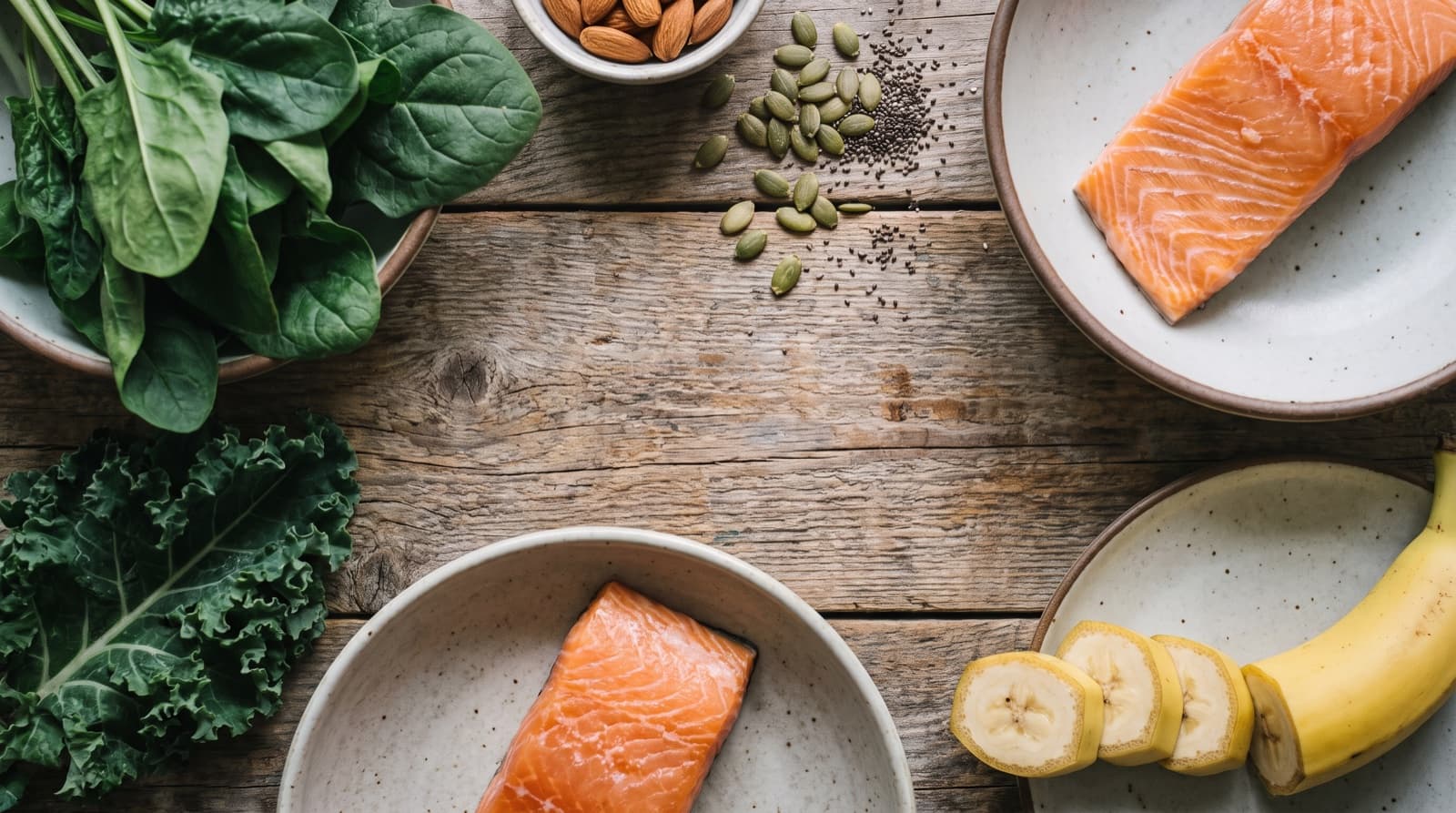
Tryptophan is an amino acid your body converts first into serotonin and then into melatonin. You will find it in turkey, chicken, eggs, dairy, fish, tofu, oats, nuts, and pumpkin seeds. The old story that a turkey dinner knocks you out is exaggerated, but the underlying nutrient genuinely matters over the long run. Pairing tryptophan-rich foods with a little wholesome carbohydrate, like oats or brown rice, may help more of it reach your brain.
Magnesium and the calming minerals
Magnesium supports many of the processes that help muscles and the nervous system settle. It shows up in leafy greens, beans, whole grains, nuts, seeds, and even a square of dark chocolate. A lot of people fall a little short of the recommended amount from food alone. Rather than reaching for a supplement as your first move, it is worth trying to top up through meals — you can read the fuller story in our guide to magnesium for sleep.
Build an evening plate that works with your clock
You do not need a special sleep menu. You need a reasonable dinner, eaten at a reasonable hour, that leans toward the foods above.
Anchor the plate with tryptophan foods
Center dinner on something like fish, eggs, chicken, tofu, or beans so the raw material for your evening chemistry is on hand.
Add a little wholesome carbohydrate
A modest side of oats, quinoa, or brown rice may help tryptophan reach the brain more easily than protein eaten completely alone.
Crowd the plate with magnesium-rich plants
Leafy greens, beans, seeds, and whole grains are quietly some of the most sleep-friendly foods you can put on a fork.
Keep the evening meal on the lighter side
A calmer, moderate dinner sits easier overnight than a heavy, rich, very late one, which can leave you digesting when you would rather be drifting.
Watch the hidden stimulants, too. Caffeine hides in chocolate, some teas, and a few sodas, and it can linger for hours, so keep it to the earlier part of the day. A nightcap is not a sleep aid either — alcohol may feel relaxing but tends to fragment the second half of the night.
Whole patterns beat single foods
Here is the honest takeaway from the current evidence, which is still emerging rather than settled: no lone ingredient decides your night. What tracks most reliably with better sleep is the overall shape of your diet. Eating patterns rich in vegetables, fruit, legumes, fish, nuts, and whole grains — the kind often described as Mediterranean-style — are associated with better-reported sleep quality, while diets heavy in ultra-processed food and added sugar tend to go the other way.
That is good news, because it means you are not chasing a perfect bedtime snack. You are building a steady, varied, mostly whole-food diet and letting the small sleep benefits accumulate. Season it with regular meal times, cut the caffeine off early, and give your last big meal a few hours before bed.
Food is the slow lever, not the fast one. Pull it gently and consistently, and let your light habits and schedule do the rest. Eat across the day like someone who fully intends to sleep well that night, and more often than not, the evening gets a little easier.
References
- Sleep Foundation — Nutrition and Sleep Sleep Foundation ↗
- NIH Office of Dietary Supplements — Magnesium Fact Sheet for Consumers NIH ↗
- Cleveland Clinic — The Best Foods To Help You Sleep Cleveland Clinic ↗
Placeholder bio. Morgan oversees editorial standards and the fact-check process. Replace with a real editor before publishing.
Read full bio →