
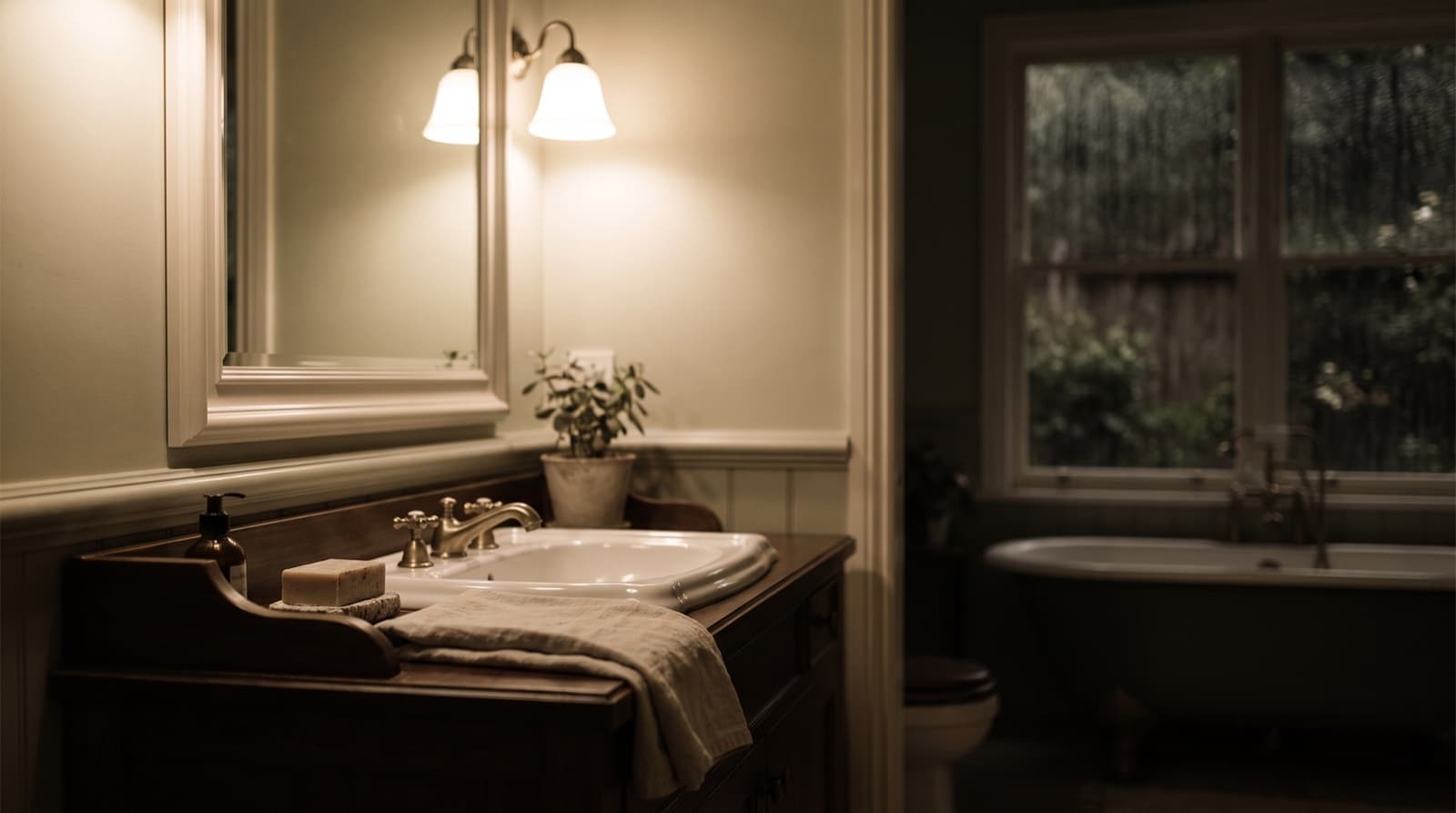
Picture the perfect wind-down. You dimmed the lamps, put the phone away, and let the house go soft and quiet. You feel genuinely sleepy. Then you step into the bathroom to brush your teeth, flip the switch, and get hit with a wall of bright white light bouncing off the mirror and the tile. In about ninety seconds, you have quietly undone an hour of careful preparation.
The last light you see wins
Your body clock is not judging the average light of your whole evening. It is paying close attention to the light hitting your eyes right now, especially in the crucial stretch before bed. The bathroom is almost always the last room you visit, which means its lighting gets the final word on whether your brain thinks it is night or day.
And most bathrooms are built for daytime tasks. Bright overhead fixtures and vanity bulbs are designed to help you shave, apply makeup, and see every detail — which is exactly the kind of intense, often blue-rich light that tells your light-sensing cells the sun is up. Deliver that message at the very end of your routine and you can nudge your melatonin release later, trading away the sleepiness you just built.
Small room, oversized effect
It seems unfair that a two-minute visit could matter so much. But timing is everything with light. A short, bright exposure lands hardest precisely when your body is on the edge of sleep. The bathroom hits that window nearly every night, which is what makes it such a sneaky sleep thief.
The fix is refreshingly simple
You do not need to stumble around in the dark or skip brushing your teeth. You just need a gentler source of light for those final minutes. A few small changes cover almost every bathroom.
Add a dimmer
A dimmer switch on the main fixture is the cleanest fix. Turn it down at night so you have enough light to see without blasting your eyes wide awake.
Use a warm night-light
A low, warm-toned night-light or a small plug-in lamp gives you plenty of light for a bedtime routine while keeping the daytime signal to a minimum.
Leave the overheads off
For a quick late-night trip, skip the bright vanity lights entirely and rely on your gentler source. Your eyes stay in night mode the whole time.
Filter what you cannot dim
In a rental or shared bathroom you cannot rewire, evening glasses that soften blue-rich light let you keep the bright bulbs from reaching your eyes at full strength.
The goal is not perfect darkness. You still want to see clearly enough to be safe and finish your routine. You are simply lowering the intensity and warming the color so that final dose of light whispers goodnight instead of shouting good morning.
Safety comes first. Keep enough light to move around without tripping, especially on stairs or if you get up during the night. Aim for soft and warm, not pitch black, so you protect your rhythm and your footing at the same time.
Protect the work you already did
Think of the bathroom as the final checkpoint of your evening. Everything you did to settle down — dimming the lamps, putting away screens, letting the house go calm — can be reinforced or reversed in that last room. Handled well, it becomes the quiet period at the end of your wind-down. Handled badly, it is a bright exclamation point that jolts your brain awake.
This is really the same idea that drives how to dim your home at night, carried all the way to the last light you touch. It would be a shame to soften every other room and then let one harsh fixture undo the effort in the final two minutes.
So make the bathroom part of the plan. Install a dimmer, plug in a warm night-light, or filter the glare on the nights you cannot change the bulbs. It is a tiny adjustment to a room you barely think about, but it guards the exact moment your body is deciding whether to fall asleep. Get that last light right, and the sleepiness you worked so hard to build finally makes it all the way to your pillow.
References
- Sleep Foundation — Light and Sleep Sleep Foundation ↗
- Harvard Health — Blue light has a dark side Harvard Health ↗
- Cleveland Clinic — Circadian Rhythm Cleveland Clinic ↗
Placeholder bio. Jordan translates sleep and nutrition research into practical guidance. Replace with a real contributor before publishing.
Read full bio →