
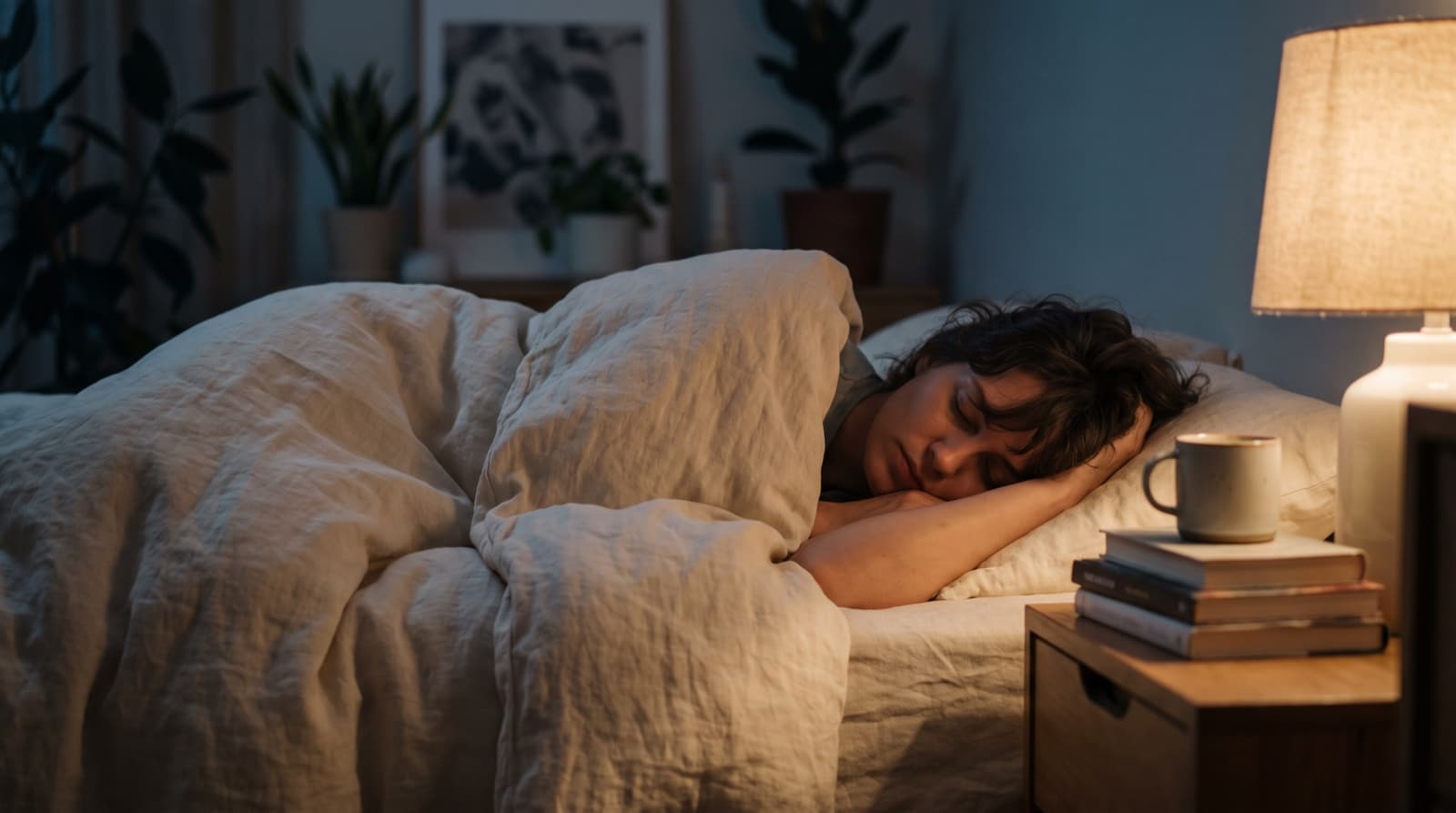
The question of the best sleeping position comes up constantly, and the honest answer is a little unsatisfying. There is no single posture that works for everyone. What matters more is how well your body is supported and whether you actually feel comfortable enough to stay asleep. Still, each of the three main positions comes with its own trade-offs worth knowing, so you can lean toward what tends to help and away from what tends to get in the way.
What your position actually affects
Where you land at night can influence how freely you breathe, whether you snore, how your spine is aligned, and where pressure builds over the hours. None of these are dramatic on their own, but together they shape how rested you feel. The goal is not a perfect pose held all night — it is a starting position that supports you and lets you drift off without a fight.
The three main positions
Side sleeping
Side sleeping is the most common position, and for many people it tends to be the most forgiving. It generally keeps the airway more open, which is why it is often suggested for people who snore or wake up congested. It can also feel easier on the lower back when the spine stays roughly neutral. The main downsides are shoulder and hip pressure, and some people notice facial creasing over time. A pillow between the knees can help keep the hips level and the spine in a gentler line.
Back sleeping
Sleeping on your back spreads your weight evenly and can help keep the head, neck, and spine in a neutral position, which some people find comfortable. The catch is breathing. Lying flat can let the tongue and soft tissue settle backward, which may make snoring worse and can be a problem for anyone dealing with disrupted breathing at night. If you like your back but tend to snore, it is worth mentioning to a professional.
Stomach sleeping
Stomach sleeping is usually considered the least friendly to your body. It tends to flatten the natural curve of the lower back and forces the neck to turn to one side for hours, which can leave you stiff or sore. If it is genuinely the only way you fall asleep, a very thin pillow or none at all under the head, plus a flat pillow under the hips, can ease some of the strain.
Support is the other half of the story
Your position only works as well as what holds it up. A pillow that is too tall or too flat can bend your neck out of line no matter how you lie, and a sagging mattress can undo otherwise good posture. Treat your pillow and mattress as the quiet partners to whatever position you choose.
Match your pillow to your position
Side sleepers usually want a firmer, taller pillow to fill the gap between ear and shoulder. Back sleepers want something medium. Stomach sleepers want the thinnest option they can find.
Keep your spine roughly neutral
Aim for a line where your ears, shoulders, and hips stay reasonably stacked. If your neck is cranked up, down, or sideways, fix that before you fuss over the position itself.
Let the mattress do its job
A surface that keeps your hips from sinking too far tends to support most sleepers. If you wake up sore in the same spot day after day, your mattress may be part of the story.
Add a pillow where you gap
Between the knees for side sleepers, under the knees for back sleepers, under the hips for stomach sleepers. Small props close the gaps that pull your spine out of line.
Comfort and environment matter more than the perfect pose
Here is the part that gets lost in position debates. If you are comfortable and your surroundings are set up for sleep, the exact angle of your body matters far less. Forcing yourself into a position that feels wrong tends to backfire — you lie there tense and half awake, waiting to feel natural. It is usually better to start in a well-supported version of the position you already prefer and let your body settle.
The room around you does a lot of quiet work too. A cool, dark, quiet space makes almost any position easier to sleep in, and dialing in the ideal bedroom temperature is often a bigger lever than rearranging your posture.
If you wake up in a different position than the one you fell asleep in, that is completely normal. Aim to fall asleep well supported, and let your body shift as it needs to through the night.
When to talk to a professional
Position tweaks go only so far. If you regularly wake with neck, shoulder, or back pain, or if you or a partner notices loud snoring, gasping, or pauses in breathing at night, it is worth checking in with a doctor or a sleep specialist. Those patterns can point to something a new pillow will not address, and a professional can help you sort out what is going on. Persistent pain and disrupted breathing are signals to get looked at, not to sleep through.
The best position, in the end, is the well-supported one you can actually rest in. Start there, tidy up your pillow and your room, and let comfort lead the way.
References
- Sleep Foundation — Best Sleeping Positions Sleep Foundation ↗
- Cleveland Clinic — Best Sleeping Positions for Better Sleep Cleveland Clinic ↗
- Mayo Clinic — Sleep tips, six steps to better sleep Mayo Clinic ↗
Placeholder bio. Jordan translates sleep and nutrition research into practical guidance. Replace with a real contributor before publishing.
Read full bio →