
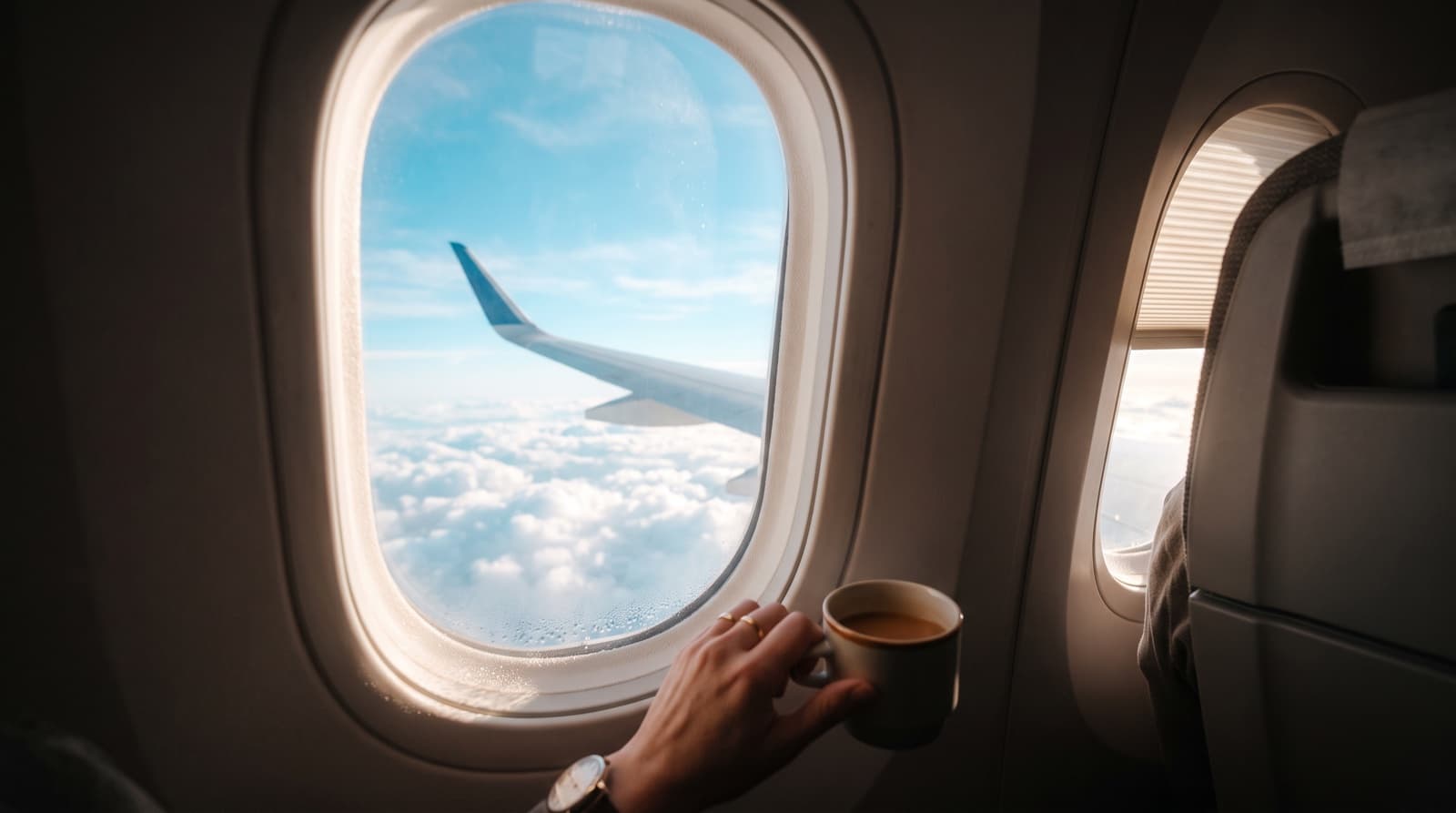
You land after a long flight, step out into bright afternoon sun, and your body flatly insists it is the middle of the night. A few hours later you are wide awake at 3am staring at the ceiling — then nodding off over lunch the next day. That is jet lag, and the most powerful tool for it is not something you swallow. It is light.
Jet lag is a clock problem, not a sleep problem
Every cell in your body takes its cue from a master clock in your brain, and that clock is still set to the time zone you left — not the one you just arrived in. Jet lag is simply the gap between the two. Until your internal clock catches up to local time, your sleep, appetite, and energy stay a few hours out of step. If you want the deeper mechanics, we broke them down in your circadian rhythm.
The encouraging part is that this clock is adjustable, and light is the strongest lever you have on it. Special cells in your eyes read light and tell your brain whether it is day or night. Get bright light at the right moment and your clock shifts toward local time. Get it at the wrong moment and you can nudge yourself further out of sync. So the whole game is timing.
Which way are you flying?
Direction matters, because it flips when you want light and when you want to avoid it.
Flying east — say, from the US to Europe — means you need your clock to move earlier. Your body has to start feeling sleepy sooner and waking sooner. To coax it that way, seek bright light in the morning once you arrive, and go easy on bright light late at night.
Flying west — say, from Europe back home — means you need your clock to move later. Here the play reverses. Get plenty of light in the late afternoon and early evening, and avoid very early morning light for the first day or two so you are not jolted awake before your body is ready.
Only crossing two or three time zones? Your clock can often drift into place on its own within a few days, so keep things simple and lean on a steady schedule.
Start before you even fly. Shifting your sleep and wake times by about an hour a day in the right direction for two or three days before departure gives your clock a head start, so you land with less ground to make up.
A simple reset plan
Live on destination time from the gate
Set your watch to local time at your destination before you board, then act as if you are already there. Sleep when it is night where you are headed, and stay awake when it is daytime there.
Chase or dodge the right light
On your first full day, follow the rule for your direction — morning light going east, evening light going west. Get outside for real daylight whenever you can, since it is far brighter than any indoor bulb.
Guard the last two hours
In the window before your new bedtime, keep light low and warm. Bright screens and glaring hotel lobbies pour out the blue-heavy light your brain reads as daytime, which can quietly stall the whole reset.
That third step is the one travelers most often skip, and it is where a good plan tends to fall apart.
Be deliberate about evening light
You can nail the morning light and still undo it by sitting under bright hotel lighting or scrolling in bed until midnight. In the last couple of hours before your target bedtime, dim whatever you can and treat bright, blue-rich light as something to manage rather than ignore.
A pair of amber-tinted glasses makes this far easier on the road, where you rarely control the lighting. Slip them on after dinner and they filter much of that daytime signal, so your brain can begin winding down even in a bright, unfamiliar room. It is a small, portable habit that can help the day-and-night rhythm you are rebuilding actually take hold. Morning light to advance the clock, filtered evening light to protect it — the same system, worked from both ends.
Give it a little time
Even done well, a body clock does not hop time zones overnight. A rough rule of thumb is that it shifts around an hour a day, so plan on a few days of adjustment on a long trip and be patient with yourself in the meantime. Anchor a consistent wake time, get outside early when you can, eat your meals on the local schedule, and let light carry most of the load.
Reaching for a sleep aid might knock you out for one night, but it does nothing to move the clock underneath — so the gap is still waiting for you the next day. Light is what actually shifts that clock. Use it with a little intention on your next trip and you will spend far less of it feeling like your body got left behind at the departure gate.
References
- Sleep Foundation — Jet Lag Sleep Foundation ↗
- NIH NIGMS — Circadian Rhythms NIH ↗
- Cleveland Clinic — How To Get Over Jet Lag Cleveland Clinic ↗
Placeholder bio. Morgan oversees editorial standards and the fact-check process. Replace with a real editor before publishing.
Read full bio →