
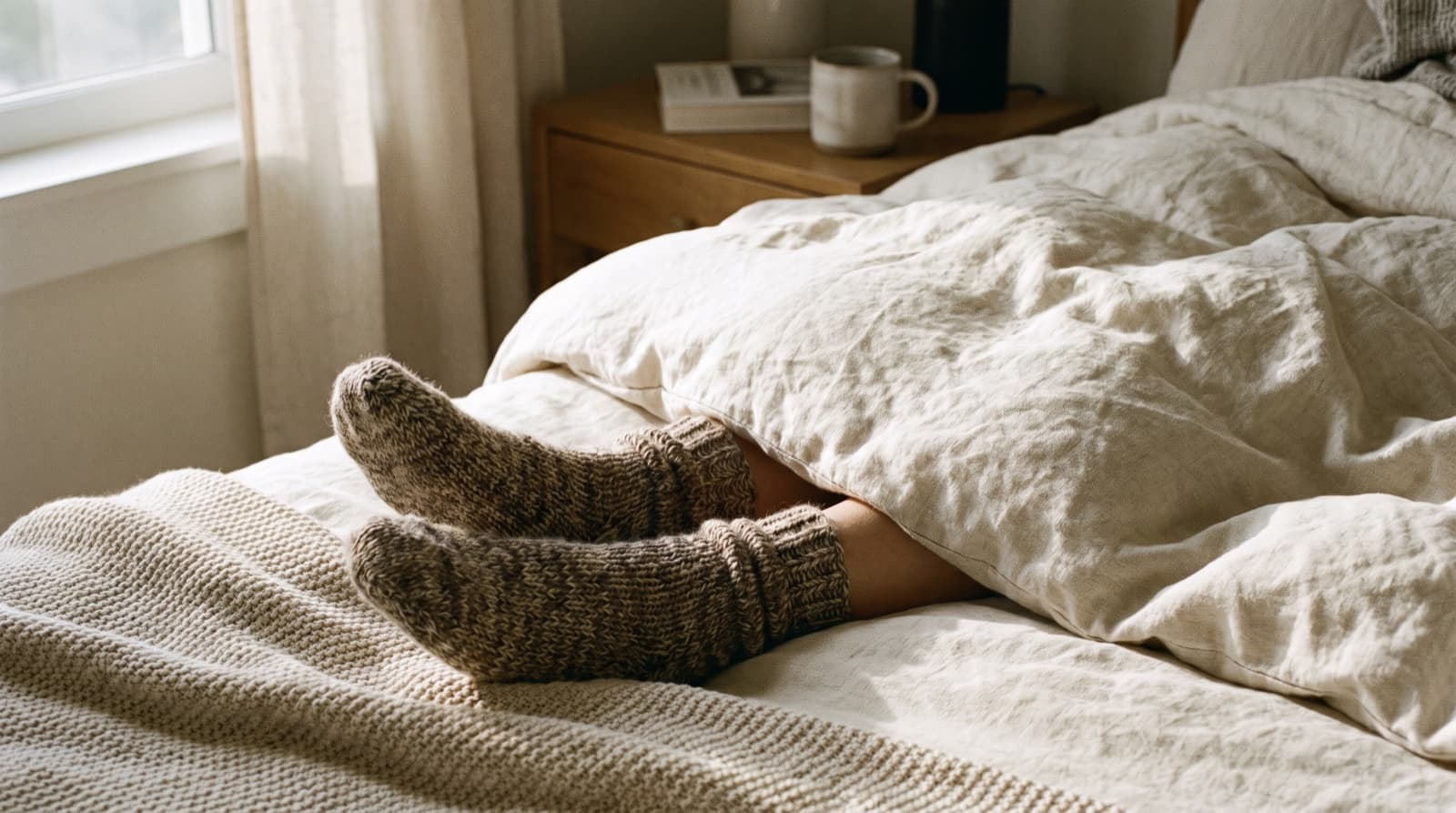
If you have ever lain in bed with icy feet, unable to nod off, you already know the strange power your extremities hold over sleep. The fix is almost comically simple. Warm your feet, and the rest of you tends to follow. It sounds like folk wisdom, and yet there is real physiology underneath it. It all comes down to how your body sheds heat on the way to sleep.
Sleep begins with a cooldown
In the hours before bed, your core temperature naturally starts to fall. This gentle decline is one of the quiet cues your body uses to shift toward sleep, and it arrives alongside the evening rise in the sleep hormone melatonin. A cooler core and a sleepier brain tend to travel together. Anything that helps your body lower its core temperature at the right moment tends to smooth the path into sleep, while a core that stays stubbornly warm can leave you tossing.
Here is the part that surprises people. To cool its core, your body has to move heat outward and release it through the skin, and your hands and feet are its main release valves. They are packed with special blood vessels that can open wide to give off warmth. When those vessels are open, heat pours out and your core drops. When they are clamped shut by cold, that heat stays trapped inside where you do not want it.
Why warming actually cools you
This is the apparent paradox. Warming your feet does not heat your core up. It does the opposite. Gentle warmth at the surface signals those vessels to open, blood rushes to the skin, and your body offloads core heat far more efficiently. Cold feet, by contrast, keep the valves closed and the heat locked in, which is exactly why they can keep you staring at the ceiling. So the goal is not to bake yourself under a pile of blankets. It is to coax open the release valves so your core can slide down into sleep range.
Simple ways to warm up before bed
You do not need any special gear for this. A pair of socks or a few minutes of warm water will do the job. The idea is to apply gentle warmth to your feet or hands during the wind-down window, then let your body take it from there.
Warm up about an hour out
Roughly an hour before bed, run a warm foot soak or take a warm shower. You are not trying to overheat, only to open the blood vessels in your skin, so a few minutes is plenty.
Or just reach for socks
If a soak feels like too much effort, simply pull on a loose, breathable pair of bed socks. It is the low-lift version and works well for most people who run cold at night.
Keep the room cool
Warm feet, cool room. A cooler bedroom gives the released heat somewhere to go, so the two work together instead of leaving you sweaty and awake.
If you wake up too warm in the small hours, kick the socks off or switch to a thinner pair. You want an open release valve at the start of the night, not a hot bed at 3 a.m.
The warm-water version has a close cousin worth knowing about, which is why a warm shower before bed helps through this very same cooldown effect.
Who tends to benefit most
This trick tends to help the people who need it most. If your feet are reliably cold, if you sleep in a cool room, or if you simply take a long time to feel drowsy, gentle warming gives your body a clear head start on its cooldown. It also stacks neatly onto the rest of a calm evening. Dim lights, fewer screens, and a cool, warm-footed bed all point your body in the same direction.
A word of realism is in order. This is a nudge, not a switch. The evidence here is moderate and the effect is gentle, so treat warm feet as one small tool among several rather than a fix for every restless night. If you tend to run hot, already sleep in a warm room, or wake up sweating, this one may do little for you, and pushing it could even backfire by keeping your core too warm.
Still, for a habit that costs nothing and takes only minutes, it earns its place in the routine. Tonight, before you climb in, warm your feet, cool the room, and let your body do what it already knows how to do. Sometimes the oldest tricks are the ones with the most physiology quietly standing behind them.
References
- Sleep Foundation — The Best Temperature for Sleep Sleep Foundation ↗
- Mayo Clinic — Sleep tips 6 steps to better sleep Mayo Clinic ↗
- Harvard Health — 8 secrets to a good night’s sleep Harvard Health ↗
Placeholder bio. Jordan translates sleep and nutrition research into practical guidance. Replace with a real contributor before publishing.
Read full bio →