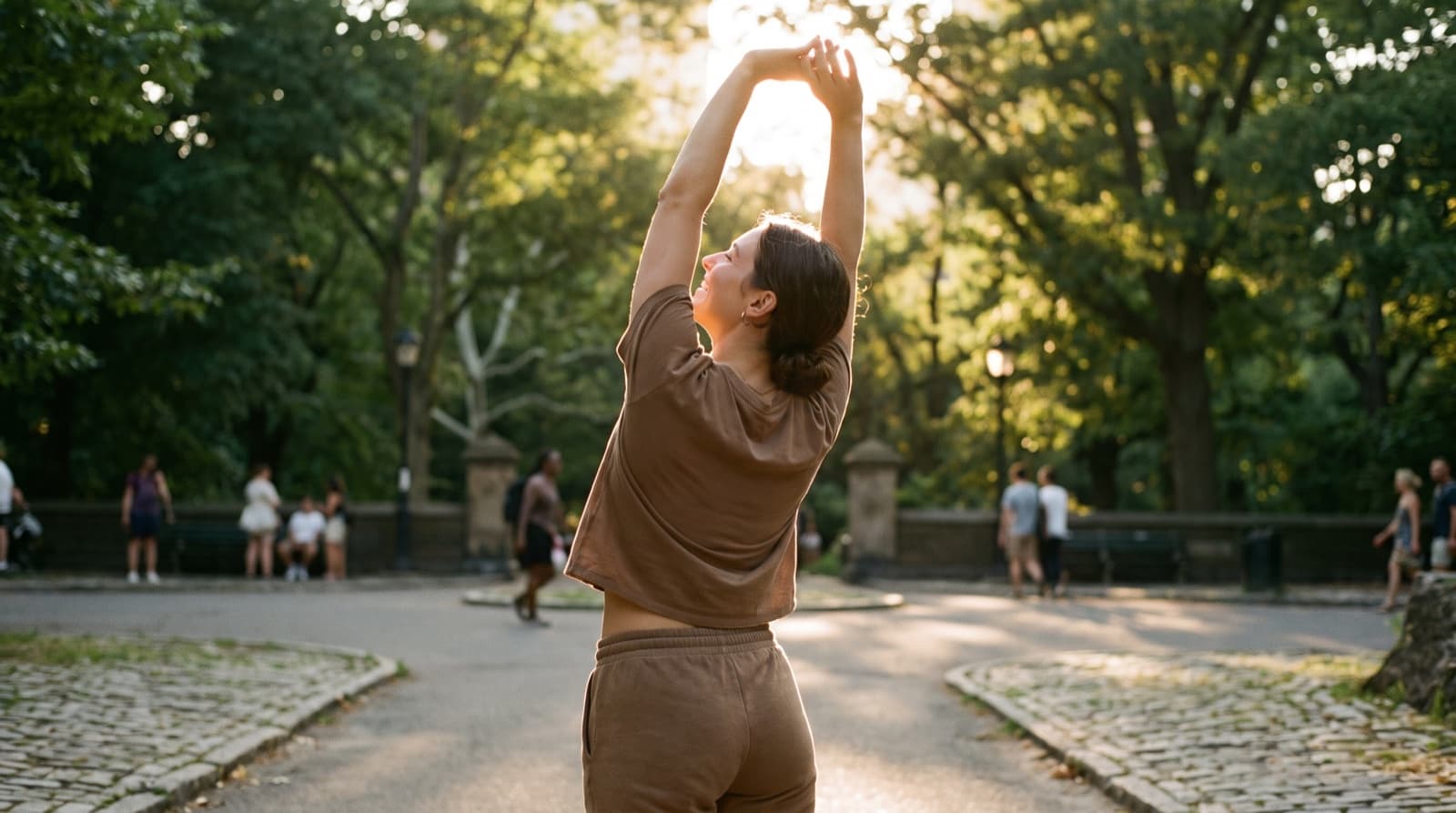

Most sleep advice asks you to add something to your evening — another tea, another gadget, another rule. The morning walk works the other way around. It asks for ten or fifteen minutes soon after you wake, and it quietly pays you back that night. What makes it so effective is not any single ingredient. It is that one small habit delivers three of the strongest signals your body uses to tell day from night, all at once.
Why a walk beats a coffee for your body clock
Deep in your brain sits a master clock that keeps you on a roughly 24-hour schedule. It decides when you feel alert, when your temperature rises and falls, and when the sleep hormone melatonin is released. That clock does not run on its own — it needs a daily signal to stay accurate, and the strongest one it knows is light.
The light does the heavy lifting
The moment you step outside, your eyes take in far more light than any indoor room can offer, even under a gray sky. Special light-sensing cells in your eyes read that brightness and report to the master clock that the day has begun. That single message helps schedule your melatonin release for roughly fourteen to sixteen hours later, right around bedtime. Sip your coffee at the kitchen counter and you miss the dose entirely. Carry it out the door and you turn a habit you already have into a clock-setting appointment.
Movement adds a second signal
Light is the headliner, but the walking matters too. Gentle morning movement nudges up your core body temperature and alertness, reinforcing the natural rise your body makes in the first hours of the day. Regular physical activity is also linked with easier, more restful sleep overall, and morning is a friendly time to get some — it energizes you without the late-evening arousal that a hard workout close to bedtime can bring.
You do not need a fast pace or a long distance. An easy stroll around the block counts. The goal is to pair the light with a little motion so your brain gets two cues instead of one.
A cue your brain can count on
The third ingredient is the one people overlook — repetition. Your clock loves predictability. When the light and the movement land at about the same time each morning, your body stops guessing and starts anticipating. That is what turns a nice idea into a rhythm you can actually feel.
Bright light, early
Outdoor light in the first hour after waking anchors your master clock and sets your melatonin timing for that night. Even an overcast morning is far brighter than your living room.
Gentle movement
An easy walk lifts your temperature and alertness in step with your body’s natural morning rise, supporting daytime energy and an easier wind-down later.
A repeatable cue
Doing it at roughly the same time each day gives your brain a signal it can count on, which is what keeps the whole rhythm steady.
Leave the sunglasses off for these few minutes so the light can reach your eyes — but never look straight at the sun. Ordinary indirect daylight is all your clock is asking for.
The walk works best when it lands on top of a consistent wake time, since a steady morning is one of the most reliable ways to keep the whole system on schedule. Wake, step outside, move a little — the same order, most days.
Making it stick when mornings are messy
The habit is simple, but real life is not, so lower the bar until it is almost impossible to skip. Set your shoes and jacket by the door the night before. Tie the walk to something you already do — the dog, the school run, the first coffee. Aim for ten minutes and let yourself stop there on hard days; a short walk beats a skipped one every time.
On mornings you truly cannot get out — bad weather, a sleeping baby, an early call — do not treat it as all or nothing. Open the blinds all the way and sit by your brightest window while you drink your coffee. It is a weaker dose than real daylight, so give it a few more minutes, then catch the outdoor version at lunch if you can.
The other half of the strategy happens after dark. The same light-sensing cells that help you in the morning cannot tell a bright screen from the sun, so a flood of light late in the evening sends the daytime message all over again and pushes your melatonin later. Chase light early, then ease it down at night, and the two habits point the same direction.
None of this is dramatic, and that is the point. A morning walk is free, it takes minutes, and it may be the smallest change with the biggest return that your sleep has been waiting for. Tomorrow, before you reach for your phone, reach for the door instead.
References
- Sleep Foundation — Exercise and Sleep Sleep Foundation ↗
- NIH NIGMS — Circadian Rhythms NIH ↗
- CDC — About Sleep CDC ↗
Placeholder bio. Morgan oversees editorial standards and the fact-check process. Replace with a real editor before publishing.
Read full bio →